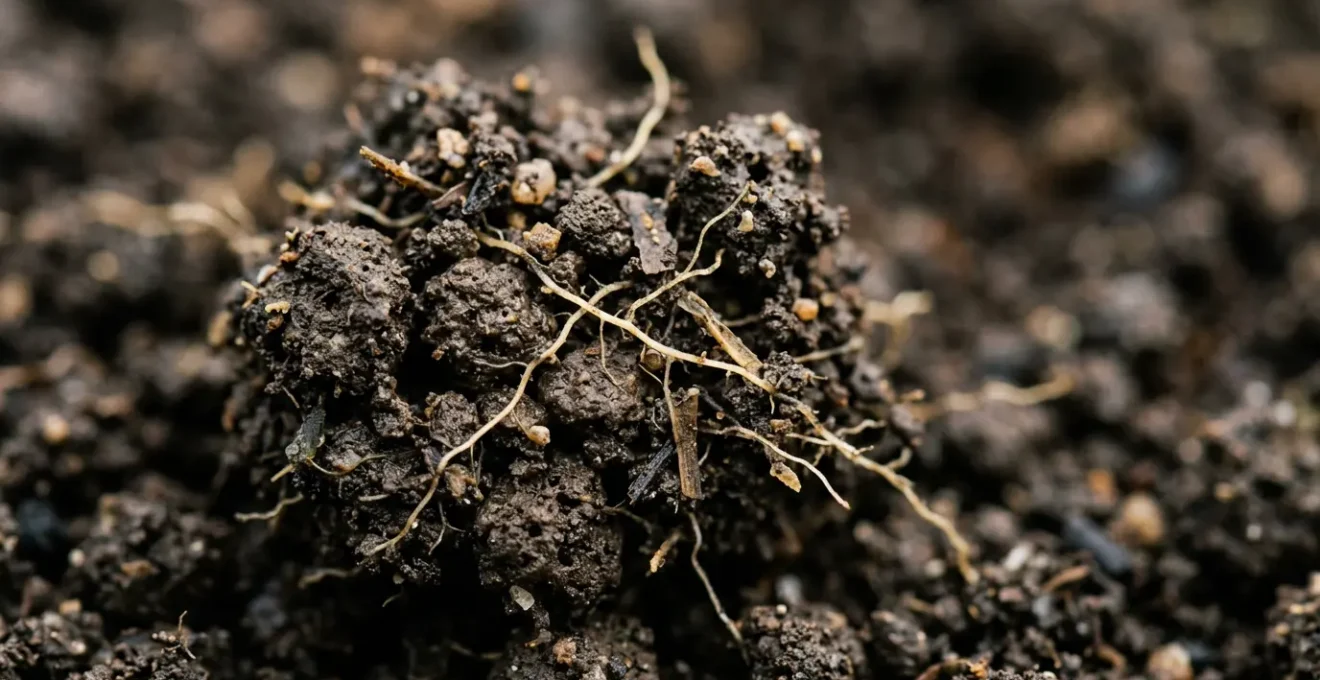
Your farm’s plateauing yields aren’t a fertilizer problem; they’re a biological activation problem. Your soil contains a powerful but dormant microbial engine capable of unlocking nutrients your crops can’t currently access.
- Fungi and bacteria are the gears of this engine, cycling nutrients with different efficiencies and for different purposes.
- Conventional practices like deep tillage and certain fungicide applications can seize this engine, while targeted strategies can restart it.
Recommendation: Shift focus from simply feeding the crop with NPK to actively managing the soil microbiome as a yield-driving asset. Start by protecting your existing fungal networks during tillage.
If you’re a high-input farmer, you’ve seen the trend. You apply the recommended rates of nitrogen, phosphorus, and potassium, yet your yield gains have slowed or stopped altogether. You’re spending more on inputs, but the needle isn’t moving. The conventional playbook suggests the solution is more fertilizer or a new hybrid, but this ignores the most powerful and cost-effective tool at your disposal: the dormant biological engine right under your feet.
The common advice to “improve soil health” often feels vague and unscientific. We hear about adding organic matter, reducing tillage, or using cover crops. But these are just tactics. The strategy is to understand that your soil isn’t a dead sponge for holding nutrients; it’s a living ecosystem. The trillions of bacteria and fungi within it are a high-performance engine designed for one primary purpose: to cycle nutrients and make them available to your plants. This engine, however, has been largely ignored and, in many cases, stalled by modern farming practices.
What if the key to breaking through your yield plateau wasn’t adding more, but activating what’s already there? The truth is, a significant portion of the nutrients in your soil—including expensive legacy P and K—are locked up and unavailable to your crops. The key to unlocking them lies in understanding and managing the specific functions of your soil’s microbiome. This isn’t about abandoning your current system; it’s about making it work smarter.
This article will dissect the mechanics of this biological engine. We will explore how to fuel it during fallow periods, diagnose its health with actionable data, and protect its most critical components from damage. By the end, you will see your soil not as a chemical repository, but as a dynamic, living asset you can manage for greater efficiency and higher yields.
To guide you through this paradigm shift, from soil chemistry to soil biology, we’ve structured this deep dive into a logical sequence. You’ll first learn about the engine’s core components, then discover how to manage, measure, and protect them for maximum ROI.
Summary: Unlocking Your Soil’s Biological Yield Potential
- Why Bacteria and Fungi Are the Engine of Nutrient Cycling
- How to Feed Your Soil Microbes During the Winter Fallow Period
- PLFA or DNA Sequencing: Which Test Gives Actionable Data for Farmers?
- The Fungicide Effect on Soil Life That Nobody Talks About
- How to Brew Compost Tea That Actually Works on Arable Crops
- Why Straw Incorporation Alone Won’t Build Stable Humus Rapidly
- Why Fungal Networks Take 3 Years to Recover After a Single Deep Plough
- How to Protect Mycorrhizal Networks During Tillage Operations
Why Bacteria and Fungi Are the Engine of Nutrient Cycling
To start managing the soil’s biological engine, you first need to understand its two primary types of gears: bacteria and fungi. While both are crucial for nutrient cycling, they operate in fundamentally different ways, much like the contrast between a sprinter and a marathon runner. Understanding this difference is the first step toward purposefully steering your soil’s biology for profit.
Bacteria are the sprinters. They have a low carbon-to-nitrogen (C:N) ratio, meaning they are rich in nitrogen. They thrive on simple sugars and “green” residues like legume cover crops. They reproduce quickly, releasing a rapid burst of nutrients into the soil solution—but they are inefficient. They burn through carbon quickly, releasing much of it as CO2. Fungi are the marathon runners. They have a much higher C:N ratio and are the only organisms that can effectively break down complex, high-carbon materials like lignin and cellulose found in straw and wood chips. They are far more efficient; research shows that fungi capture 40-55% of carbon from organic matter into their bodies, compared to just 20-30% for bacteria. This captured carbon is used to build extensive hyphal networks and, eventually, stable humus.
This “marathon runner” efficiency is what builds resilient soil structure and creates a slow-release nutrient bank. As the Plant Microbiomes Research Team notes in a study published in Frontiers in Soil Science, these processes are essential for sustained crop performance.
Beneficial microbes may enhance plant growth and improve plant nutrition uptake through solubilization of P, K, and Zn, nitrogen fixation.
– Plant Microbiomes Research Team, Frontiers in Soil Science
A conventionally tilled field, fed primarily with simple chemical fertilizers, tends to become bacterially dominated. This system is leaky and inefficient. A soil with a robust fungal network, however, is a system that captures, stores, and efficiently delivers nutrients to the crop when it needs them. Your goal is not to eliminate bacteria, but to foster a powerful fungal component to work alongside them, creating a balanced and high-performance engine.
How to Feed Your Soil Microbes During the Winter Fallow Period
A high-performance engine needs fuel, even when it’s not at full throttle. The winter fallow period is a critical and often overlooked opportunity to feed and condition your soil’s microbial engine for the upcoming season. Leaving the soil bare is like letting your engine’s fuel tank run dry; microbial populations decline, leaving them slow to respond in the spring when your new crop needs them most. The strategic use of cover crops is the most effective way to provide a continuous “trickle charge” of carbon to keep the biology active.
However, not all cover crops are created equal. The choice of cover crop directly influences whether you are feeding the bacterial “sprinters” or the fungal “marathon runners.” Your selection should be a conscious decision based on your specific goals for soil function. Do you need to build long-term structure or get a quick release of nitrogen? Each choice provides a different type of food source through its root exudates and biomass.
Here’s a breakdown of how different cover crop strategies can be used to target specific microbial outcomes:
- High-carbon cereal covers (e.g., rye, oat): Their tough, fibrous biomass is rich in cellulose and lignin. This is the preferred food for fungal populations, promoting the slow decomposition that builds stable soil structure and long-term carbon.
- Diverse legume mixtures (e.g., clover, vetch, peas): These low-carbon, high-nitrogen plants support nitrogen-fixing bacteria and provide easily digestible sugars that fuel a broad spectrum of bacterial activity and increase overall functional diversity.
- Brassica covers (e.g., radish, mustard): Known for their biofumigation effects against certain pathogens, they also provide a rapid input of easily accessible carbon that stimulates a burst of general bacterial activity.
- Multi-species cocktails: This is the premium fuel blend. By mixing grasses, legumes, and brassicas, you provide a wide variety of root exudates—sugars, amino acids, and phenolic compounds—that support the greatest possible microbial diversity, enhancing overall ecosystem resilience.
- Alternative for arid/cold climates: Where cover cropping is challenging, applying stable carbon sources like high-carbon compost or liquid carbon (e.g., molasses, humates) before winter serves as a “survival ration” to sustain microbial life.
By thinking of cover crops as a targeted feeding program for your underground workforce, you shift from a passive fallow period to an active investment in next year’s yield potential. You are ensuring the engine is warm and ready to fire on all cylinders come springtime.
PLFA or DNA Sequencing: Which Test Gives Actionable Data for Farmers?
Once you start managing your soil as a biological engine, you’ll need a dashboard to see if your efforts are paying off. You wouldn’t run an expensive engine without an oil pressure gauge, and the same logic applies here. Two main technologies have emerged for assessing soil biology: Phospholipid Fatty Acid (PLFA) analysis and DNA sequencing. For a farmer focused on management decisions and ROI, understanding the difference is crucial. One provides an actionable, year-over-year dashboard, while the other is more of a deep diagnostic tool for specific problems.
PLFA analysis acts like your dashboard gauge. It measures the fatty acids in the cell membranes of living microorganisms. This gives you a snapshot of the *living, active* microbial biomass in your soil right now. Its key outputs are practical metrics that a farmer can use: the total microbial biomass, and critically, the Fungi-to-Bacteria (F:B) ratio. Is your management shifting your soil toward that more efficient, fungal-dominated pathway? PLFA tells you this directly and cost-effectively. It is highly sensitive to recent management changes, making it ideal for tracking the impact of a new cover crop mix or a reduction in tillage.
DNA sequencing is the master diagnostic tool. It identifies the specific species present by sequencing their DNA. This tells you *who* is in your soil, providing a complete library of every microbe, whether living, dormant, or recently deceased. While incredibly powerful for identifying a specific disease-causing pathogen or confirming the presence of a particular beneficial species you’ve applied, it can be information overload for routine management. Its higher cost and longer turnaround time make it less suitable for regular monitoring. Furthermore, knowing a thousand different species are present doesn’t tell you what they are *doing* or how their functions are balanced.
The following table, based on metrics discussed in comparative studies, breaks down the decision matrix for a farmer. As a recent comparative analysis highlights, the choice depends entirely on the question being asked.
| Feature | PLFA Analysis | DNA Sequencing |
|---|---|---|
| Cost | $50-150 per sample | $200-500+ per sample |
| Turnaround Time | 1-2 weeks | 2-4 weeks |
| Taxonomic Resolution | Low (broad groups: F:B ratio, Gram+/-, AMF) | High (genus/species level identification) |
| Best Use Case | Year-over-year tracking, ROI monitoring, cost-effective dashboard | Problem diagnosis, pathogen identification, specific beneficial species |
| What It Measures | Living microbial biomass (cell membranes) | Total microbial DNA (living + dormant + dead) |
| Sensitivity | High sensitivity to short-term changes | Lower sensitivity for rapid shifts |
| Farmer ROI | High – tracks management impacts directly | Medium – best for targeted problem-solving |
For most farmers looking to track progress and justify changes in practice, PLFA provides the most actionable data per dollar spent. It answers the fundamental question: “Is my management successfully restarting my soil’s biological engine?” As researchers in Biology and Fertility of Soils have noted, its precision and repeatability make it a trusted industry standard.
The Fungicide Effect on Soil Life That Nobody Talks About
In a high-input system, fungicides are a non-negotiable tool for protecting yield from disease. They are selected for their targeted effect on a specific foliar pathogen. However, what is rarely discussed is the unavoidable “collateral damage” that occurs when these compounds reach the soil. While protecting the leaves, we may be inadvertently throwing a wrench into the gears of our soil’s biological engine, specifically targeting its most valuable component: beneficial fungi.
The problem is one of non-target effects. A fungicide designed to kill Septoria on a wheat leaf doesn’t magically become inert upon contact with the soil. Many of these active ingredients have a broad spectrum of activity against fungi, and they cannot distinguish between a pathogen on a leaf and a beneficial mycorrhizal or saprophytic fungus on a soil particle. When fungicides are washed off the plant by rain or applied as in-furrow treatments, they can suppress or kill the very organisms responsible for building soil structure and cycling nutrients.
This creates a significant, hidden cost. You may be hampering the fungal-driven “marathon runners” that are essential for breaking down tough crop residues and building stable humus. By suppressing them, you inadvertently favor the less efficient, bacterially-dominated “sprinter” pathway. This can lead to a downward spiral: weaker soil structure, less efficient nutrient cycling, and a greater dependence on synthetic fertilizers to feed the crop directly—the very problem we are trying to solve.
This is not an argument to abandon fungicides. Rather, it’s a call for a more integrated and conscious approach. This means: 1. Minimizing Off-Target Application: Using sprayer technologies and adjuvants that ensure more product stays on the leaf. 2. Considering the Soil Impact of Active Ingredients: Some fungicide families have a greater and more persistent impact on soil microbes than others. When choices exist, this should be a factor in the decision. 3. Actively Rebuilding Biology: If a heavy fungicide program is necessary, it becomes even more critical to implement practices that support fungal recovery, such as diverse cover cropping, compost applications, or minimizing soil disturbance.
The goal is to view the farm as a whole system, where an action taken to protect the canopy has a reaction in the soil. Acknowledging this hidden effect is the first step toward managing it and ensuring your disease control program isn’t silently sabotaging your soil-building efforts.
How to Brew Compost Tea That Actually Works on Arable Crops
The concept of “compost tea” often raises skepticism among conventional farmers, and for good reason. The space is filled with anecdotal claims and “magic bucket” recipes that lack scientific rigor. However, when approached from a microbiological perspective, brewing compost tea is simply a process of extracting and multiplying the beneficial microorganisms from high-quality compost to apply them to your field. It’s not a fertilizer; it’s a biological inoculant designed to jump-start or supplement the native microbial engine.
For compost tea to be effective in an arable setting, especially in the UK climate, success hinges on three core principles, not a secret recipe:
- Source Material is Everything: The quality of your tea is 100% dependent on the quality of your starting compost. You cannot multiply what isn’t there. You need a mature, microbially diverse, and thermophilically produced compost. Ideally, this would be a fungal-dominated compost, rich in the “marathon runner” organisms that are often lacking in tilled agricultural soils. Using raw manure or immature compost risks multiplying pathogens, not beneficials.
- Oxygen is Non-Negotiable: The brewing process is an aerobic one. The goal is to create an oxygen-rich environment that favors the rapid multiplication of beneficial aerobic microbes. This means using a brewer with an adequate air pump that creates vigorous “bubbling” throughout the entire water column. If the brew goes anaerobic (smells sour or putrid), it has failed and is likely dominated by facultative anaerobes and potentially plant-damaging alcohols and organic acids.
- Targeted Brewing for Targeted Outcomes: Just as you choose a cover crop to feed a specific microbial group, you can steer your brew. A bacterial-dominated tea, useful for breaking down simple residues or as a foliar application, can be brewed quickly (12-24 hours) using food sources like molasses. A fungal-dominated tea, the goal for inoculating soil and improving structure, requires a longer brew (24-48 hours), a higher-quality fungal compost source, and more complex food sources like fish hydrolysate or humic acids to encourage fungal hyphae growth.
In the context of UK arable crops, applying a high-quality, fungal-dominated tea post-harvest or during early crop establishment can help re-inoculate soils that have been disrupted by tillage or left fallow. It’s a way to directly add a diverse workforce back into the system, accelerating the process of building a more resilient and efficient soil engine. The key is to move past the mystique and treat it as a deliberate microbiological process.
Why Straw Incorporation Alone Won’t Build Stable Humus Rapidly
A common belief is that incorporating high-tonnage straw residues after harvest is a fast track to building soil organic matter (SOM). While the intention is correct—returning carbon to the soil—the biological reality is more complex. Simply burying straw without the right microbial workforce is like throwing logs into a cold fireplace; you have the fuel, but no flame to convert it into useful energy. Straw incorporation alone often fails to build stable humus quickly because it lacks the right “engine” to process it efficiently.
The primary challenge with straw is its extremely high carbon-to-nitrogen (C:N) ratio. It is composed of tough, complex carbon compounds like cellulose and lignin. The bacterial “sprinters” in the soil are ill-equipped to break this down. When they try, they must scavenge the soil for available nitrogen to balance their own dietary needs, a process known as nitrogen immobilization or “N-robbing.” This can temporarily lock up nitrogen, starving the following cash crop and often causing a visible yield drag.
This is where the fungal “marathon runners” are essential. Fungi are the specialists in decomposing high-carbon, lignin-rich materials. Their enzymatic machinery is designed specifically to unlock the carbon in straw. More importantly, they do it with incredible efficiency. As studies demonstrate, fungi assimilate 40-55% of the carbon from these tough materials into stable compounds within their bodies and the surrounding soil matrix. This process, known as the “fungal carbon pump,” is the primary pathway for converting raw residue into long-lasting, stable humus that improves soil structure and water-holding capacity.
Therefore, if your soil is bacterially dominated—a common state in frequently tilled systems—incorporating straw will be a slow, inefficient process that may even harm your next crop’s performance. The key to making straw work for you is to ensure a robust fungal population is present *before* you incorporate it. This can be achieved through practices that protect and promote fungi: reducing tillage intensity, using diverse cover crop mixes, and ensuring your soil doesn’t suffer from the non-target effects of overuse of certain fungicides.
Why Fungal Networks Take 3 Years to Recover After a Single Deep Plough
If fungi are the critical “marathon runners” of the soil engine, then the vast, interconnected network of mycorrhizal hyphae is their superhighway. These microscopic threads extend the reach of a plant’s root system by up to 100 times, actively exploring the soil for water and locked-up nutrients like phosphorus, and transporting them back to the plant. This symbiotic relationship is not a niche phenomenon; research confirms that mycorrhizal fungi symbiotically associate with 80% of all land plants, including most major row crops. A single deep ploughing event, however, is catastrophic for this delicate, living infrastructure.
Imagine a bustling city’s entire fiber-optic internet and subway system being physically shattered and turned upside down in an instant. This is what a moldboard plough does to the mycorrhizal network. The inversion of soil layers and intense shearing action severs the hyphae, destroying the nutrient transport pathways and isolating the microbial communities. While bacteria can rebound relatively quickly, re-establishing a complex, field-scale fungal network is a slow, multi-year process. It requires the slow extension of hyphae from surviving spores, the reconnection of fragmented networks, and the re-establishment of symbiotic links with host plant roots.
The 3-year recovery figure is an ecological rule of thumb representing the time needed for the network to regain a significant level of its original complexity and function under favorable conditions. It highlights that the impact of one tillage pass is not a short-term disturbance but a long-term system reset.
Case Study: The Lasting Impact of Tillage on Fungal Communities
A recent study published in Nature Communications Biology provided strong evidence for this long-term impact. Using advanced machine learning, researchers found that tillage dramatically alters the microbial communities in the top 20cm of soil. While it can increase the random dispersal of some microbes (stochastic processes), it jeopardizes the structured, interactive networks that are critical for ecosystem function. The study revealed that the source of fertility (e.g., synthetic vs. organic) was the most pronounced factor for microbial assembly, *especially for fungi*, confirming their sensitivity to management practices like tillage.
This long recovery period has profound economic implications. For years after a deep tillage event, the soil’s ability to supply its own nutrients is compromised, making the crop almost entirely dependent on soluble, spoon-fed synthetic fertilizers. The free service provided by the mycorrhizal network is lost, and the farmer must pay to replace it.
Key Takeaways
- The soil microbiome functions like an engine, with bacteria as “sprinters” for rapid nutrient release and fungi as “marathon runners” for stable humus building and efficiency.
- Conventional practices like deep tillage and some fungicide applications can severely damage the fungal networks that are critical for nutrient cycling and soil structure.
- Actionable data for farmers is best obtained through PLFA tests, which act as a “dashboard” to track management impact on living microbial biomass and the Fungi:Bacteria ratio.
How to Protect Mycorrhizal Networks During Tillage Operations
For many farmers, especially in heavier soils or certain cropping systems, eliminating tillage completely is not an immediate option. The question then becomes not “if” you till, but “how” you till. Protecting the critical mycorrhizal network is not an all-or-nothing game. By understanding that different tillage methods have vastly different levels of impact, you can make strategic choices to minimize biological damage while still achieving your agronomic objectives. The goal is to move from destructive inversion to less disruptive disturbance.
Most beneficial microorganisms, especially mycorrhizal fungi, can’t handle modern tillage or synthetics. Cultivated land is predominantly bacterial because of past farming practices.
– ST Biologicals Research, Soil Biological Health and Nutrient Cycling
This reality forces us to think about tillage on a spectrum of intensity. The more you move, mix, and invert the soil, the more you shatter the fungal hyphae networks. The less lateral soil movement you create, the more of this living infrastructure you preserve. Preserving even small, undisturbed zones can create “fungal refugia”—safe havens from which mycorrhizal networks can rapidly recolonize the tilled areas. This dramatically shortens the recovery time compared to a full-width, deep inversion that resets the entire system.
Moving along this spectrum, even one step at a time, is a direct investment in the health of your soil engine. It’s a practical compromise that acknowledges agronomic realities while steering your system toward greater biological function and nutrient efficiency.
Your Action Plan: Assess Your Tillage Intensity
- Most Damaging: Moldboard Plough – Inverts soil layers completely, destroying virtually 100% of fungal networks and burying vital aerobic organisms.
- High Damage: Offset Disc – Involves extensive soil mixing and shearing of mycorrhizal hyphae across the entire working depth, causing widespread disruption.
- Moderate Damage: Chisel Plough – Fractures and breaks up soil but leaves some undisturbed zones between the tines, offering partial protection to the network.
- Low Damage: Vertical Tillage – Focuses on vertical soil shattering with minimal lateral (sideways) movement, preserving a significant portion of fungal connections.
- Minimal Damage: Strip-Till – Creates ‘fungal refugia’ in the undisturbed zones between the tilled strips, allowing for rapid recolonization of the planted row and maintaining network integrity across the field.
- No Damage: No-Till – Preserves the entire mycorrhizal network architecture and the natural soil structure, maximizing biological function.
The final step in this process is to translate this knowledge into action. Shifting from a moldboard plough to a chisel plough, or from a disc to a vertical tillage tool, is a tangible step that has immediate and long-term biological benefits. It is the most practical way to begin protecting and restarting your soil’s dormant engine.
To put these principles into practice, the logical next step is to evaluate your current tillage system against this intensity spectrum and identify where a strategic change could deliver the biggest biological and financial return.