In summary:
- The June ‘hungry gap’ is a critical inspection failure point due to a lack of nectar between spring and high-summer blooms.
- Strategic sowing of fast-flowering species like borage and phacelia is essential to bridge this gap.
- Rotational mowing, not no-mowing, is the required management technique to extend flowering and provide insect refuge.
- Evidence of management (sowing dates, mowing records, photos) is as crucial as the flowers themselves for passing an inspection.
- Inspectors are now looking for landscape-scale connectivity, not just isolated ‘stepping stone’ plots.
The stewardship inspection date is on the calendar, and a familiar sense of unease begins to set in. The focus of this anxiety is often the period around June, a time known as the ‘hungry gap’ or ‘June gap’. As an advisor, I see competent farmers fail inspections not from a lack of effort, but from a misunderstanding of the inspector’s objectives. You may have diligently sown a standard wildflower mix and left your margins untouched, assuming this is sufficient. However, these common actions often fail to address the specific ecological bottleneck that occurs when spring flowers fade and summer flowers have yet to bloom.
This is where compliance becomes a science. Passing an inspection is not merely about having flowers; it’s about demonstrating a targeted, evidence-based strategy to provide a continuous food source for pollinators, especially during this critical mid-summer void. The modern stewardship agreement requires you to think beyond isolated plots and consider the farm as a connected, functioning ecosystem. It demands a shift in mindset from simply following rules to proactively managing and documenting your actions to prove intent and effectiveness.
This guide moves beyond generic advice. We will dissect the specific challenges of the June gap and provide a detail-oriented, rule-focused framework for success. We will cover precise sowing strategies, correct mowing techniques, and the critical importance of self-auditing. The objective is to equip you with the knowledge to not only pass your inspection but to understand the ecological and regulatory logic that underpins the requirements, transforming compliance from a chore into a strategic advantage.
This article details the precise strategies and management requirements needed to satisfy inspectors. Explore the sections below to build a robust and compliant plan for your farm’s pollinator habitats.
Summary: Passing Your Stewardship Inspection by Managing the June Gap
- Why June is the Hardest Month for Pollinators in Arable Landscapes?
- How to Add Borage and Phacelia to Fill the Mid-Summer Void?
- Cut and Collect or Rotational Mowing: Which Extends the Flowering Season?
- The Sowing Depth Mistake That Stops Wildflowers Germinating
- When to Walk the Margins: Self-Auditing Before the Inspector Arrives
- Which Wildflower Mix Attracts Hoverflies to Eat Aphids in July?
- Why ‘Stepping Stones’ Are No Longer Enough for Natural England?
- Connecting Hedgerows: How to Qualify for Higher Tier Stewardship Payments?
Why June is the Hardest Month for Pollinators in Arable Landscapes?
The “June gap” is a recognised period of nectar and pollen scarcity in agricultural environments. It represents a critical bottleneck for pollinator populations, particularly bees and hoverflies. The phenomenon occurs as the floral resources from spring-flowering plants, such as oilseed rape and hawthorn, decline before the main summer-flowering species, like knapweed and clover, have come into full bloom. For a stewardship inspector, a visible lack of flowering resources in your margins during June is a significant red flag, indicating a gap in your provision.
This isn’t merely an ecological curiosity; it has direct economic implications. The health and abundance of pollinator populations are intrinsically linked to the productivity of many agricultural crops. While a specific UK study is complex, the principle is universally demonstrated. For example, a study on cash crops in West Africa found that the loss of bee pollinators would result in yield gaps between 33% and 43% for cotton. This highlights the severe economic consequences of a pollinator population crash, which the June gap can precipitate on a local scale.
From a compliance perspective, your stewardship plan must demonstrate an understanding of this challenge. An inspector will not just be looking for the presence of a margin; they will be assessing its functionality throughout the season. A margin that is green but not flowering in late June fails its primary objective. Therefore, your seed mix selection and management strategy must be explicitly designed to bridge this gap, providing a continuous “nectar-and-pollen-pathway” from spring to late summer. Failure to account for this specific period shows a lack of detailed management, which can lead to a scoring reduction or non-compliance.
How to Add Borage and Phacelia to Fill the Mid-Summer Void?
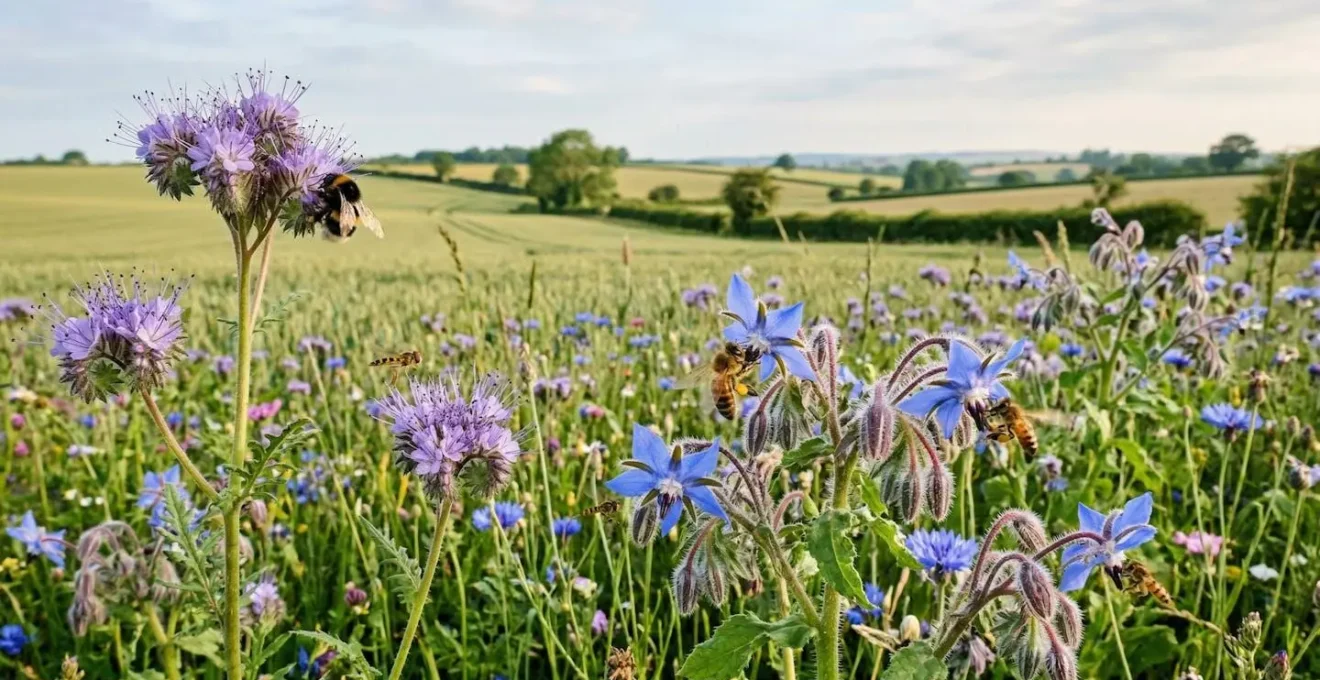
Addressing the June gap requires a strategic intervention with plant species specifically chosen for their rapid growth and intense nectar production during this critical window. Borage (Borago officinalis) and Phacelia (Phacelia tanacetifolia) are the two most effective tools for this purpose. They are not typically part of standard, slow-to-establish perennial wildflower mixes, and their inclusion must be a deliberate management choice.
Borage is exceptionally valuable due to its unique ability to replenish nectar. Astonishingly, borage refills its nectar supply in only 2 to 5 minutes, compared to the 24 hours required by most other flowers. This makes it a non-stop refueling station for bees. Phacelia, meanwhile, is a fast-growing annual that can go from seed to flower in just 6-8 weeks, producing a dense carpet of purple blooms that are highly attractive to a wide range of pollinators.
To effectively use these species, a succession sowing strategy is paramount. This is not a ‘sow and forget’ operation. For borage, you should plant every 3 to 4 weeks from the last frost into mid-summer to ensure continuous blooms. For phacelia, 2 to 3 successional sowings every two weeks through spring will extend its flowering window significantly. Seeds should be sown shallowly; borage at about 1cm deep, and phacelia merely raked into the soil surface to ensure good contact. This active, staggered management demonstrates a high level of stewardship intent to an inspector, proving you are proactively tackling the hungry gap rather than passively hoping a standard mix will suffice.
Cut and Collect or Rotational Mowing: Which Extends the Flowering Season?
A common mistake in managing wildflower margins is believing that “leaving it alone” is the best approach. In reality, unmanaged margins become rank, dominated by aggressive grasses that outcompete desirable wildflowers. The correct approach is active management, specifically rotational mowing. This technique is far superior to a simple “cut and collect” at the end of the season because it creates a mosaic of habitats and extends the flowering period.
The principle of rotational mowing is to manage different sections of the margin at different times. A key recommendation from conservation bodies is to follow a “one-third” rule. As outlined by experts like the Xerces Society, mowing about one-third of your pollinator habitat acreage per year on a rotational basis is optimal. This ensures that two-thirds of the area remains undisturbed at any given time. This unmown portion provides a crucial refuge for insects to complete their life cycles, including overwintering as eggs, larvae, or pupae within seed heads and stems.
As the image demonstrates, this creates a structural diversity that is vital for biodiversity. The mowed section will see a flush of new growth and potentially a second flowering of certain species, while the unmown section provides continuity of habitat and seed sources for the following year. When an inspector walks your margin, they are looking for this evidence of thoughtful management. A uniform, uncut, rank margin looks neglected. A rotationally managed margin, with its clear distinction between cut and uncut areas, looks professionally managed and compliant. It is essential to record your mowing dates and the sections cut in your management log as evidence.
The Sowing Depth Mistake That Stops Wildflowers Germinating
One of the most frequent and frustrating causes of wildflower margin failure is incorrect sowing depth. Unlike conventional crop seeds, many wildflower species have a specific requirement for light to trigger germination. Burying these seeds too deep is the equivalent of preventing them from ever starting. This is a crucial detail that an inspector implicitly assesses; a patchy or failed margin often points back to this fundamental error.
Most wildflower seeds are ‘light germinators’. This means they must be at or very near the soil surface to receive the light cues they need to sprout. The general rule is that a seed should not be covered by more than its own diameter. Sowing wildflower seed with a conventional drill calibrated for crops like wheat or barley is a guaranteed recipe for failure. The seed must be broadcast onto the surface of a well-prepared, firm seedbed and then rolled to ensure good seed-to-soil contact, but not buried.
The following table clarifies the critical differences in sowing requirements, a key piece of knowledge for ensuring establishment success.
| Germination Type | Light Requirement | Sowing Depth | Examples | Key Instruction |
|---|---|---|---|---|
| Light Germinators | Need light to germinate | Surface sowing or barely covered (1/8 inch max) | Poppy, Yarrow, most wildflowers | Do not bury deep – seeds won’t sprout if buried |
| Standard Depth | Light tolerant | 1/8 to 1/4 inch | Most wildflower mixes | Cover to maximum twice the diameter of seed |
| Deep Sowing (Avoid) | N/A | Over 1/4 inch | None recommended | Too deep placement is a major cause of wildflower failures |
| Source: Wildflower establishment guidelines from agricultural seed specialists | ||||
A practical method to check your work is the ‘Credit Card Test’. After sowing and rolling, you should still be able to see 10-20% of the seeds on the soil surface. If you can’t see any, they are likely too deep. If you suspect your seeds have been sown too deep, a light harrowing or raking can sometimes be a rescue mission to bring some back to the surface before the first rainfall cements them in place.
When to Walk the Margins: Self-Auditing Before the Inspector Arrives
The most effective way to ensure a successful stewardship inspection is to conduct your own rigorous self-audit several weeks prior. Adopting the mindset of an inspector allows you to identify and, where possible, rectify issues before they are officially recorded. This proactive approach demonstrates a high level of professionalism and commitment to the scheme’s objectives. Your self-audit should be a formal process, documented with notes and dated photographs that can serve as evidence of your active management.
Walking the margins is not a casual stroll; it is a systematic check for key compliance indicators and potential red flags. The inspector will be looking for a healthy, diverse stand of the intended species, but they will also be scanning for signs of neglect or poor practice. This includes checking the required width of the margin, looking for evidence of spray drift from the adjacent crop, and identifying the presence of injurious or invasive weeds.
Your goal is to see the margin through the inspector’s eyes, focusing on evidence of compliance and active management. The following checklist outlines the top red flags that an inspector will be looking for. Use it to guide your own pre-inspection walk and create an action plan for any issues you identify. This documented self-audit is powerful evidence of your stewardship intent.
Your Pre-Inspection Audit Checklist: Thinking Like an Inspector
- Check for Noxious Weeds: Identify any presence of docks, thistles, or ragwort. Document their location and any control measures you have taken (e.g., spot spraying, pulling). This proves active management, not neglect.
- Verify Margin Width: Use a measuring tape to confirm that the margin meets the required minimum width (e.g., 4m, 6m) along its entire length. Check for any crop encroachment.
- Look for Signs of Spray Drift: Examine the edge of the margin closest to the crop. Look for scorched, yellowed, or bare patches that could indicate herbicide or pesticide drift. Document these areas with photos.
- Assess Species Dominance: Is the margin being overtaken by invasive grasses or a single aggressive wildflower? Note this down. While sometimes unavoidable, having a plan to manage it in the future (e.g., changing the mowing regime) shows foresight.
- Compile Management Evidence: Gather your records. This includes seed mixture invoices, sowing dates, and a log of when and where you performed rotational mowing. A simple file with dated photos can be your most powerful tool.
Which Wildflower Mix Attracts Hoverflies to Eat Aphids in July?
While the primary goal of stewardship margins is often pollinator support, a secondary—and highly valuable—benefit is the creation of habitat for predatory insects that contribute to natural pest control. An inspector will view this integrated pest management (IPM) function as a sign of a highly successful and functional habitat. In July, as aphid populations can explode on nearby crops, attracting hoverflies becomes a key objective.
Hoverfly adults are pollinators that feed on nectar and pollen, but their larvae are voracious predators of aphids. To attract adult hoverflies, your wildflower mix must include species with small, open-faced flowers that provide easily accessible nectar. The best choices are plants from the umbellifer family, such as Wild Carrot (Daucus carota), Yarrow (Achillea millefolium), and Fennel (Foeniculum vulgare), as well as other open-flowered species like Ox-eye Daisy (Leucanthemum vulgare).
The strategy is simple: provide food for the parents, and they will lay their eggs near your crop where the larvae can feast on pests. The presence of borage, as mentioned for bridging the June gap, also plays a key role here. Comprehensive research on companion planting demonstrates that hoverflies are strongly attracted to its nectar. A single hoverfly larva can consume hundreds of aphids during its lifecycle, providing a tangible economic benefit by reducing the need for insecticide applications. When an inspector sees a margin buzzing with hoverflies in July, they see a habitat that is delivering multiple ecosystem services, which is the hallmark of a top-tier stewardship scheme.
Including these species in your mix is a strategic decision that adds a layer of functionality to your margin, creating a more compelling case for your stewardship efforts. It shows you are not just meeting the minimum requirements but are actively building a resilient farm ecosystem.
Key takeaways
- The June ‘hungry gap’ is the single most critical failure point in a pollinator stewardship plan; it must be actively managed, not ignored.
- Evidence of management (sowing dates, mowing plans, photo logs) is as important to an inspector as the physical presence of the flowers themselves.
- The focus of modern stewardship has shifted from isolated plots to demonstrating landscape-scale connectivity, linking habitats across the farm.
Why ‘Stepping Stones’ Are No Longer Enough for Natural England?
The philosophy behind stewardship schemes, particularly those guided by Natural England, has undergone a significant evolution. The old model of creating isolated patches of habitat, or ‘stepping stones’, is now considered insufficient. The scientific consensus has shifted towards promoting landscape-scale connectivity. This means the focus is now on creating a network of linked habitats that allows species to move, feed, and breed across the entire farm landscape, rather than being confined to small, fragmented islands.
An inspector is now trained to look at the bigger picture. How does your new wildflower margin connect to an existing hedgerow? Does that hedgerow connect to a beetle bank, which in turn links to a pond or a woodland edge? These connections are vital for creating resilient populations of wildlife. As the guiding principle of modern conservation states:
Isolated ‘stepping stones’ lead to genetic bottlenecks, while connected corridors create resilient ‘metapopulations’
– Ecological conservation framework, Landscape-scale conservation thinking
This concept of ‘metapopulations’—a group of spatially separated populations of the same species that interact at some level—is key. Isolated habitats are vulnerable to local extinctions from disease or environmental events. Connected habitats allow for rescue effects, where individuals from a healthy population can recolonize an area that has suffered a decline. The data supports this approach; a three-year Irish study tracking farm-scale pollinator habitat showed that a whole-farm approach led to a 56% increase in pollinator scores, demonstrating the power of connectivity over isolated plots. Therefore, your stewardship plan must now articulate how each element contributes to this wider farm network.
Connecting Hedgerows: How to Qualify for Higher Tier Stewardship Payments?
The transition from isolated plots to landscape-scale thinking is not just a philosophical shift; it is directly tied to the structure of stewardship payments, particularly at the Higher Tier. To qualify for these more substantial payments, you must demonstrate how your management actions create a cohesive and connected network of habitats across your farm. Connecting wildflower margins to hedgerows is one of the most powerful and visually obvious ways to achieve this.
A hedgerow is a permanent habitat corridor. By ensuring your wildflower margins run alongside and connect between hedgerows, you are creating a ‘super-highway’ for wildlife. This allows pollinators, predatory insects, small mammals, and birds to move safely and efficiently across the agricultural landscape. An inspector will assess this connectivity visually. Gaps in hedgerows should be targeted for planting, and new margins should be designed to link existing high-value habitats rather than being placed in isolation.
This approach is being increasingly formalised through results-based payment models, which reward farmers for the ecological outcomes they achieve, not just the actions they take. This provides a clear pathway to higher payments by delivering superior environmental results.
Case Study: The Whole Farm Pollinator Scorecard
A pioneering three-year study in Ireland worked with 40 farms to develop a “whole farm pollinator scorecard.” Farmers received points based on the amount and quality of connected, pollinator-friendly habitat they managed. The results were unequivocal: farms that focused on creating a network of habitats, rather than isolated patches, achieved significantly higher scores across all farm types (beef, dairy, mixed, and arable). This scorecard was then used to calculate results-based payments, directly linking landscape-scale connectivity to increased financial reward and justifying higher payment tiers for a more integrated, whole-farm approach.
To qualify for higher tiers, your application and your on-the-ground management must tell a story of connectivity. Map out your farm’s habitats and explicitly show how your proposed actions will enhance the links between them. This strategic vision is precisely what separates a standard stewardship agreement from a high-scoring, higher-tier plan.
With these strategies, you are not just planting flowers; you are building a resilient, compliant, and evidence-based case for your stewardship. The next logical step is to formalise your self-audit process and document your management plan today, ensuring you have a robust file of evidence ready for inspection.