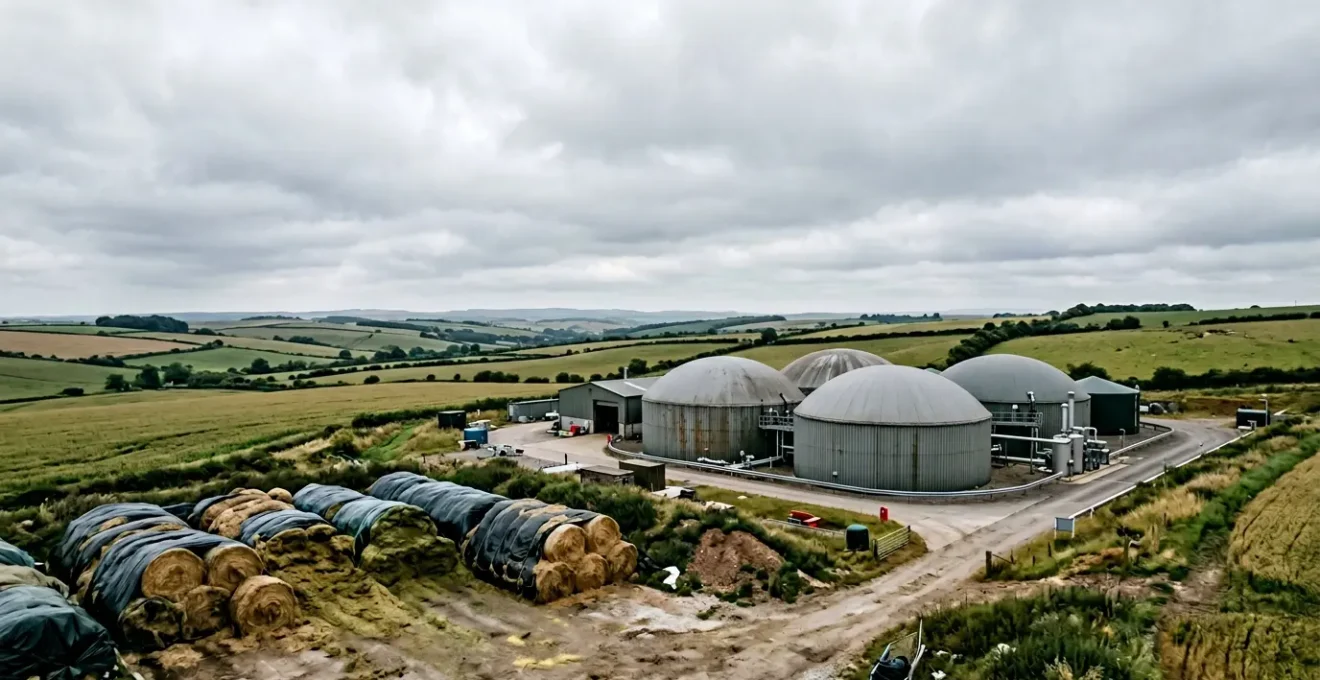
Achieving peak methane output is less about a single “best” feedstock and more about mastering the biochemical interplay between high-energy crops and nitrogen-rich supplements.
- Maize silage offers superior methane potential per tonne due to its high starch content, but its low nitrogen can destabilize the digester.
- Co-digesting with nitrogenous materials like livestock manure is not just beneficial; it’s essential for balancing the C:N ratio and preventing process inhibition.
Recommendation: Shift from a feedstock-centric view to a system-biology approach, focusing on stoichiometric balance and nutrient cycling to unlock consistent, high-efficiency biogas production.
For any Anaerobic Digestion (AD) plant operator, the central challenge remains constant: how to maximize methane yield while navigating the complex realities of feedstock cost, availability, and consistency. It is common knowledge in the industry that maize silage stands as a powerhouse, a benchmark for energy potential. Many strategies revolve around securing the highest volume of this single crop, believing it to be the most direct path to profitability. This approach, however, often overlooks the intricate biological engine at the heart of the digester.
The pursuit of raw energy density without considering the corresponding nutritional requirements of the microbial consortium is a frequent cause of process instability, including volatile fatty acid (VFA) accumulation and pH crashes. The true key to optimization lies not in simply choosing the “best” crop, but in understanding its specific biochemical profile and compensating for its limitations. The low nitrogen content of maize, for instance, is its Achilles’ heel, a factor that can cap its theoretical potential if not properly addressed through strategic co-digestion.
This guide moves beyond simplistic yield comparisons to offer a biologist’s perspective on feedstock management. We will dissect the biochemical reasons behind maize’s high performance, provide a clear protocol for managing feedstock transitions, evaluate buffer feeds for seasonal consistency, and pinpoint the critical operational errors that can kill methanogenic activity. Ultimately, we will demonstrate how closing the nitrogen loop through intelligent use of manure and digestate transforms the AD plant from a linear processor into a highly efficient, self-sustaining biological system.
This article provides a comprehensive operational framework for AD plant operators. Below is a summary of the key biological and strategic topics we will cover to help you translate feedstock potential into maximized, stable methane output.
Summary: A Strategic Guide to AD Feedstock and Nutrient Management
- Why Maize Produces More Methane Per Tonne Than Grass?
- How to Adjust Feed Rates When Switching from Maize to Rye?
- Beet or Wholecrop: Which Is the Best Buffer Feed for Winter?
- The Loading Mistake That Acidifies the Tank and Kills Methanogens
- When to Apply Digestate: Matching N Availability to Crop Needs?
- How to Acidify Slurry to Retain Nitrogen and Reduce Ammonia Emissions?
- How to Sequence Crops to Build Nitrogen for the Cash Crop Year?
- How to Close the Nitrogen Loop Using Livestock Manure Effectively?
Why Maize Produces More Methane Per Tonne Than Grass?
The superior methane yield of maize silage compared to grass silage is fundamentally rooted in its biochemical composition. Maize is a C4 plant optimized for accumulating non-structural carbohydrates, primarily starch, in its cob and stalk. During anaerobic digestion, these long-chain carbohydrates are more readily and completely hydrolyzed into simple sugars, the primary substrate for the acidogenesis and acetogenesis phases. This efficient conversion pathway leads directly to a higher production of methane precursors like acetate and hydrogen.
Quantitatively, the difference is significant. While high-quality grass silage can achieve good methane quality, typically in the range of 70-80%, its yield is limited by a higher proportion of structural carbohydrates like cellulose and hemicellulose. These lignocellulosic materials are more recalcitrant to microbial breakdown, resulting in a lower overall gas yield per unit of volatile solids (VS). In contrast, research shows maize silage can achieve a specific methane yield of up to 0.38 m³ CH₄ per kg of VS. This biochemical advantage translates directly to land-use efficiency; recent field studies demonstrate yields as high as 9,058 Nm³ of methane per hectare from dry maize silage.
However, this high energy density comes at a biological cost. Maize has a very wide carbon-to-nitrogen (C:N) ratio, meaning it is rich in energy but poor in the nitrogen required by the microbial consortium for cell synthesis and enzyme production. Without supplementation, this imbalance can lead to nutrient limitation, slowing down microbial growth and potentially destabilizing the entire process. Therefore, while maize provides more fuel, it requires careful nutritional management to unlock its full potential.
How to Adjust Feed Rates When Switching from Maize to Rye?
Transitioning between primary feedstocks, such as from maize to rye silage, is a critical operation that risks shocking the digester’s microbial ecosystem if handled incorrectly. The key principle is gradual adaptation. The acidogenic and methanogenic populations are specialized to the substrate they are fed; an abrupt change can lead to a sharp drop in gas production or, in worst-case scenarios, process failure. A structured protocol is essential for a smooth changeover.
The transition should begin by slowly introducing the new feedstock (rye) while phasing out the old one (maize) over a period of several weeks. This allows the microbial kinetics to adjust. During this period, intensified monitoring of key process parameters is non-negotiable. This includes tracking shifts in pH, alkalinity, and, most importantly, the concentration of Volatile Fatty Acids (VFAs). A spike in VFAs indicates that the acid-producing bacteria are out-pacing the methane-producing archaea, a primary symptom of process imbalance.
Furthermore, the different nutritional profiles must be managed. Maize’s low nitrogen content often requires supplementation. As rye is introduced, which may have a different nitrogen profile, the operator must track the ammonium nitrogen (NH4-N) concentration to ensure it remains within the optimal, non-inhibitory range. This systematic approach allows the biology to adapt, maintaining stable and efficient biogas production throughout the transition.
Action Plan: Protocol for Feedstock Transition
- Initiate Gradual Substitution: Begin by replacing a small percentage (e.g., 10-15%) of the maize silage with the alternative substrate, such as rye silage, and increase this proportion incrementally over several weeks.
- Monitor Nitrogen Balance and Alkalinity: Track NH4-N concentration and pH daily. Maize’s low alkalinity often requires buffering; adjust dosing of agents like brewery sludge as the new, potentially more acidic, feedstock is introduced.
- Track Volatile Fatty Acid (VFA) Levels: Closely monitor VFA concentrations. A rapid increase signals that the rate of hydrolysis and acidogenesis is exceeding the capacity of the methanogens, requiring a pause or reduction in the transition rate.
- Observe Biogas Quality and Volume: Monitor methane content (CH4%) and total gas volume. A significant drop indicates stress on the methanogenic population, signaling the need to slow the rate of change.
- Allow for Full Microbial Adaptation: Do not rush the process. A full and stable transition can take four to six weeks, allowing the microbial consortium to fully adapt its enzymatic machinery to the new substrate composition.
Beet or Wholecrop: Which Is the Best Buffer Feed for Winter?
Selecting an effective buffer feed for winter is crucial for maintaining consistent gas production when the availability of primary silages may be limited. The choice between fodder beet and wholecrop cereals (like rye or triticale) depends on a combination of factors including geographic location, storage logistics, and the specific performance characteristics of the feedstock. Both options offer distinct advantages for stabilizing a digester’s diet during colder months.
Fodder beet and sugar beet are exceptionally energy-dense, containing readily available sugars that provide a rapid boost to biogas production. This rapid fermentation can be highly beneficial for maintaining digester temperature and activity in winter. In fact, laboratory-scale experiments confirm that co-digesting sugar beet with grass silage can nearly double the methane production rate from 0.14 to 0.27 lN/kg VS/h. However, root crops present logistical challenges; they are heavy, contain significant soil contamination that can accelerate pump wear, and require specialized chopping equipment. Furthermore, their frost tolerance is a major consideration, with fodder beet generally being more resilient than sugar beet in northern climates.
Wholecrop silage, on the other hand, offers a more fibrous and structurally similar alternative to grass or maize silage, making it easier to handle with standard equipment. It provides a slower, more sustained release of energy, which can contribute to a more stable fermentation process, avoiding the rapid acid production that can sometimes occur with high-sugar feedstocks. The decision often comes down to a strategic blend.
Case Study: Stracathro Estate’s Year-Round Feedstock Strategy
To ensure stable, year-round operation of its AD plant, which consumes 110 tonnes of feed daily, the Stracathro Estate in Scotland employs a diversified winter feedstock strategy. The diet combines 35 tonnes of wholecrop rye with 40 tonnes of grass silage. The estate grows fodder beet specifically for its superior frost tolerance, which is critical for their northern location. After observing gas production drops with other strategies, the estate found that incorporating root crops as a buffer feed was key to stabilizing biogas output throughout the challenging winter months, demonstrating the power of a blended approach.
The Loading Mistake That Acidifies the Tank and Kills Methanogens
The single most catastrophic and common operational error in anaerobic digestion is organic overloading. This occurs when feedstock is added to the digester at a rate that exceeds the processing capacity of the microbial ecosystem. While seemingly a simple way to increase output, it initiates a destructive biochemical cascade that leads to process souring, a condition where the digester’s pH plummets, inhibiting or even killing the vital methanogenic archaea.
The process begins with the first two stages of digestion: hydrolysis and acidogenesis. When an excess of readily digestible substrate is introduced, the hydrolytic and acidogenic bacteria populations explode, rapidly converting carbohydrates into Volatile Fatty Acids (VFAs) like acetic, propionic, and butyric acid. This is the “acid crash.” The methanogens, which are responsible for converting these VFAs into methane, have much slower growth kinetics and a narrower tolerance for environmental changes. They simply cannot keep up with the sudden flood of acidic intermediates.
As VFAs accumulate, they overwhelm the digester’s natural buffering capacity (alkalinity), causing a sharp drop in pH. Methanogens are extremely sensitive to pH; most species function optimally in a narrow range of 6.8 to 7.4. Once the pH drops below 6.5, their metabolic activity is severely inhibited. Below a pH of 6.0, the environment becomes toxic, leading to widespread population death. At this point, methane production ceases, and the digester has soured. Recovering from such an event is a slow and costly process, often requiring a complete system flush and re-inoculation. Therefore, adhering to a calculated Organic Loading Rate (OLR), specific to the feedstock type and digester volume, is not just a best practice—it is the fundamental rule for preventing biological collapse.
When to Apply Digestate: Matching N Availability to Crop Needs?
The effective use of digestate as a biofertilizer is the cornerstone of a circular AD economy, but its value is entirely dependent on timing. The nitrogen within digestate exists primarily in two forms: a readily plant-available mineral form (ammonium, NH4-N) and a slow-release organic form. Applying digestate at the right moment in the crop’s growth cycle is essential to synchronize this nutrient availability with the plant’s peak demand, maximizing uptake and minimizing losses to the environment.
Applying digestate too early, long before the crop’s rapid growth phase, risks losing the valuable ammonium nitrogen through leaching or volatilization. Applying it too late means the crop may have already passed its window of peak nutrient demand, resulting in a suboptimal yield response. For a high-demand crop like maize, this means application should be timed as closely as possible to the period of rapid vegetative growth, which typically occurs several weeks after sowing.
Field studies consistently demonstrate the profound impact of well-timed digestate application. A three-year study in Serbia that evaluated the effects of applying 50 tonnes/ha of digestate before maize sowing found that it significantly influenced all measured parameters. The research highlighted a direct positive correlation between the digestate application and key outcomes like plant height, total biomass yield, and, consequently, the potential biogas and methane yield from the subsequent harvest. This demonstrates a powerful feedback loop: using the output of the AD process correctly directly enhances the quality and quantity of the next generation of feedstock, closing the nutrient cycle efficiently.
How to Acidify Slurry to Retain Nitrogen and Reduce Ammonia Emissions?
Anaerobic digestion significantly alters the nitrogen composition of organic wastes like livestock slurry. The process mineralizes organic nitrogen into ammonium (NH4-N), a form readily available to plants. However, this ammonium exists in a chemical equilibrium with ammonia (NH3), a volatile gas. At the typically alkaline pH of digestate and slurry (often pH 8.0 or higher), this equilibrium shifts heavily towards the formation of ammonia gas, leading to significant nitrogen loss to the atmosphere during storage and field application. Data shows this concentration effect can be dramatic; operational data from full-scale biogas plants shows that NH4-N concentration can increase from below 1,600 mg/L to almost 4,500 mg/L during co-digestion.
Slurry acidification is a direct and effective technology to counteract this loss. The process involves adding a strong acid, most commonly sulfuric acid (H2SO4), to the slurry or digestate to lower its pH to around 6.0. By lowering the pH, the chemical equilibrium is shifted decisively back towards the stable, non-volatile ammonium ion (NH4-N). This “traps” the nitrogen in the liquid, where it remains available for crop uptake rather than escaping into the air as ammonia pollution.
This technique offers a dual benefit: it drastically reduces harmful ammonia emissions, which contribute to air pollution and ecosystem damage, while simultaneously increasing the fertilizing value of the slurry. More of the nitrogen produced in the digester actually reaches the crop root zone. While the process requires investment in acid-resistant storage and application equipment, the return on investment comes from both improved crop yields and a reduced need for purchasing synthetic nitrogen fertilizers, making it a key technology for optimizing the nutrient loop in an integrated AD and farming system.
Key Takeaways
- Feedstock choice is a balance; maize offers high energy but requires nitrogen supplementation, while grasses or wholecrops can provide stability and better C:N ratios.
- Operational discipline is paramount. Gradual feedstock transitions and strict adherence to a calculated Organic Loading Rate (OLR) are essential to prevent biological crashes.
- Closing the nutrient loop is not an afterthought. Effective digestate management and nitrogen retention techniques like slurry acidification directly boost farm-level efficiency and reduce reliance on synthetic fertilizers.
How to Sequence Crops to Build Nitrogen for the Cash Crop Year?
An advanced AD operation integrates its feedstock production directly into a multi-year crop rotation plan designed to optimize not only biogas yield but also soil health and nutrient cycling. Rather than viewing energy crops in isolation, they are sequenced strategically to prepare the ground for subsequent cash crops by managing nutrient levels, particularly nitrogen. This approach transforms the AD plant from a consumer of crops into an integral part of a regenerative agricultural system.
The core principle is to use a diverse range of energy crops with different growing seasons and nutrient profiles. For instance, a rotation might involve lifting a beet crop by late March, followed immediately by drilling spring oats or a mix of spring triticale and a nitrogen-fixing legume like clover. This “catch crop” not only provides additional feedstock for the digester but also keeps the soil covered, prevents nutrient leaching, and, in the case of legumes, actively builds soil nitrogen for the following season. As agricultural research conducted in Scotland found that the highest methane yields per hectare are derived from maize, hybrid winter rye, and energy beet, these can be rotated as the primary energy harvest, with other crops sequenced around them.
This integrated system also leverages the AD plant’s outputs. Solid digestate, rich in phosphate and potassium, can be applied pre-sowing to build soil fertility. The liquid fraction, rich in ammonium nitrogen, is then applied with precision during the growing season. This strategy, as demonstrated by the Stracathro Estate, allows crops to maintain a healthier green color for longer without the sudden “flush” from high synthetic nitrogen rates that can increase disease vulnerability. By sequencing crops and recycling nutrients, the entire farm system becomes more resilient and less reliant on external inputs.
How to Close the Nitrogen Loop Using Livestock Manure Effectively?
For an AD plant running on high-energy, low-nitrogen feedstocks like maize silage, livestock manure is not merely a waste product to be managed; it is the single most critical co-substrate for achieving stable, high-efficiency digestion. The effective use of manure is the key to closing the nitrogen loop, solving the inherent biochemical deficiencies of energy crops and unlocking superior performance from the entire system.
As established, maize’s wide C:N ratio poses a significant challenge to microbial health. Manure perfectly counteracts this with its high concentration of nitrogen, particularly ammonium, as well as a rich diversity of essential micronutrients and trace elements. Adding manure to the feedstock mix provides the microbial consortium with all the building blocks it needs for robust growth and enzymatic function. This leads to a more stable process, better capable of handling variations in organic loading. The performance improvements are not theoretical; they are substantial and measurable. For instance, comparative reactor studies reveal that co-digesting dairy manure with maize silage can provide a 116% increase in specific biogas production, while improving the destruction of volatile solids by over 14%.
This synergistic relationship is best summarized by biological research into the process. As one research team explains, the instability of pure maize digestion is a known issue that requires a specific solution:
Maize silage’s low nitrogen content causes anaerobic digestion to be unstable. Anaerobic process stabilization can be achieved using alkali or complementing substrates with a greater amount of nitrogen (for example, surplus sludge from a wastewater treatment plant or manure).
– Research team, Environment, Soil, and Digestate Interaction of Maize Silage and Biogas Production
By viewing manure as a vital process input rather than a waste output, operators can transform their digester’s performance, creating a resilient, highly productive, and truly circular system.
To implement these advanced strategies, the next logical step is to conduct a full audit of your current feedstock mix, nutrient flows, and operational protocols to identify key areas for optimization.