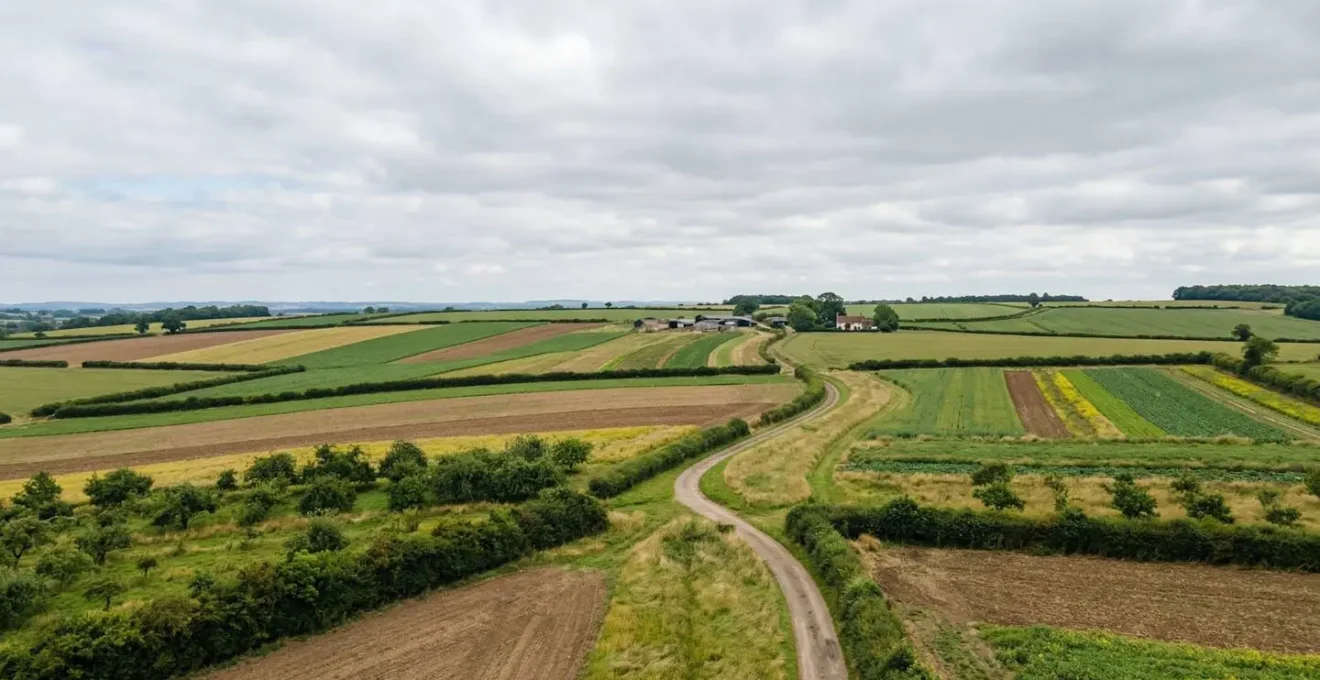
The end of BPS is not a crisis, but a critical opportunity to build a more resilient and profitable farm business by shifting from subsidy dependence to a strategic agroecological model.
- Stacking SFI actions intelligently can generate a new, reliable revenue stream that often exceeds previous BPS payments.
- Focusing on soil biology as a productive asset actively reduces your largest variable costs, particularly synthetic nitrogen.
- Strategic diversification and machinery cooperation directly tackle fixed costs and open new, high-margin markets.
Recommendation: Begin by auditing your nitrogen spending and mapping out a simple, 3-action SFI stack; these are the first steps to de-risking your business and securing its future.
The phasing out of the Basic Payment Scheme (BPS) feels like the ground shifting beneath your feet. For years, it was a predictable, if sometimes frustrating, part of the annual budget. Now, that certainty is gone, replaced by anxiety over volatile input prices and the pressing question of how to fill a significant hole in your farm’s income. Many farmers are looking at the array of new Environmental Land Management schemes (ELMS) and feeling overwhelmed, seeing more bureaucracy than business opportunity. The temptation is to trim costs, hunker down, and hope for the best.
The conventional wisdom suggests tightening the belt, maybe trying a small SFI option here and there, and continuing with the system you know. But this approach only papers over the cracks. It leaves your business exposed to the same price shocks for fertiliser, fuel, and feed that have eroded margins for years. What if the real solution isn’t just to survive without BPS, but to build a fundamentally stronger, more profitable business that doesn’t need to rely on subsidies in the first place?
This is where agroecology stops being an environmental buzzword and becomes a hard-nosed business strategy. The key is to stop thinking about your farm as a simple input-output machine and start seeing it as a complex asset. This guide is your financial playbook for that transition. We will not be talking about vague ecological benefits; we will be talking about pounds and pence. We will break down how to replace, and even exceed, your lost BPS income by strategically cutting hidden costs, stacking new revenue streams, and managing the transition like the critical business project it is.
This article provides a step-by-step financial breakdown for a 200-hectare arable farm, demonstrating how to make agroecology your most profitable asset. From the real cost of nitrogen to the art of SFI stacking and smart diversification, we will explore the practical levers you can pull to build a resilient and financially secure future for your farm.
Summary: Your Financial Playbook for Post-BPS Profitability
- Why Conventional Nitrogen is Costing You £50 More Per Acre Than Nature-Based Alternatives?
- How to Stack SFI Actions to Fund Your Agroecological Transition Without Red Tape?
- Red Tractor vs Soil Association: Which Badge Adds More Value to Agroecological Produce?
- The Yield Dip Mistake That Bankrupts Farms in the First 3 Years of Transition
- How to Reduce Fixed Machinery Costs by 20% Through Cooperative Agroecology?
- Vegetable Box Scheme or Cut Flowers: Which Has the Lowest Startup Cost?
- Why Bacteria and Fungi Are the Engine of Nutrient Cycling?
- Which Diversified Model Yields the Best ROI for Smallholdings Under 50 Acres?
Why Conventional Nitrogen is Costing You £50 More Per Acre Than Nature-Based Alternatives?
The biggest line item in many arable budgets, synthetic nitrogen, is often seen as a non-negotiable cost of production. However, from a purely financial perspective, it’s a liability with a hidden, compounding cost. The price you pay per tonne is only the beginning. You must also factor in the fuel for application, the carbon footprint, and most importantly, the damage it does to your farm’s greatest asset: the biological engine in your soil. Synthetic nitrogen applications can suppress the very soil life that would otherwise provide nutrients for free.
The numbers show a clear path to savings. Many farmers find it hard to believe, but a Minnesota farm business analysis provides a stark lesson. It revealed that the least profitable corn farms were spending 15-30% more on fertilizer than their most profitable counterparts. An analysis of the data found that less profitable farms spent 33% more per acre on fertilizer for corn in a single year. These farms weren’t getting higher yields; they were simply over-applying, using premium products without validation, and eroding their own margins.
This is the cost-of-nitrogen fallacy in action. By contrast, building a system that fosters natural nitrogen fixation and nutrient cycling isn’t just an ecological goal; it’s a direct route to higher profitability. Integrating practices like diverse crop rotations with legumes can drastically cut your reliance on bagged fertiliser. The transition requires careful management, but the end goal is a system where your soil works for you, turning a significant variable cost into a sustainable, on-farm asset. The financial prize is not just the £50 per acre you might save on inputs, but the increased resilience and stability of your entire farm business.
How to Stack SFI Actions to Fund Your Agroecological Transition Without Red Tape?
The Sustainable Farming Incentive (SFI) is the primary tool DEFRA has provided to replace BPS, but many farmers view it with suspicion, seeing a complex menu of options with low payment rates. The key to unlocking its financial potential is to stop thinking about it as a replacement for BPS and start thinking of it as a new enterprise on your farm. The strategy is “revenue stacking”—intelligently combining multiple SFI actions on the same parcels of land to create a significant, reliable income stream.
This isn’t theoretical. A case study of the fourth-generation Claydon farm in Suffolk shows the power of this approach. Across their 255-hectare farm, they strategically stacked several no-till and soil health actions. As reported by Farmers Weekly, by combining options like catch crops, companion crops, and cover crops within their rotation, they generated an annual SFI income of £88,995. This averages out to £349 per hectare—a figure that is not just a useful top-up, but a core part of the farm’s profitability, directly funding their transition to a more resilient system.
The potential is significant across different farm sizes. An AHDB analysis shows that farm businesses can generate substantial additional revenue through smart stacking. The secret, as the Claydon family emphasizes, is simplicity. You build the agreement around what your farm can deliver repeatedly with straightforward record-keeping. The goal is to choose a combination of actions that complement your existing rotation and business goals, turning compliance into a cash-flow-positive activity. For a 200-hectare (approx. 500-acre) farm, a well-designed stack of 3-5 complementary actions can realistically generate between £20,000 and £50,000 annually, turning the loss of BPS into a net financial gain.
Red Tractor vs Soil Association: Which Badge Adds More Value to Agroecological Produce?
As you reduce inputs and change your farming system, you will inevitably create a product that is different from, and arguably superior to, conventionally farmed produce. The question then becomes: how do you capture that added value in the marketplace? Certification is a key part of the answer, but choosing the right scheme is a critical business decision. For most UK farmers, the choice boils down to the widely recognised Red Tractor scheme versus the premium-focused Soil Association organic standard.
They serve very different purposes. Red Tractor is the baseline for most major UK retailers. It is a robust assurance scheme focused on traceability, food safety, and meeting a set of environmental and welfare standards. For many, it’s a license to operate and supply the mass market. However, it doesn’t inherently command a price premium for the farmer, as it’s the expected standard.
The Soil Association, on the other hand, is the gateway to the organic market. It prohibits synthetic inputs, mandates higher welfare standards, and focuses on a holistic, whole-farm approach to sustainability. This badge allows access to a premium market where customers are willing to pay more for the assurance of how their food was produced. However, it comes with stricter rules, a potentially more arduous transition period, and a smaller, more niche market.
The following table, based on analysis from consumer group Which?, breaks down the key differences to help you decide which path aligns with your business goals.
| Certification Aspect | Red Tractor | Soil Association (Organic) |
|---|---|---|
| Farming Systems Covered | Indoor and outdoor systems | Outdoor and free-range only |
| Primary Focus | Food safety, traceability, environmental protection | Organic standards, animal welfare, environmental sustainability |
| Synthetic Inputs | Permitted with restrictions | Prohibited (no synthetic pesticides or fertilizers) |
| Space Allowances | Aligns with legal minimum | More generous than legal requirements |
| Confinement Systems | Farrowing crates permitted | Farrowing crates prohibited |
| Market Position | Largest UK assurance scheme, required by most major retailers | Premium positioning, higher price point potential |
| Scope | Full supply chain (farm to pack) | Holistic farm system including soil health, biodiversity |
The decision is strategic: is your goal to produce efficiently for the mainstream market with a trusted badge (Red Tractor), or to invest in a system that unlocks a premium price point by appealing to a dedicated consumer base (Soil Association)? For many transitioning farms, a “Red Tractor Plus” approach, where you exceed the baseline standards through agroecological practices but don’t commit to full organic conversion, can be a pragmatic and profitable middle ground, as explained by analysis from consumer experts.
The Yield Dip Mistake That Bankrupts Farms in the First 3 Years of Transition
The single greatest fear for any farmer considering a move away from a high-input system is the “yield dip.” It’s the transitional period, typically in the first one to three years, where the soil’s biological function hasn’t fully recovered from years of chemical inputs, but those inputs have been withdrawn. Yields can drop, and if not managed properly, this can create a cash-flow crisis that puts the entire farm business at risk. This is the transition chasm, and navigating it is the most critical part of the entire process.
The mistake that bankrupts farms is treating it as an agronomic problem alone. It is, first and foremost, a financial planning problem. You must budget for a potential, temporary drop in output. This means building resilience into your business plan *before* you make the first change in the field. The SFI stacking strategy discussed earlier is not just a bonus; it’s your primary financial buffer. The reliable, non-market-correlated income from SFI is what allows you to invest in your soil’s long-term health without facing a short-term financial crunch.
The goal during this period is not to maximize yield at all costs, but to accelerate the rebuilding of your soil’s natural fertility. This is where your focus must shift from chemistry to biology. Practices like multi-species cover cropping, incorporating livestock (if possible), and reducing tillage are not just about ticking SFI boxes; they are direct investments in the microbial workforce that will ultimately restore and sustain your yields. You are feeding the soil biology so it can feed your cash crops.
Viewing this phase through a financial lens changes everything. The money you don’t spend on synthetic fertiliser is re-invested in high-quality, diverse cover crop seed. The SFI payments you receive are the salary that pays for this long-term capital improvement project. By planning for the dip and using SFI to fund the recovery, you turn a period of high risk into a calculated, strategic investment in your farm’s most valuable asset: its soil. This reframes the yield dip from a threat into a manageable, temporary cost of building a more profitable and resilient system.
How to Reduce Fixed Machinery Costs by 20% Through Cooperative Agroecology?
As you shift your farming system, your machinery needs will change. An agroecological approach often requires specialised equipment, such as a direct drill or a crimper roller for cover crops, which can represent a daunting capital investment. At the same time, some of your existing heavy cultivation machinery may become redundant. This presents a major challenge to a farm’s fixed costs, but also a significant opportunity for savings through cooperation.
Machinery rings and sharing agreements are not new concepts, but they take on a new power in an agroecological context. When a group of local farmers are all transitioning to similar systems, the demand for specific, high-cost equipment becomes shared. A £100,000 direct drill is a huge liability for one 200-hectare farm; for a cooperative of five local farms, it becomes an affordable, highly efficient shared asset. This approach can realistically reduce individual capital outlay and ongoing fixed machinery costs by 20% or more.
However, successful cooperation hinges on clear, legally sound agreements. Informal arrangements based on a handshake can quickly lead to disputes over liability, maintenance, and scheduling during critical weather windows. A formal agreement is not about mistrust; it’s about professionalism and ensuring the smooth operation of a shared business asset. It protects all members and ensures the long-term viability of the cooperative.
Below is a checklist of essential points that must be included in any machinery-sharing agreement to ensure it is robust, fair, and effective. These points are critical for turning a potential source of conflict into a powerful tool for cost reduction.
Your action plan for a machinery sharing agreement
- Establish a clear liability framework: Define responsibility for damage, breakdowns, and third-party incidents with appropriate insurance coverage requirements for all cooperative members.
- Implement a GPS-tracked hour-logging system: Use digital tracking to ensure accurate, transparent billing based on actual machine usage hours across all member farms.
- Create maintenance schedules and responsibilities: Set clear protocols for routine servicing, repairs, and who bears costs for wear-and-tear versus negligence-related damage.
- Define a dispute resolution process: Establish a structured mediation procedure and decision-making framework to resolve conflicts between cooperative members without litigation.
- Set booking and priority systems: Develop fair scheduling protocols that account for seasonal peaks, weather windows, and equitable access during critical farming periods.
By formalising the arrangement, farmers can unlock significant savings, gain access to the best technology without the full capital burden, and build a stronger, more collaborative local farming community. It’s a strategic move that directly impacts the bottom line.
Vegetable Box Scheme or Cut Flowers: Which Has the Lowest Startup Cost?
Diversification is a powerful tool, but it can be intimidating. The key is to start with a “pilot project” on a small area of your 200-hectare farm—perhaps a single hectare or two—to test a model before scaling. Two popular and potentially high-margin options are a vegetable box scheme and a cut flower enterprise. From a purely financial perspective, the crucial question is: which has the lowest barrier to entry in terms of startup costs?
A cut flower business often presents the lower initial capital outlay. The primary costs are seeds/plugs, soil preparation, and perhaps some simple low-tunnels for season extension. A basic startup on one acre could be achieved for under £5,000, assuming you have existing access to water. The business model is simple: you sell high-value, perishable goods directly to consumers (farm gate, farmers’ markets) or to local florists. The challenges are the intense seasonality, high labour requirement during peak season, and the need for good marketing to build a customer base.
A vegetable box scheme has a higher potential for year-round revenue but also typically requires a greater initial investment. To provide the variety customers expect, you’ll need a wider range of crops, which means more seeds and potentially more complex planting schedules. The biggest cost difference is often infrastructure. To guarantee a consistent supply, one or two commercial-scale polytunnels are almost essential, representing an upfront cost that could be anywhere from £10,000 to £20,000. You also have the added complexity of managing harvesting, packing, and delivery logistics.
Here’s a simplified cost comparison for a one-acre pilot project:
- Cut Flowers (Startup Year 1):
- Seeds & Plugs: £1,500 – £2,500
- Soil amendments/compost: £500
- Irrigation setup (drip tape): £500
- Basic tools & harvesting equipment: £300
- Estimated Total: £2,800 – £3,800
- Veg Box Scheme (Startup Year 1):
- Seeds & Plants (diverse range): £1,000 – £2,000
- Commercial Polytunnel (14ft x 42ft): £5,000 – £8,000
- Irrigation & Bed Preparation: £1,000
- Packing materials & basic software: £500
- Estimated Total: £7,500 – £11,500
From a startup cost perspective, cut flowers are the leaner option. They allow you to test a direct-to-consumer model with less upfront financial risk. A successful flower pilot can generate the cash flow and business experience needed to later invest in a more complex vegetable operation if desired.
Why Bacteria and Fungi Are the Engine of Nutrient Cycling?
For decades, conventional farming has operated on a simple principle: if a crop needs a nutrient, you apply it from a bag. This approach, while effective in the short term, completely ignores the powerful, free-of-charge workforce living in your soil. The most profound shift in an agroecological system is moving from feeding the plant to feeding the soil life that feeds the plant. This biological engine is primarily driven by bacteria and fungi.
Think of your soil not as dirt, but as a bustling underground city. In this city, bacteria are the primary decomposers. They break down simple organic matter, like the residues from a cover crop, and in doing so, they “mineralise” nutrients. This means they convert nutrients like nitrogen, phosphorus, and sulphur from a form that is locked away in organic matter into a soluble, plant-available form. They are, in effect, microscopic fertiliser factories.
If bacteria are the factories, then fungi, particularly mycorrhizal fungi, are the distribution network. These fungi form a symbiotic relationship with the roots of most cash crops. They create a vast, intricate web of fine threads called mycelium that extend far beyond the reach of the plant’s own roots. This network acts as a superhighway, actively exploring the soil, mining for nutrients like phosphorus and water, and delivering them directly to the plant’s root system. In exchange, the plant provides the fungi with carbon (sugars) from photosynthesis. It’s a perfect partnership.
Why does this matter for your farm’s P&L? Because a healthy, functioning biological engine directly reduces your input costs. A soil rich in fungal networks is more efficient at accessing and cycling nutrients, meaning you need to apply less from external sources. A diverse bacterial community ensures a steady supply of nitrogen. Practices like reduced tillage, keeping the soil covered, and increasing plant diversity are not just environmental nice-to-haves; they are direct investments in the efficiency and productivity of this underground workforce. When you foster this engine, you are actively turning a cost centre (fertiliser) into a self-renewing farm asset.
Key takeaways
- The end of BPS is a financial trigger to re-evaluate your business model, not just your costs.
- Strategic SFI stacking is a new enterprise that can generate reliable, five-figure annual revenue on a 200ha farm.
- Managing the “yield dip” is a cash-flow challenge that can be fully mitigated with the income from SFI payments.
Which Diversified Model Yields the Best ROI for a Large Arable Farm?
While the previous sections focused on optimising the core arable business, true long-term resilience comes from building multiple, independent income streams. For a 200-hectare farm, diversification isn’t about replacing the main enterprise but adding profitable, complementary businesses that make use of your existing assets: land, buildings, and location. The question isn’t just what you can do, but which model delivers the best return on investment (ROI) for the capital and time you put in.
The title of this section mentions smallholdings, but the principle is scalable. The best approach for a larger farm is to think like a venture capitalist: pilot small, learn fast, and scale what works. Instead of converting 50 acres at once, dedicate 5 acres to a high-potential pilot.
Let’s compare three models based on their ROI potential for a larger arable unit:
- Direct-to-Consumer (D2C) Farm Shop: This has a high ROI potential but also a significant upfront investment in a retail building, commercial kitchen, and staffing. Its success is heavily dependent on location (passing trade) and marketing. ROI can be excellent (>20%) if you capture the full retail margin on your own produce and that of other local suppliers, but the initial capital can exceed £100,000.
- Agri-Tourism / Glamping: This model leverages your landscape asset. Setting up a small, high-spec glamping site (e.g., 5-10 pods or bell tents) has a lower capital cost than a full farm shop, often in the £50,000 – £80,000 range. It taps into the high-demand “staycation” market. ROI is strong as the primary inputs are land and scenery, but it requires a very different skill set in hospitality and online booking management.
- High-Value Niche Production: This involves dedicating a small acreage to a product with a very high value per hectare, such as viticulture (vineyard), speciality mushrooms, or even renewable energy (solar farm). The initial investment varies wildly, from moderate for mushrooms to extremely high for a vineyard or solar. The ROI is long-term. A vineyard, for example, won’t see a return for 5-7 years, but can be extremely profitable once established. This is a long-term capital appreciation play, rather than a short-term cash flow generator.
For a typical 200-hectare arable farm, the most balanced ROI proposition is often agri-tourism. It requires a moderate investment, leverages an existing asset (your landscape), and can be started as a small pilot project. It provides a completely separate income stream that is not correlated with commodity prices or farming subsidies, which is the ultimate goal of strategic diversification. It diversifies your farm’s income portfolio, making the entire business stronger and more resilient.
The end of the Basic Payment Scheme is a pivotal moment for UK agriculture. By viewing agroecology not as an environmental obligation but as a sophisticated business strategy, you can move from a position of subsidy dependence to one of financial strength and resilience. The steps are clear: systematically replace input costs with biological assets, stack SFI actions into a new profit centre, manage the transition with a clear financial buffer, and strategically diversify to build multiple income streams. This is the playbook for a profitable, secure, and independent future for your farm business. To put these strategies into practice, the logical next step is to conduct a detailed financial analysis of your own operation to identify the most impactful first move.