In summary:
- Shift from selling produce to building a community investment narrative to combat winter ‘root fatigue’.
- Use strategic pricing models, like annual prepayments, to leverage member psychology and significantly increase retention.
- Transform winter logistics from a challenge into a premium brand experience through thoughtful packaging and delivery options.
- Diversify your offering with low-cost, high-value add-ons like preserves, flowers, or partner products to enhance box value.
- Strengthen the farmer-member connection through storytelling and consistent communication to build deep, lasting loyalty.
As a CSA manager, you know the rhythm of the seasons all too well. Spring brings enthusiasm and a flood of new sign-ups. Summer is a bounty of abundance. Then comes the chill of January and February, and with it, the dreaded “root fatigue.” Suddenly, the excitement for fresh, local food wanes as boxes fill with another round of cabbage, potatoes, and parsnips. This is the moment we see membership numbers dip, and the hard work of building our community feels like it’s slipping away. Many of us react by simply trying to find more “interesting” vegetables or sending out a generic recipe, but these are often short-term fixes for a deeper problem.
The common advice to “offer more variety” or “communicate more” often misses the strategic core of winter retention. The challenge isn’t just about the contents of the box; it’s about the perceived value and the member’s emotional connection to the farm during the leanest months. The real opportunity lies in reframing the entire winter experience. What if the key to keeping members wasn’t just fighting the limitations of the season, but embracing them as part of an authentic story? What if we could transform logistical hurdles into moments of delight and use member psychology to build unbreakable loyalty?
This guide moves beyond the platitudes. We will explore a community-focused, strategic approach to not just survive the winter churn but to thrive in it. We’ll deconstruct the psychology behind cancellations, explore financial models that foster commitment, and turn every touchpoint—from the email newsletter to the box on the doorstep—into a powerful retention tool. This is about building a system where our members feel less like customers and more like essential partners in our farm’s journey, especially when the fields are cold and the harvests are humble.
To navigate these challenges effectively, we’ve broken down the core strategies into distinct areas of focus. This article will guide you through the psychology of winter churn, practical ways to enhance your offering, and the financial and operational decisions that have the biggest impact on member loyalty.
Contents: How to Master Winter Member Retention
- Why the ‘Root Fatigue’ in February Causes 30% of Cancellations?
- How to Include Stored Fruit or Preserves to Sweeten the Winter Box?
- Monthly Subscription or Pay-As-You-Go: Which Retains Members Longer?
- The Logistics Mistake That Freezes Veg on the Doorstep
- When to Send Recipes: The Sunday Email That Reduces Food Waste
- Why Shoppers Pay 20% More When They Know the Farmer’s Name?
- Vegetable Box Scheme or Cut Flowers: Which Has the Lowest Startup Cost?
- Which Diversified Model Yields the Best ROI for Smallholdings Under 50 Acres?
Why the ‘Root Fatigue’ in February Causes 30% of Cancellations?
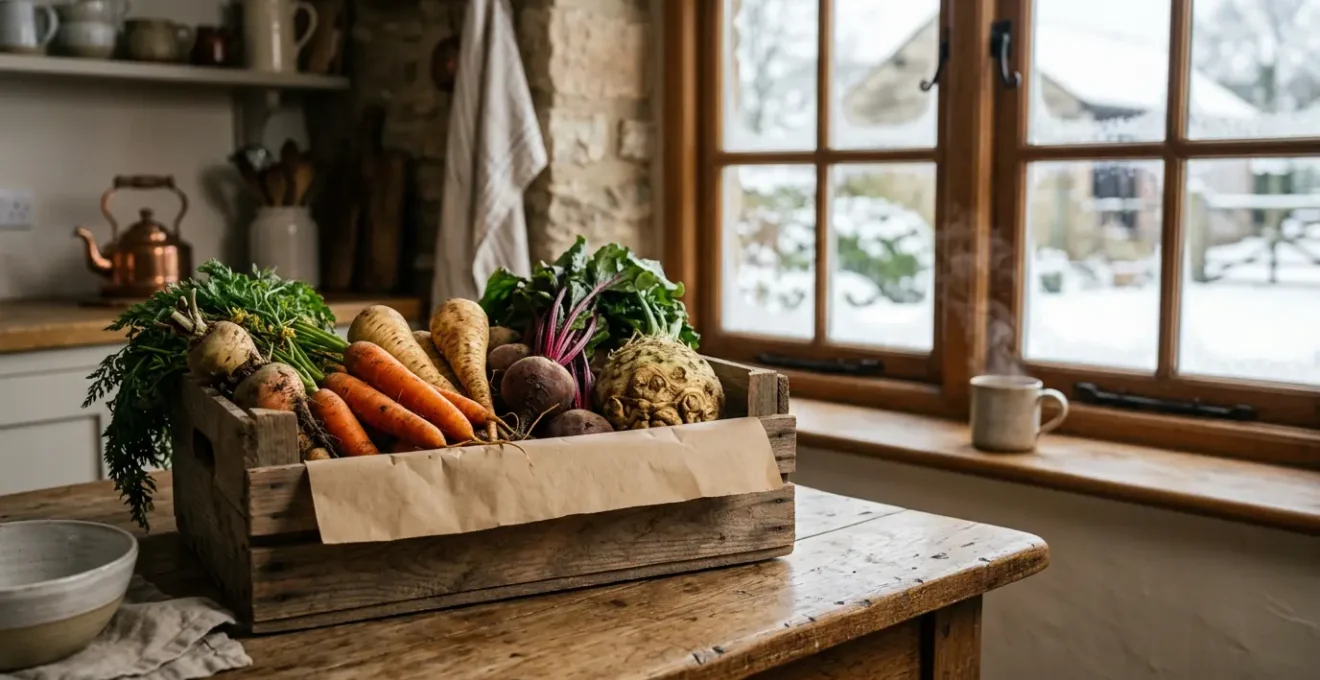
The February slump is a familiar and frustrating reality for many CSA managers. After the festive period, a combination of waning New Year’s resolutions and a monotonous stream of root vegetables leads to what we call ‘root fatigue’. This isn’t just a feeling; it’s a primary driver of customer churn. Members who were thrilled with vibrant summer tomatoes and crisp lettuces can feel uninspired by their tenth consecutive week of parsnips and cabbage. They begin to question the value of their subscription when they see more variety in the supermarket aisles. This perceived lack of diversity, coupled with the end of the initial excitement, creates a critical decision point for members.
The numbers confirm this trend is a major threat to a CSA’s stability. A Small Farm Central survey highlighted that the average CSA has a challenging 46.1% customer retention rate, meaning nearly half of all members are lost year-over-year. A significant portion of these cancellations are clustered in the late winter months. The core issue is a psychological disconnect. Members join with an idealised vision of farming, but the reality of seasonal eating in a temperate climate can be jarring. Our job as community managers is to bridge this gap, not by magically producing out-of-season crops, but by managing expectations and reframing the narrative.
Proactive CSAs, like Kentish Town Vegbox, tackle this head-on. They acknowledge the challenge of the “hungry gap” and the winter box composition. Instead of apologising for the roots and squashes, they transform them into an opportunity for culinary education. By providing weekly, tailored recipe ideas, they empower members to use the produce effectively, turning a potential negative into a positive, skill-building experience. This strategy shifts the focus from “what’s in the box” to “what we can create together,” building a sense of partnership and shared understanding of the seasonal food journey.
How to Include Stored Fruit or Preserves to Sweeten the Winter Box?
Combating ‘root fatigue’ requires more than just recipes; it demands a strategic enhancement of the winter box’s value. When fresh variety is naturally low, introducing value-added products is one of the most effective ways to create excitement and delight. These additions serve a dual purpose: they break the monotony of the root-vegetable cycle and introduce new revenue streams for the farm. The key is to think beyond what we can grow ourselves in winter and embrace the power of curation and collaboration.
Think of the winter box as a canvas. The root vegetables are the base, but the highlights come from stored, preserved, or partner products. This could be as simple as including a jar of apple butter made from the autumn harvest, a small bag of dried mushrooms, or a bottle of local honey. These items have a long shelf life, are easy to store, and provide a welcome burst of sweetness or umami that complements the earthy winter produce. It shows members that we are thinking creatively about their experience and are committed to providing value even during the leanest months.
A structured approach to integrating these items can transform your CSA from a simple veg delivery to a curated local food experience. By planning ahead, you can create a compelling and varied offering throughout the winter. Here’s a practical strategy for integrating these high-value additions:
- Source local complements: Start by sourcing complementary items like honey, cheese, meat, or eggs from neighboring farms. This adds variety without the need for you to grow or produce everything, strengthening the local food ecosystem and positioning your CSA as a hub for the best local products.
- Create seasonal add-on shares: Develop special, limited-time “add-on” shares that members can purchase. Think of a “Pancake Breakfast Share” in January with local flour and maple syrup, a “Thanksgiving Herb Share” in November, or a “Salsa Share” in late summer using preserved tomatoes.
- Partner for curated themes: Collaborate with other local artisans to offer monthly themes. A “Bakery Box” with local sourdough, a “Preserver’s Box” with jams and pickles, or a “Wellness Box” with herbal teas tells a story about the wider community and makes the add-ins feel special.
- Allow for customization: Give members control by allowing them to customize their boxes with optional add-ons through your online platform. This sense of autonomy is a powerful retention tool and generates crucial additional revenue during the winter.
Monthly Subscription or Pay-As-You-Go: Which Retains Members Longer?
The way we structure our payment options has a profound impact on member retention, often more than the contents of the box itself. The choice between a full-season prepayment, a recurring monthly subscription, or a flexible pay-as-you-go (PAYG) model directly influences member psychology and commitment. While PAYG might seem attractive for its low barrier to entry, it forces members to make a conscious purchase decision every single week. This creates “decision fatigue” and makes it far too easy for them to drop off during the less exciting winter months.
Conversely, longer-term commitments tap into powerful psychological principles that build loyalty. The data is clear: research on subscription business models shows month-to-month contracts suffer from significantly higher churn rates than annual plans. This is because prepayment creates a “sunk cost” mentality; members feel they have already invested in the season and are more motivated to see it through. It also fosters an “endowment effect,” where members feel a stronger sense of ownership over their “share” of the harvest. Our goal is to move members from a transactional mindset to one of community investment.
The key is finding the sweet spot between commitment and flexibility. A rigid, unforgiving annual plan can deter potential members who are worried about travel or changing circumstances. The most successful models build in a degree of flexibility, such as offering a limited number of “skip credits” that members can use throughout the season. This small concession provides a sense of control without undermining the foundational commitment. The following table breaks down the retention advantages and psychological drivers of each model, offering a clear guide for choosing the right structure for your CSA.
This comparative data, drawn from analysis of successful subscription services, provides a clear framework for optimizing your payment structure. The most effective strategy is often to use different models for different goals: PAYG for a limited trial period, monthly subscriptions to build habit, and a discounted annual prepay to lock in your most committed members.
| Model Type | Retention Advantage | Customer Psychology | Best Practice |
|---|---|---|---|
| Full-Season Prepay | Highest retention (70-80%) | Endowment effect + sunk cost | Offer 2-3 skip credits for flexibility |
| Monthly Subscription | Moderate retention (45-55%) | Builds subconscious habit | Annual pricing discount (30-40% off) |
| Pay-As-You-Go | Lowest retention (below 45%) | Weekly decision fatigue | Only for trial/testing phase |
The Logistics Mistake That Freezes Veg on the Doorstep
Winter retention isn’t just about what’s inside the box; it’s about ensuring the box arrives in perfect condition. A single negative delivery experience—like finding a box of frozen, ruined vegetables on the doorstep—can instantly erase weeks of positive brand building and trigger a cancellation. In winter, delivery logistics become a critical brand touchpoint. Overlooking the challenges of cold weather is a common and costly mistake. We must shift our thinking from logistics as a cost center to logistics as a key part of the premium member experience.
The core problem is leaving produce exposed to freezing temperatures for extended periods. Standard cardboard boxes offer minimal insulation, and a member coming home late from work to a frozen box feels frustrated and let down. This is where “operational delight” comes into play. By investing in better packaging and offering more flexible delivery options, we can turn a potential disaster into a moment that reinforces our commitment to quality and care. This demonstrates that we understand and respect the value of the food we grow and the investment our members have made.
Case Study: Norwich Meadows Farm’s Premium Packaging
Norwich Meadows Farm provides a masterclass in turning winter logistics into a competitive advantage. They ship their boxes nationwide, a major challenge in winter. Their solution is to use high-quality overnight shipping in insulated packaging. Customer testimonials frequently praise this specific feature, noting how vegetables arrive “crisp, fresh, and ready to inspire” even in the depths of a Midwest winter. This investment in packaging isn’t just a cost; it’s a powerful statement about the quality of their product and their respect for the customer. It proves that premium packaging can be a significant brand-building tool.
Implementing a robust winter logistics strategy is essential for protecting your produce and your member relationships. It requires a multi-faceted approach that provides both protection and flexibility. The following checklist outlines the key practices for winter-proofing your delivery system.
Your Action Plan: Winter-Proofing Your Deliveries
- Offer flexible delivery windows: Provide members with a choice of collection days or times (e.g., Tuesday or Thursday afternoons) to minimize the time a box sits outside in the cold.
- Use weather-proof packaging: Invest in closed-top, weather-resistant boxes that can be left in a safe, discreet location if a member is not home.
- Implement a reusable thermal system: Use insulated liners or sleeves, potentially with ice packs in warmer months, that members return with their empty box. This reduces long-term cost and environmental impact.
- Establish local pickup hubs: Partner with local businesses like cafes, libraries, or community centers to create convenient, sheltered neighborhood collection points, reducing doorstep risk entirely.
- Enable last-minute delivery management: Allow members to easily pause, skip, or reschedule a delivery through their online account with a reasonable notice period (e.g., 48 hours), empowering them to manage their own schedule.
When to Send Recipes: The Sunday Email That Reduces Food Waste
Sending recipes is a common tactic for CSAs, but its effectiveness hinges entirely on timing and relevance. A recipe for celeriac soup sent on a Wednesday, after the member has already done their weekly shopping, is often too late to be useful. The most strategic CSAs understand that the goal of a recipe email is not just to provide ideas, but to influence the member’s weekly meal planning and shopping habits. The optimal time to send this crucial communication is on Sunday evening.
A Sunday email arrives just as many people are planning their meals and writing their shopping lists for the week ahead. By providing a preview of the upcoming box’s contents along with a few thoughtful recipes, you empower your members to integrate the CSA produce into their weekly plan. This simple shift in timing accomplishes several key objectives: it reduces food waste by ensuring the vegetables get used, it increases the perceived value of the box, and it subtly encourages members to do their complementary shopping around the CSA delivery. It transforms the box from a weekly surprise to a planned-for centerpiece of their diet.
The impact of a well-executed email strategy is significant. Vancouver-area CSAs provide a powerful example of this in action. One member testimonial raved that they “LOVED the weekly emails” and ended up making 75% of the suggested recipes. The farm was strategic, selecting recipes that used multiple items from that week’s box. The business case for this level of effort is compelling; studies on subscription box email strategies reveal that email marketing has an enormous return on investment, and targeted, segmented emails can drive substantial increases in revenue and retention. A great recipe email isn’t just a service; it’s one of our most powerful marketing tools.
Why Shoppers Pay 20% More When They Know the Farmer’s Name?
In a world of anonymous, shrink-wrapped produce, the single greatest competitive advantage a CSA has is its human element. Members aren’t just buying vegetables; they are buying into a story, a philosophy, and a personal connection to the land and the people who farm it. When a member knows the farmer’s name, sees their face in newsletters, and reads about their challenges and triumphs, they become partners in the farm’s journey. This sense of connection and co-production is the foundation of long-term loyalty and is why they are willing to pay a premium and stick with you through the lean winter months.
Building this connection requires consistent, transparent, and authentic storytelling. It’s about sharing the realities of farming—the good, the bad, and the muddy. It means explaining why a crop failed due to a wet spring or celebrating the success of a new soil health initiative. This transparency builds a deep well of trust and empathy. When members understand the labor, risk, and passion that goes into every box, they view their subscription not as a transaction, but as a meaningful investment in their local food system and in your family’s livelihood.
Featherstone Farm exemplifies this partnership mentality brilliantly. They foster loyalty through comprehensive new member onboarding and radically transparent communication. During a season with challenging weather, they made the decision to prioritize their CSA members over wholesale clients, ensuring members received the best of the limited harvest. They openly communicated their crop losses, even showing pictures of asparagus crowns they had to compost. This act of putting the community first, and sharing the unvarnished reality of the farm, created an unbreakable bond. Members didn’t just feel like customers; they felt valued, respected, and deeply invested in the farm’s survival. This is the kind of loyalty that no supermarket can replicate.
Vegetable Box Scheme or Cut Flowers: Which Has the Lowest Startup Cost?
When considering diversification, especially on a smallholding, it’s crucial to evaluate not just the potential return, but also the upfront investment required. While a full-scale vegetable CSA is a cornerstone for many farms, it comes with significant startup costs in terms of infrastructure, irrigation, cold storage, and a wide variety of seeds. For a farm looking to add a revenue stream with a lower barrier to entry, a cut flower operation often presents a more accessible starting point.
Cut flowers can be grown intensively on a small plot of land and typically require less complex infrastructure than a diverse vegetable operation. The “cold chain” for flowers can be simpler, and the appeal is highly visual and emotional, allowing for premium pricing. More importantly, flowers can be integrated into an existing vegetable CSA as a low-cost, high-value add-on. This “diversification within a diversification” model is a savvy way to test the market and enhance your current offering without a massive capital outlay.
Case studies from farms like Delvin Farms, which has been running a large CSA for decades, show the power of this approach. They successfully integrate value-added products, including seasonal flower bouquets. The owner notes that a key to their member loyalty is making the boxes “beautiful and appealing.” Members often photograph their boxes before unpacking them, demonstrating that visual presentation has a very high ROI relative to its cost. A simple, beautiful bouquet of flowers can dramatically elevate the perceived value of a winter box filled with root vegetables. Similarly, offerings like Holiday Wreath Shares, as highlighted by Bootstrap Farmer, use materials already available on the farm during winter months, representing an almost pure-profit diversification that requires minimal new investment.
Key Takeaways
- Psychology Over Produce: Winter retention is won by managing member psychology—leveraging sunk cost and endowment effects through annual plans—not just by changing the vegetables in the box.
- Logistics as a Brand: Every touchpoint is a marketing opportunity. Investing in insulated packaging and flexible delivery transforms a logistical challenge into a premium experience that builds trust and loyalty.
- Diversification as a Buffer: Integrating low-cost, high-value add-ons like flowers, preserves, or partner products creates crucial financial buffers and enhances the member experience during the leanest months.
Which Diversified Model Yields the Best ROI for Smallholdings Under 50 Acres?
For small farms under 50 acres, financial resilience rarely comes from a single enterprise. Strategic diversification is the key to maximizing profitability, mitigating risk, and creating a sustainable business model. The question isn’t whether to diversify, but how. The best models are those that create a synergistic, multi-enterprise system where each component supports the others, yielding a return on investment (ROI) that is greater than the sum of its parts. This approach moves beyond simply adding another product and focuses on building an integrated farm ecosystem.
The financial impact of diversification is well-documented. In the UK, for example, research shows 50% of farms gained income from diversification, and for a third of those, the diversified income stream became their primary source of revenue. This highlights a crucial shift: diversification is not a side-hustle; it’s a core business strategy. For smallholdings, this could mean integrating agritourism, educational workshops, or value-added processing alongside primary production.
A prime example of a high-ROI diversified model is the integration of pasture-raised poultry with vegetable production. Research from Ohio State University’s Mellinger Farm demonstrated the powerful synergies of this model. The vegetables provided direct revenue through a CSA and sales to local cafes. The chickens, raised in mobile tractors on pasture, not only provided meat and eggs for sale but also delivered valuable “ecosystem services.” They fertilized the pasture, controlled weeds and pests, and prepared the ground for future vegetable crops, reducing the need for external inputs. This model creates multiple, stacked revenue streams (meat, eggs, improved soil health) from a single, relatively low-infrastructure investment, making it a particularly resilient and profitable model for small-scale farms.
Ultimately, a thriving winter CSA is built on a foundation of community, strategy, and a deep understanding of your members. By reframing the winter season as a unique, authentic experience and by making strategic choices in your pricing, logistics, and communication, you can transform the annual slump into your strongest season for loyalty. For a personalized review of your current retention strategy and to explore how these models can be adapted to your unique farm, the next step is to conduct a detailed audit of your member journey.