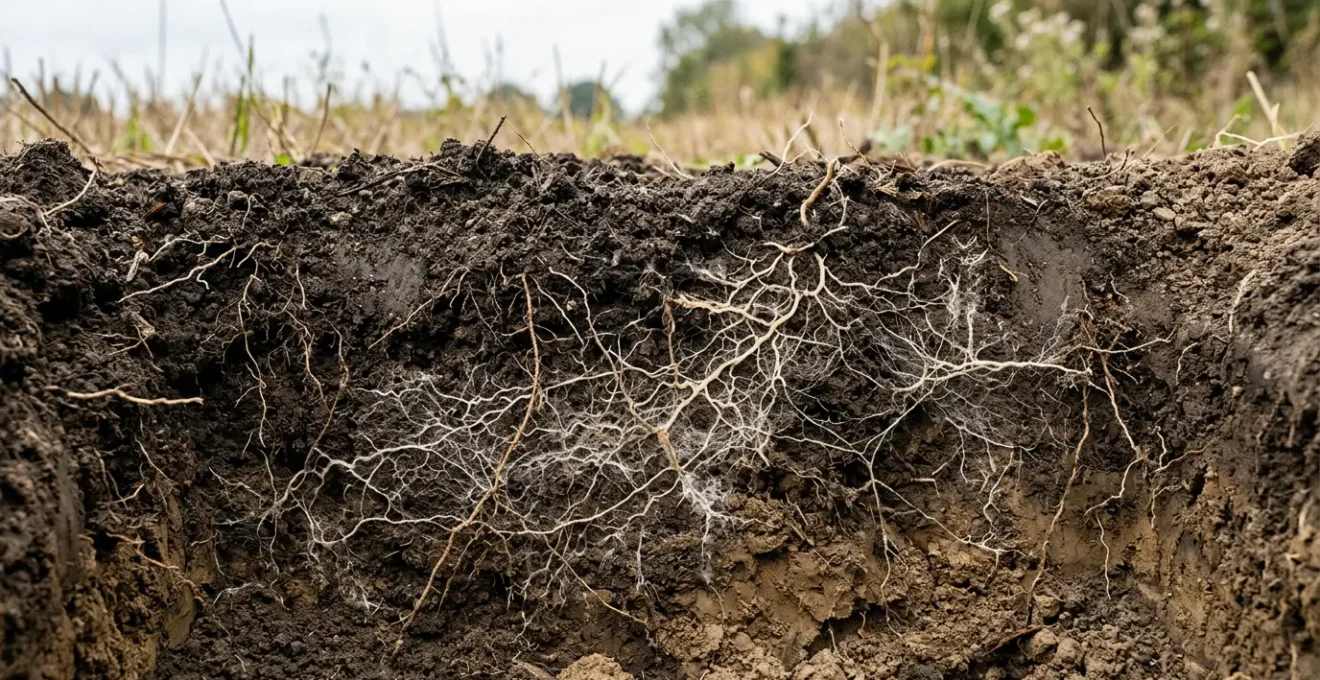
For farmers needing to till for weed control, the fear of destroying soil life is a major concern. The conventional wisdom often presents an unhelpful “all-or-nothing” choice. This guide moves beyond that, treating tillage as a surgical tool, not a blunt instrument. By focusing on pragmatic adjustments to depth, technique, timing, and fertility, you can significantly mitigate the collateral damage to vital mycorrhizal networks, achieving effective cultivation while preserving your soil’s biological capital.
For any farmer invested in regenerative principles, the conversation around tillage can feel like a dead end. You’re told that to build healthy soil, you must stop tilling. Yet, the practical reality of managing aggressive weeds or preparing a seedbed often makes this advice seem impossible to implement. This creates a difficult dilemma: do you sacrifice your soil’s biology for a clean field, or risk being overrun by weeds in pursuit of an ecological ideal? The common narrative suggests you can’t have both.
This all-or-nothing thinking overlooks a crucial middle ground. What if the goal wasn’t the complete elimination of tillage, but the implementation of *strategic disturbance*? The real key lies not in whether you till, but in *how* you till. By understanding the intricate, living web of mycorrhizal fungi beneath your feet, you can adapt your cultivation practices to work with it, rather than against it. This isn’t about abandoning a necessary tool; it’s about learning to use it with precision and care.
This article provides a pragmatic framework for farmers who find themselves in this exact position. We will move past the dogma and explore the science-backed strategies for minimizing harm to your soil’s most valuable asset. We will dissect how to adjust cultivator depth, compare conservation tillage methods, understand the impact of fertilizers, and outline a recovery plan for when deeper ploughing is truly unavoidable. The objective is to empower you with the knowledge to make informed trade-offs, protecting your fungal allies while still running a productive and viable farm.
The following sections break down the essential strategies and scientific principles that allow you to balance the operational need for cultivation with the ecological imperative of preserving your soil’s living infrastructure. Explore this table of contents to navigate the key areas of focus.
Summary: A Farmer’s Guide to Tillage and Fungal Preservation
- Why Mycorrhizal Fungi Are Essential for Phosphorus Uptake in Low-Input Systems?
- How to Set Your Cultivator Depth to Minimize Fungal Hyphae Damage?
- Min-Till vs Strip-Till: Which Preserves the Fungal Network Better?
- The High-P Fertilizer Mistake That Switches Off Natural Fungal Associations
- When to Inoculate Seeds with Mycorrhiza for Best Establishment?
- Why Bacteria and Fungi Are the Engine of Nutrient Cycling?
- Why Fungal Networks Take 3 Years to Recover After a Single Deep Plough?
- How to Maintain Fungal Networks When Ploughing Is Unavoidable?
Why Mycorrhizal Fungi Are Essential for Phosphorus Uptake in Low-Input Systems?
Before we can protect mycorrhizal networks, we must appreciate their role as a cornerstone of soil fertility, especially concerning phosphorus (P). Phosphorus is a vital nutrient for plant growth, but it is notoriously immobile in the soil. Plant roots can only access the P in their immediate vicinity, a tiny fraction of the total P present. This is where arbuscular mycorrhizal fungi (AMF) become a plant’s most powerful ally. These fungi form a symbiotic relationship with over 80% of land plants, creating a vast underground network of fine threads called hyphae.
This hyphal network acts as a highly efficient, living extension of the plant’s root system. It can explore a much greater volume of soil, reaching far beyond the root’s grasp to mine for nutrients. For phosphorus in particular, this is a game-changer. The fungi don’t just find P; they actively work to make it available. Through the secretion of organic acids and specialized enzymes like phosphatases, AMF can solubilize forms of phosphorus that are chemically bound to soil particles and otherwise unavailable to the plant.
In low-input or organic systems where synthetic P fertilizers are limited, this biological mechanism is not just beneficial—it’s essential. Relying on this natural symbiosis allows farmers to unlock the legacy phosphorus already in their fields, reducing dependency on costly external inputs. A healthy fungal network effectively turns your soil into a more self-sufficient system, enhancing nutrient cycling, improving plant resilience to stress, and building the very foundation of long-term soil health. Protecting this biological capital is a direct investment in your farm’s productivity and sustainability.
How to Set Your Cultivator Depth to Minimize Fungal Hyphae Damage?
The single most impactful adjustment you can make to protect your mycorrhizal network is controlling your tillage depth. The common image of a plough inverting the entire topsoil horizon is the definition of maximum destruction for fungal life. However, not all tillage is created equal. The key is to understand where your fungal allies are most concentrated and to stay out of that zone as much as possible.
The vast majority of fungal biomass and activity is located in the upper layers of the soil. Specifically, research shows the most vibrant and extensive hyphal networks are typically found in the top 10-15 cm (4-6 inches) of soil. This is the zone richest in organic matter and oxygen, where the symbiotic exchange between fungi and plant roots is most active. Tilling deeper than this is where the most significant collateral damage occurs, as it severs these established networks, disrupts soil structure, and buries the fungal spores and hyphae that are essential for regeneration.
Therefore, the most pragmatic approach is to practice strategic shallow cultivation. If your goal is to manage annual weeds in the top few inches, there is no need to run a cultivator at 8 inches deep. By setting your equipment to work only in the top 5-7 cm (2-3 inches), you can achieve effective weed control while leaving the deeper, more established parts of the fungal network largely intact. This approach represents a critical compromise, allowing you to manage the soil surface without obliterating the biological infrastructure below.
Min-Till vs Strip-Till: Which Preserves the Fungal Network Better?
When you move beyond simple depth adjustments, the choice of tillage system becomes the next critical decision. For farmers seeking a middle ground, minimum tillage (min-till) and strip-tillage are two popular options. While both are significant improvements over conventional mouldboard ploughing, they impact the fungal network in different ways. Understanding these differences is key to choosing the right strategy for your operation.
Minimum tillage generally refers to any system that reduces the overall intensity of cultivation, often through shallow, full-width passes. While better than deep ploughing, it still disturbs 100% of the soil surface, causing widespread but less severe disruption to the hyphal network. Strip-tillage, on the other hand, takes a more targeted approach. It involves tilling only a narrow band or “strip” where the seed will be planted, leaving the soil between the rows—the inter-row zone—completely undisturbed. This creates protected “refuges” where the mycorrhizal network can persist and quickly recolonize the tilled strips after planting.
Research consistently shows that reducing tillage intensity directly benefits soil health. For instance, fungi produce a glue-like protein called glomalin, which is crucial for binding soil particles together into stable aggregates. These aggregates improve water infiltration and resist erosion. Importantly, a 2021 study found that glomalin levels and aggregate stability were significantly greater in zero-tillage soils compared to conventional tillage, demonstrating a direct link between less disturbance and better soil structure.
Case Study: The Long-Term Impact of Tillage on Fungal Diversity
A 7-year field experiment on China’s Loess Plateau provided a stark comparison between no-tillage with straw return (NTS) and conventional mouldboard ploughing (CT). The results were clear: the NTS system significantly improved soil microbial diversity and increased soil organic carbon. In contrast, the conventional tillage system led to a decrease in AM fungal diversity by up to 40%. The no-till plots maintained a much richer and more connected fungal community, showcasing the long-term biological cost of intensive soil disturbance.
From a fungal preservation perspective, strip-tillage is generally superior to full-width min-till. By leaving large portions of the soil untouched, it provides a stable habitat for the mycorrhizal network to thrive and serve as a living reservoir of inoculum for the new crop. It is the quintessential example of strategic disturbance.
The High-P Fertilizer Mistake That Switches Off Natural Fungal Associations
Mechanical disruption isn’t the only way to harm your fungal network; chemical inputs can be just as damaging. One of the most common and counterintuitive mistakes is the over-application of high-phosphorus synthetic fertilizers. While it may seem logical to feed your crop what it needs, an excess of readily available P effectively tells the plant that its symbiotic fungal partner is redundant.
The relationship between a plant and mycorrhizal fungi is a two-way street based on trade. The plant provides the fungus with carbon (sugars from photosynthesis), and in return, the fungus provides the plant with nutrients, primarily phosphorus. However, this is a costly exchange for the plant. If the soil is flooded with easily accessible synthetic phosphorus, the plant has no incentive to spend its valuable carbon resources supporting the fungus. It can get what it needs for free. As a result, the plant reduces or completely stops sending the chemical signals needed to establish and maintain the symbiosis. The fungal network isn’t killed directly, but it is put into a state of symbiotic downtime—starved of its carbon food source, it becomes dormant and its population declines.
This creates a dependency cycle. The less the plant relies on fungi, the weaker the network becomes, making the crop even more dependent on synthetic fertilizers in the future. The threshold for this effect is surprisingly low. As leading soil science shows, when soil P supply exceeds a modest level of around 10 mg per kg of soil, mycorrhizal colonization can be significantly reduced. As researchers Balzergue et al. noted, when P availability is high, plants simply “do not produce the necessary signals for the establishment of the mycorrhizal symbiosis.” This highlights the importance of soil testing and applying P fertilizers judiciously, using them to supplement, not replace, the natural nutrient-cycling power of your soil’s biology.
When to Inoculate Seeds with Mycorrhiza for Best Establishment?
While preserving your existing fungal network is paramount, there are times when re-introducing or “inoculating” with mycorrhizal fungi is a sound strategy. This is particularly relevant after a fallow period, following a non-mycorrhizal crop like canola, beets, or mustard, or when transitioning a conventionally tilled field to a reduced-tillage system. However, the success of inoculation hinges on one critical factor: timing.
The goal of inoculation is to ensure the fungi can form a symbiotic relationship with the plant root as early as possible. The most effective method is to apply the inoculum directly to the seed or in-furrow at planting. This places the fungal spores and hyphal fragments in the perfect position to colonize the emerging seedling’s roots immediately upon germination. This early connection gives the crop a significant head start, allowing it to begin benefiting from the extended nutrient reach of the fungal network from its earliest growth stages. Broadcasting inoculum over the soil surface is far less effective, as the fungi may not make contact with a host root before they are degraded by sunlight or other environmental factors.
The principle is to establish the symbiosis in a protected environment before the plant faces the stresses of the open field. This strategy’s effectiveness is well-documented in various agricultural and horticultural systems.
Case Study: The Power of Early Inoculation
Research on tropical tree species demonstrated that inoculating with mycorrhizal fungi at the nursery stage led to significantly better growth in both the nursery and later in the field. A similar study found that inoculating Welsh onions with AMF at an early growth stage drastically reduced the need for phosphate fertilizer once they were transplanted. By establishing a robust symbiosis before the plants were moved to the field, farmers could reduce production costs while maintaining their marketable yield. This shows that giving the fungi a head start is a powerful investment.
For a farmer, this means treating inoculation not as a remedy to be applied later, but as a proactive step at the very beginning of the crop’s life. By ensuring your seeds are equipped with their fungal partners from day one, you are building a more resilient and self-sufficient cropping system from the ground up.
Why Bacteria and Fungi Are the Engine of Nutrient Cycling?
To truly understand the impact of tillage, we need to zoom out and see the soil not as dirt, but as a complex ecosystem with two primary biological engines: bacteria and fungi. Both are vital for decomposition and nutrient cycling, but they create very different soil environments, and tillage profoundly shifts the balance between them. The ratio of fungi to bacteria (F:B ratio) is a key indicator of soil health and ecosystem maturity.
Bacterial-dominated soils are characteristic of highly disturbed environments. Bacteria thrive on simple sugars and reproduce quickly, excelling at rapidly breaking down “easy” food sources like fresh green residues. Conventional tillage, with its high levels of disturbance and oxygenation, creates perfect conditions for a bacterial bloom. This leads to a rapid, often inefficient release of nutrients, particularly nitrogen, which can be easily lost to leaching or volatilization. These are the conditions that favor early-successional plants, which we often call weeds.
Fungal-dominated soils, in contrast, are the hallmark of stable, mature ecosystems like forests and native prairies. Fungi, with their extensive hyphal networks, are specialists at breaking down complex, carbon-rich materials like wood, straw, and old root matter. They are slower-growing but far more efficient, locking nutrients into their biomass and creating a stable, slow-release fertility system. Their hyphae also physically bind soil particles together, creating the resilient, spongy structure of healthy soil. No-till and other low-disturbance systems naturally favor this shift towards a higher fungal-to-bacterial ratio.
As a global meta-analysis on conservation tillage synthesized, management practices are the deciding factor: “Tillage and high nitrogen favor a bacterial-dominated system… while no-till and complex plant cover favor a fungal-dominated system.” The choice of tillage is therefore a choice about which biological engine you want to power your farm. While both are necessary, a system that systematically destroys its fungal component is sacrificing its long-term stability and efficiency for short-term nutrient release.
Key Takeaways
- Tillage isn’t an all-or-nothing choice; strategic adjustments to depth, timing, and tools can mitigate fungal damage.
- The majority of vital fungal networks reside in the top 10-15 cm (4-6 inches) of soil; shallow cultivation is a key preservation tactic.
- Excess high-phosphorus fertilizer can switch off the plant-fungi symbiosis, creating a dependency on synthetic inputs.
Why Fungal Networks Take 3 Years to Recover After a Single Deep Plough?
The argument for being cautious with tillage becomes much more compelling when we understand the long-term consequences of a single, destructive event. While a shallow cultivation pass causes manageable disruption, a deep mouldboard ploughing event is a cataclysm for the soil’s fungal ecosystem. It’s not a setback that recovers in a season; it’s a reset that can take years to repair.
Deep ploughing doesn’t just cut through hyphal networks; it completely inverts the soil profile. This buries the aerobic, fungi-rich topsoil deep underground where it lacks oxygen, while bringing sterile, low-organic-matter subsoil to the surface. It shatters the soil structure built by glomalin and root channels, and it decimates the population of fungal spores and other propagules needed for regrowth. Studies consistently demonstrate that conventional tillage can decrease AM fungal diversity by up to 40%.
The recovery timeline is sobering. The intricate architecture of a mature fungal network, which has developed over years of undisturbed growth, cannot be rebuilt overnight. It requires the slow, steady process of spore germination, hyphal exploration, and the re-establishment of connections with host plant roots. Even with ideal conditions—the presence of a host crop and sufficient moisture—this biological reconstruction is a multi-year project.
Case Study: The Lasting Damage of a One-Time Ploughing Event
A pivotal study in eastern Nebraska examined the effect of a one-time mouldboard ploughing event on fields that had been under a no-till regime. The results were dramatic: the tillage immediately reduced AM fungal colonization of corn roots by 58-87%. More critically, the researchers found that this negative effect persisted through the second year with “no indication of AM recovery.” While the plants in the first couple of years could still access residual fertility, the biological engine for long-term, sustainable nutrient uptake had been severely compromised, demonstrating the profound and lasting damage of a single deep-tillage pass.
This long recovery period underscores the importance of viewing your soil’s fungal network as a long-term investment. While a single deep ploughing might solve an immediate problem like severe compaction, the biological cost is steep and the recovery long. This knowledge should make any farmer pause and consider it an absolute last resort.
How to Maintain Fungal Networks When Ploughing Is Unavoidable?
Even the most dedicated regenerative farmer may face a situation where deep tillage feels like the only option—to remediate severe compaction, incorporate lime, or deal with a truly unmanageable perennial weed problem. In these moments, the goal shifts from prevention to damage control. By adopting a “fungal triage” mindset, you can take deliberate steps before, during, and after the tillage event to minimize the harm and accelerate the recovery.
This approach treats the unavoidable tillage pass like a surgical operation on your soil. You must prepare the patient, perform the surgery as carefully as possible, and provide intensive post-operative care. Simply ploughing and hoping for the best is a recipe for long-term biological degradation. Keeping the soil covered is paramount; research has shown there can be a 40% reduction in fungal abundance after just one fallow season, as the fungi are left without a living root to partner with.
A structured approach is essential. Instead of seeing it as a failure, view it as a planned, strategic intervention with a clear recovery protocol. The following checklist outlines the key phases of this triage process, transforming a potentially destructive act into a manageable one.
Your Fungal Triage Checklist for Unavoidable Tillage
- Pre-Op (Strengthen the Patient): In the season before the planned tillage, bulk up the fungal network by growing a diverse and dense cover crop mix. This maximizes spore density and hyphal fragments in the soil, creating a more resilient biological starting point that is better able to survive the disturbance.
- Intra-Op (Minimize Surgical Damage): Choose the least-destructive tool for the job. Instead of a mouldboard plough that inverts and shears, consider a straight-shank subsoiler or vertical tillage tool that lifts and fractures the soil. Critically, only till when the soil is dry to prevent smearing and further damage to soil structure.
- Post-Op (Intensive Care & Rehabilitation): Do not leave the soil bare. Immediately follow the tillage operation by seeding a fast-growing cover crop. This provides surviving fungal propagules with a living root partner right away. Consider applying a biological stimulant like compost extract or humic acids to provide a food source and kick-start microbial activity.
By following this protocol, you can significantly shorten the recovery period and guide your soil back to a fungal-dominated state more quickly. It acknowledges the realities of farming while remaining committed to the principles of soil health.
To apply these principles effectively, the next logical step is to analyze your specific soil conditions, weed pressures, and available equipment to create a tailored, field-by-field tillage-minimization plan.