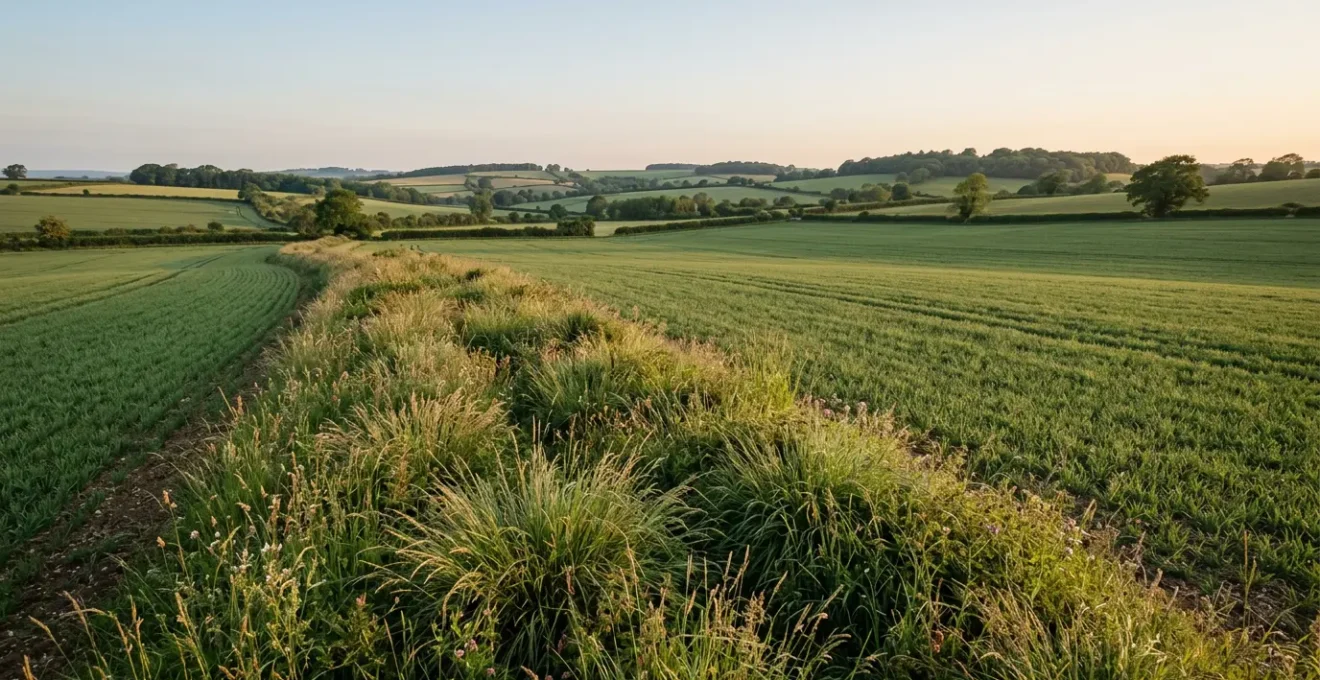
The key is to view SFI-compliant beetle banks not just as a grant requirement, but as a high-performance farm asset engineered for a direct return on investment through reduced chemical inputs.
- Properly designed mid-field banks (AHW3) provide a habitat for predators that actively control slugs and aphids in the crop’s centre, where they have the most impact.
- Strategic management, including rotational mowing and successional wildflower planting, multiplies the bank’s value by supporting beneficial insects throughout the entire season.
Recommendation: Move beyond simple compliance. Design your beetle bank as an integrated pest management tool that reduces costs and qualifies for the £764 per hectare SFI payment.
For farmers navigating the Sustainable Farming Incentive (SFI), the goal is twofold: secure the payment and, ideally, see a tangible benefit on the farm. When it comes to pest control, the default can be a costly reliance on slug pellets and insecticides. The notion of establishing a beetle bank might seem like another box to tick for compliance, a simple grass strip put in place to satisfy the rules.
However, this approach overlooks a significant opportunity. Many guides will list the basic requirements for the AHW3 action, but they often fail to connect the dots between the design specifications and the powerful economic and ecological outcomes. They present the ‘what’ but not the ‘why’ or the ‘how to optimise’. The risk is creating a feature that gets you paid but underperforms in its primary role: controlling pests.
But what if the true key wasn’t just following the rules, but engineering a high-performance ecological asset? This guide reframes the conversation. We will move beyond mere compliance to explore how to design a beetle bank that not only qualifies for the SFI payment but also functions as a predator factory, actively reducing your input costs and delivering a clear return on investment. It’s about turning a conservation feature into a core part of your integrated pest management strategy.
This article will provide a detailed blueprint for success. We will examine the specific predators you are nurturing, the precise construction methods for optimal performance, the crucial decisions on placement and management, and ultimately, how this single farm feature can offer a cheaper, more sustainable alternative to chemical controls.
Summary: How to Design SFI-Compliant Beetle Banks That Pay for Themselves
- Why Carabid Beetles Are Your Best Defense Against Slugs?
- How to Build a Beetle Bank: Dimensions and Species for Heavy Soils
- Mid-Field or Headland: Where Do Beneficials Have the Biggest Impact?
- The Mowing Mistake That Wipes Out Pollinators in Mid-Summer
- Which Wildflower Mix Attracts Hoverflies to Eat Aphids in July?
- How to Manage Rough Grass Strips to Boost Vole Populations for Owls?
- Why June is the Hardest Month for Pollinators in Arable Landscapes?
- Barn Owls vs Rodenticides: Which Controls Rat Populations Cheaper?
Why Carabid Beetles Are Your Best Defense Against Slugs?
Before investing in a beetle bank, it’s crucial to understand the asset you’re creating: a habitat for voracious predators. The primary targets are carabid (ground) beetles, which are one of the most effective natural enemies of slugs in UK farmland. A recent farmer-led project, SLIMERS, is currently investigating how to maximise the impact of key species like the black clock beetle and the violet ground beetle, moving away from a reliance on chemical slug pellets. These beetles are not fussy eaters; they are relentless generalist predators.
I think of [carabid beetles] as the hyenas of the beetle world. They will eat pretty much anything they come across.
– Dr Kelly Jowett, Rothamsted Research entomologist, interviewed in Farmers Guardian
Their appetite extends far beyond slugs. Their diet also includes other pests like aphids that have fallen to the ground and, critically, weed seeds. This provides a secondary, often overlooked, economic benefit by reducing the weed seed bank in your soil. The impact can be substantial; according to Rothamsted Research, carabid beetles can consume up to 4,000 weed seeds per square metre per day. This dual-action pest and weed control makes them an invaluable ally in an integrated pest management (IPM) system.
The challenge, however, is that these beetles need a safe, permanent, and undisturbed place to overwinter and breed. Modern arable fields, with their annual cultivations, offer little refuge. A beetle bank provides this essential infrastructure, acting as a reservoir from which these beneficial insects can emerge in spring and move out into the crop to protect it.
How to Build a Beetle Bank: Dimensions and Species for Heavy Soils
Constructing a beetle bank that meets SFI Action AHW3 requirements is a process of ecological engineering. The goal is to create a raised, free-draining, and permanent tussocky grass structure. While the process is straightforward, attention to detail during establishment is critical for long-term performance. It’s not just a mound of earth; it’s a carefully designed habitat. Be aware that from sowing, a beetle bank takes approximately 2 to 3 years to become fully established and deliver its maximum ecological benefits.
The choice of seed mix is fundamental to creating the right structure. You need a combination of fine-leaved grasses to form a dense base and tussock-forming grasses like cocksfoot to create the open, layered structure that beetles, spiders, and small mammals require for shelter and movement. This bi-layered structure is what makes the habitat resilient and functional.
The following plan outlines the key steps compliant with the SFI scheme, specifically tailored for establishing a robust bank, even on heavier soil types which may require careful cultivation to create the desired raised profile.
Action Plan: Establishing Your SFI-Compliant Beetle Bank (AHW3)
- Bank Creation: Plough in opposite directions during normal spring or autumn cultivations to create a raised bank at least 40cm high and 3-5 metres wide. Several passes may be needed.
- Seedbed Preparation: Use shallow cultivation and lightweight machinery to create a firm, fine seedbed. Avoid overworking the soil, which could flatten the bank’s profile.
- Sowing: Sow a grass seed mix containing fine-leaved (e.g., red fescue) and tussock-forming (e.g., cocksfoot, timothy) varieties at a rate of 20-25kg/ha.
- Machinery Access: Leave gaps of up to 40m where the bank meets field boundaries to ensure continued access for farm machinery.
- First-Year Management: Cut the sward several times in the first summer to a height of 10cm. This encourages dense tillering and helps control annual weeds.
- Long-Term Management: After year one, implement a rotational cutting plan. Avoid cutting the entire bank at once to ensure insect populations always have a refuge.
Mid-Field or Headland: Where Do Beneficials Have the Biggest Impact?
Location is everything. While a grass margin or a corner of a field (like SFI action IGL1) provides some habitat, it doesn’t solve the core problem for large fields. The predators overwintering in the headlands have a limited “reach” into the crop. In fact, research shows beetles and spiders will not travel typically no more than 250m from the field edge. This creates a vulnerable “sweet spot” in the centre of large fields where pests can thrive unchecked. This is why mid-field beetle banks are so critical and command a higher payment rate under SFI.
The AHW3 action is specifically designed to address this. These banks act as “motorways” or “service stations” for beneficial insects, allowing them to overwinter in the middle of the field and quickly colonise the surrounding crop in spring. This is particularly vital in fields larger than 20 hectares, where the centre is effectively isolated from the ecological resources of the field boundary. Placing a beetle bank across the middle of such a field bridges this gap, putting your predatory beetles right where they are needed most.
The following table, based on SFI guidance, compares the two options and makes the strategic case for the mid-field bank as a superior pest control tool, justifying its higher payment rate.
| Feature | AHW3: Beetle Banks (Mid-field) | IGL1: Take grassland field corners and blocks out of management |
|---|---|---|
| Payment Rate | £764 per hectare per year | £333 per hectare per year |
| Location | Across middle of large arable fields | Field corners or blocks |
| Primary Benefit | Pest predator dispersal into crop centre | Wildlife habitat, overwintering refuge |
| Optimal Field Size | Fields >20ha; 30-50ha may need 3-4 banks | Any field size |
| Additional Function | Can control runoff and soil erosion on slopes | Low-management wildlife refuge |
| Maintenance | Static location; rotational mowing after year 1 | Uncut and ungrazed; weed control allowed |
| Wildlife Supported | Carabid beetles, spiders, harvest mice, ground-nesting birds | Voles, nesting birds, pollinators, small mammals |
The Mowing Mistake That Wipes Out Pollinators in Mid-Summer
Once your beetle bank is established, its management becomes the single most important factor determining its success or failure as a habitat. The most common and devastating mistake is indiscriminate mowing at the wrong time of year. Cutting the entire bank in a single pass between May and July can effectively wipe out the very populations you’ve spent years nurturing. This period is the peak breeding season for beneficial insects and ground-nesting birds like the Grey Partridge.
A “one-size-fits-all” mowing approach is counterproductive. The correct strategy is rotational management. By dividing the habitat into sections (ideally thirds) and only cutting one section each year, you ensure that two-thirds of the habitat remains as an undisturbed refuge at all times. This provides continuity of food, shelter, and breeding sites, creating a stable and resilient ecosystem. The SFI guidance supports this, permitting cutting from August onwards, well after the critical nesting period.
Furthermore, how you cut is as important as when you cut. The cutting height should be maintained at 10-15cm to preserve the crucial tussocky structure at the base of the sward. Cutting too low effectively “scalps” the habitat, destroying the vole runs and insect refuges that make it so valuable. Using lightweight machinery is also advised to prevent compacting the soil and flattening the bank’s raised profile. Following a structured mowing calendar is key to maximising the ecological return on your investment.
- Avoid Mowing (May-July): This is the peak nesting season for birds and the most active period for pollinators. Flowers provide critical nectar resources.
- Cut from August Onward: SFI guidance allows cutting from August, protecting invertebrates and beneficials during their breeding season.
- Implement Rotational Strategy: Divide the bank into thirds and mow only one section per year, leaving two-thirds as a continuous refuge.
- Maintain Cutting Height: Cut to 10-15cm, not lower, to preserve the tussocky structure essential for voles and overwintering insects.
- Use Lightweight Machinery: Avoid heavy equipment that compacts soil, especially when the ground is wet.
- Manage Cuttings: Remove clippings or use machinery that cuts finely to prevent smothering the sown species and maintain low fertility.
Which Wildflower Mix Attracts Hoverflies to Eat Aphids in July?
While the grass bank (AHW3) is the core structure for ground predators, its value can be hugely amplified by adding a source of nectar and pollen. This is where a targeted wildflower mix comes in, specifically engineered to attract another group of powerful allies: hoverflies. The larvae of many hoverfly species are voracious predators of aphids, with a single larva capable of consuming hundreds during its development. To attract the adult hoverflies to lay their eggs near aphid colonies in your crop, you need to provide them with the right food source at the right time.
Adult hoverflies, along with parasitic wasps, have short mouthparts and can only feed on flowers with a simple, open structure. This makes plants from the umbellifer family, like Wild Carrot and Yarrow, exceptionally effective. These flowers act like a landing pad with easily accessible nectar, drawing in huge numbers of beneficial insects during mid-summer when aphid populations often peak.
The most effective strategy is to ensure a continuous supply of these flowers throughout the season, a concept known as successional flowering. By selecting species that flower at different times, you provide a non-stop food source for beneficials, from early spring to late summer. This ensures they are present and ready to act the moment pest populations begin to build. The wildflowers can be sown in an adjacent strip (like SFI action AHL1) to complement your grass beetle bank.
- Spring (April-May): Red Campion provides early nectar for emerging hoverflies and parasitic wasps.
- Early Summer (May-June): Common Vetch and Bird’s-foot Trefoil help bridge the “June Gap” and also fix nitrogen.
- Mid-Summer (June-July): Wild Carrot and Yarrow offer the ideal open flower structure for hoverflies, while Ox-eye Daisy attracts a diverse range of beneficials.
- Late Summer (July-August): Phacelia provides a massive nectar resource during periods of peak aphid pressure.
- Dual Benefit: Legumes in the mix, like Red Clover and Bird’s-foot Trefoil, enrich the soil while supporting pollinators.
How to Manage Rough Grass Strips to Boost Vole Populations for Owls?
The benefits of a well-designed beetle bank extend far up the food chain, creating a virtuous cycle of predation. The same tussocky grass structure that shelters ground beetles provides the perfect habitat for small mammals, particularly field voles. The dense base of grasses like cocksfoot creates a network of warm, safe runways and provides nesting material, protecting voles from both the elements and aerial predators.
This isn’t an unintended benefit; it’s a key function of the habitat. By creating a thriving vole population, the beetle bank becomes a hunting ground for some of the UK’s most iconic farmland birds. Field voles are the primary food source for Barn Owls and Kestrels. A single beetle bank can effectively become an on-farm larder, supporting these top predators and helping to control rodent populations across the wider farm landscape. The raised, free-draining nature of the bank is also critical, keeping the upper layers dry and ensuring high vole survival rates during wet winters.
Case Study: Beetle Banks as Vole and Owl Habitat
The design of a beetle bank directly supports a healthy predator-prey system. The inclusion of tussocky grasses like cocksfoot (often recommended at 30% of the seed mix) is intentional to create protected corridors for field voles. By leaving a layer of dead grass thatch at the base—a result of not removing all cuttings—farmers create an insulating blanket and an additional food source. This thriving vole population, in turn, provides a reliable food source for barn owls and kestrels, which prefer to hunt over open farmland. This single habitat feature therefore supports a chain of beneficial wildlife, from harvest mice and corn buntings nesting in the grass to the owls hunting above it.
The management choice to leave some grass uncut and allow a thatch layer to build up is a deliberate act of habitat engineering for a specific outcome. This stacked benefit, supporting everything from insects to birds of prey, elevates the beetle bank from a simple strip of grass to a cornerstone of farm-wide biodiversity. As the Farm Wildlife partnership notes, the benefits are multi-layered: tussocky banks may also provide nesting and over-winter habitat for bumblebees.
Why June is the Hardest Month for Pollinators in Arable Landscapes?
In many arable landscapes, there is a period of nectar and pollen scarcity known as the “June Gap”. This occurs after the mass flowering of spring resources like hawthorn hedges and oilseed rape has finished, but before the main summer flowers like clover and bramble have come into bloom. For pollinators such as bees, hoverflies, and butterflies, this gap can be a time of severe food shortage, leading to population decline right when they are needed most for crop pollination and pest control.
This is where thoughtfully designed and managed habitats like beetle banks and flower-rich margins become absolutely critical. A simple grass-only sward, if mown improperly, contributes to this problem. However, a strategically managed habitat can bridge this gap. Professor Jeff Ollerton, a leading pollinator expert, advocates for a “Mindful Mow” approach. Instead of a uniform cut, he suggests varying the timing of mowing in different areas each year. This creates a mosaic of habitats at different stages of growth, ensuring that some flowering plants are always available somewhere on the farm.
The testimony highlights that pollinators need more than just flowers; they need a continuous, season-long provision of resources. By incorporating early-flowering species like Red Campion and mid-season bloomers like Common Vetch and Bird’s-foot Trefoil into or alongside your beetle bank, you are actively combating the June Gap. This ensures that the beneficial insects you have attracted do not starve or leave the farm, but remain to build up their populations in time for peak pest pressure in July and August. Even simple actions can have a big impact; researchers in Massachusetts found 93 species of bees visiting lawn flowers, showing the potential of even small-scale floral resources.
Key Takeaways
- Beetle banks are not just habitat; they are predator factories for targeted slug, aphid, and weed seed control.
- Correct placement (mid-field in fields >20ha) and seed choice are critical for effectiveness, not just SFI compliance.
- Strategic management, including rotational mowing and successional flower planting, multiplies the bank’s value and helps bridge the “June Gap”.
Barn Owls vs Rodenticides: Which Controls Rat Populations Cheaper?
The ultimate test of any farm investment is its return. When viewed through the lens of ecological engineering, the beetle bank delivers a compelling financial case that goes far beyond the SFI payment. By creating a habitat for voles, you support a resident population of barn owls and kestrels, nature’s own highly effective rodent control service. This integrated system offers a long-term, sustainable, and cheaper alternative to a recurring reliance on expensive chemical rodenticides.
The SFI 2024 offer is structured to reward this integrated thinking. A farmer can stack several actions to create a farm-wide IPM strategy. For example, establishing a beetle bank (AHW3 at £764/ha/year) can be combined with a formal integrated pest management plan (CIPM1 at £1,129/year) and a nutrient management plan (CNUM1 at £652/year). This combination not only generates a significant, reliable income stream but also systematically reduces the farm’s dependence on purchased inputs.
The one-off establishment cost of the beetle bank—the fuel for ploughing and the seed—is effectively subsidised by the annual SFI payments. Over the 3-year agreement, the feature pays for itself through the grant alone. However, the *true* return on investment comes from the savings on slug pellets, aphicides, and rodenticides that are no longer needed, or are needed in far smaller quantities. The beetle bank is not a cost centre; it is a profit-generating asset that enhances farm resilience, boosts biodiversity, and secures a stable income.
Begin planning your beetle bank as an integrated farm asset today to reduce input costs and build a more resilient and profitable business for the future.