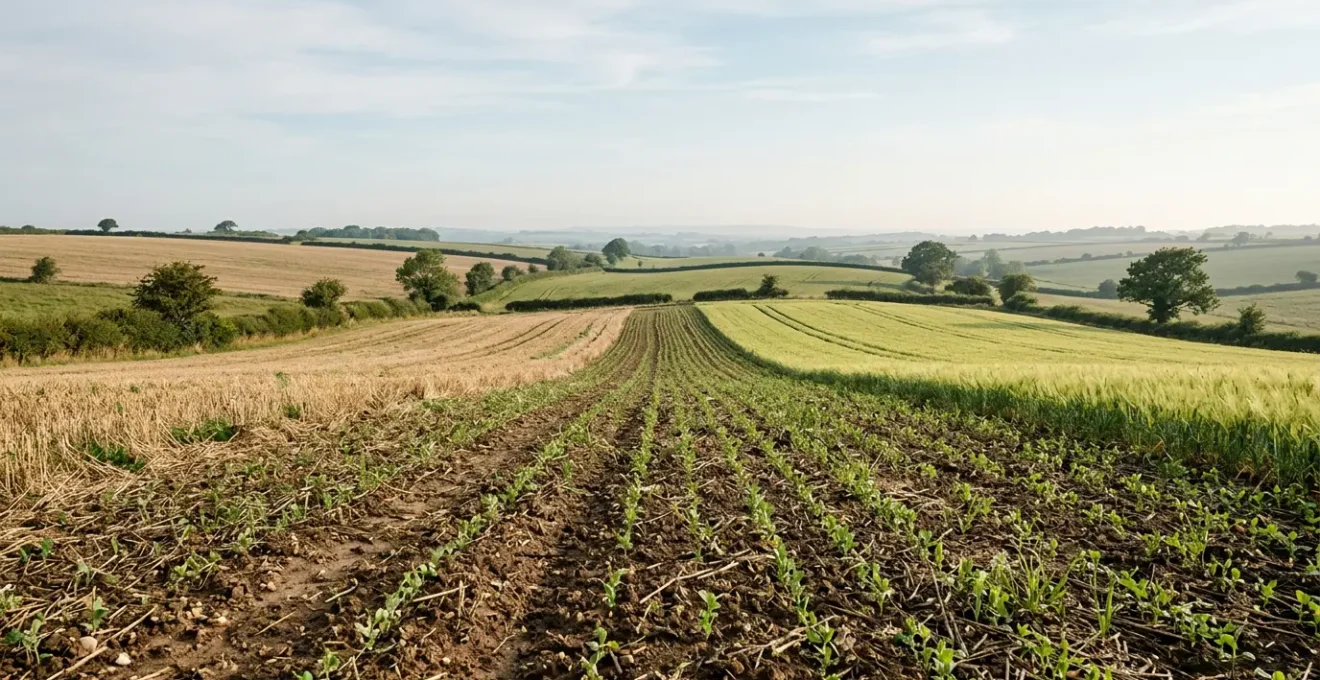
The key to defeating herbicide-resistant blackgrass is not finding a new chemical, but designing a multi-year crop rotation that systematically dismantles the weed’s life cycle.
- Varying drilling dates with spring crops disrupts blackgrass germination patterns.
- Choosing specific break crops actively improves soil structure and builds populations of beneficial, seed-eating predators.
Recommendation: Shift your focus from single-season tactics to a long-term rotational strategy that creates an environment where blackgrass simply cannot thrive.
For arable farmers across the East of England, the fight against blackgrass feels like a losing battle. Each autumn, the familiar haze of green re-emerges in winter wheat, seemingly indifferent to the expensive sprayer passes. The standard advice often revolves around later drilling or trying a different herbicide, but these are merely tactical retreats in a war that requires a fundamental strategic shift. The reliance on a single mode of action—both chemically and culturally—has created the perfect environment for this resilient weed to flourish, pushing many farming businesses to a financial breaking point.
The problem is systemic. The winter wheat-dominated rotation, with its predictable autumn cultivation and drilling window, aligns perfectly with the blackgrass life cycle. We’ve inadvertently trained it to thrive. But what if the solution wasn’t another can of chemical, but a complete rethink of the system itself? What if, instead of just fighting the weed, we created a farm ecology where it is constantly outmanoeuvred, starved, and even predated? This requires moving beyond the simple idea of a ‘break crop’ and embracing a more sophisticated philosophy of ecological disruption through strategic crop sequencing.
This article will not offer another short-term fix. Instead, it will lay out a strategic framework for designing a multi-species rotation as a precision tool for blackgrass control. We will explore why monocultures have failed and how introducing specific spring crops can be made profitable even on challenging heavy land. We will then analyse the unique benefits of different break crops for soil health, delve into managing disease carryover, and detail how to sequence crops for optimal nutrition. Finally, we will examine how to build an army of beneficial insects right in your fields, turning your farm into a resilient system that controls pests naturally.
To navigate this strategic guide, the following summary outlines the key pillars of designing an effective, resilient, and profitable rotation for long-term blackgrass control.
Summary: A Strategic Approach to Rotational Blackgrass Control
- Why Blackgrass Thrives in Winter Wheat Monocultures?
- How to Make Spring Barley Profitable on Heavy Land to Break the Cycle?
- Linseed or Beans: Which Break Crop Leaves the Best Soil Structure?
- The Rotation Gap You Must Leave to Starve Out Take-All Fungus
- How to Sequence Crops to Build Nitrogen for the Cash Crop Year?
- Why Carabid Beetles Are Your Best Defense Against Slugs?
- The Aphid Risk of Keeping Living Covers Too Close to Drilling
- How to Design Beetle Banks That Qualify for SFI Payments?
Why Blackgrass Thrives in Winter Wheat Monocultures?
Blackgrass (Alopecurus myosuroides) has become the nemesis of UK arable farming not because it is inherently invincible, but because we have created a system that caters to its every need. A winter wheat monoculture, or a rotation with limited diversity, provides a stable and predictable environment. Blackgrass, an autumn-germinating grass weed, has a life cycle that mirrors that of winter cereals. It germinates in the autumn, grows alongside the crop, and sheds its seeds just before or during harvest, replenishing the seedbank for the following year. This repetitive cycle, year after year, allows for an exponential build-up of weed pressure.
The reliance on chemistry to break this cycle has failed. The genetic plasticity of blackgrass has allowed it to develop widespread herbicide resistance. A long-term study has shown that by the 2019/20 season, 90% of blackgrass samples tested showed resistance to the common ALS inhibitor herbicides (mesosulfuron + iodosulfuron). This means that for the vast majority of farms, the primary chemical tool is no longer effective. This chemical treadmill is not just failing agronomically; it’s an economic disaster. The annual cost of herbicide-resistant blackgrass to England’s economy is estimated at £0.4 billion per year in lost gross margin, a figure that underscores the unsustainability of the current approach.
The solution, therefore, cannot be more of the same. It requires a complete paradigm shift towards ecological disruption. By introducing crops with different life cycles, particularly spring-sown crops, we fundamentally break the cycle of autumn germination and seed return. This forces a decline in the weed seedbank, a process known as inoculum management, making it the cornerstone of any successful long-term control strategy.
How to Make Spring Barley Profitable on Heavy Land to Break the Cycle?
Introducing a spring crop is the single most effective cultural control for blackgrass, as it creates a hostile germination window for the autumn-emerging weed. However, for farmers on heavy clay soils, the question has always been one of profitability and establishment risk. The key is to shift perspective from the margin of a single crop to the overall system profitability of the entire rotation. A well-managed spring barley crop can not only contribute a respectable margin itself but also significantly boost the performance of the following crops by leaving behind a clean field with improved soil structure.
This approach requires meticulous planning. Success on heavy land hinges on preparing a seedbed in the autumn, allowing frost mould and weathering to create a friable tilth for drilling in the spring. Avoiding heavy spring cultivations that can damage soil structure is critical. The goal is to drill into a drying, warming seedbed with minimal soil movement. Achieving a malting premium is often crucial for the economics to stack up, which necessitates careful variety selection and nitrogen management.
Case Study: The Rotational Uplift of Spring Barley
An economic analysis by Agrii agronomists on heavy land farms demonstrated this system-profitability approach. They found that replacing a second wheat crop with spring barley, and achieving a malting premium, delivered a tangible financial benefit. The switch increased the average annual margin across the rotation from £455/ha in a standard wheat-wheat-rape rotation to approximately £493/ha in the new system. This calculation factored in not just the spring barley margin but also the reduced blackgrass herbicide costs and significantly improved establishment and yield of the following oilseed rape crop, which benefited from the cleaner start and better soil conditions.
This demonstrates that while the spring barley crop itself may sometimes have a lower gross margin than a first wheat, its inclusion lifts the profitability of the entire rotation. It is an investment in the health and productivity of the whole farm system.
As this image shows, achieving a fine, friable tilth on heavy clay is possible. This soil structure is not just crucial for barley establishment but is also the structural legacy that benefits the subsequent crop, reducing costs and improving yield potential. This is the true, multi-year value of a well-executed spring break.
Linseed or Beans: Which Break Crop Leaves the Best Soil Structure?
Once the decision is made to introduce a non-cereal break crop, the next strategic choice is which one to grow. The answer depends on the primary objective for that slot in the rotation. While both linseed and beans offer excellent breaks from cereal diseases and disrupt the blackgrass cycle, they leave behind very different structural and nutritional legacies. The choice is a classic trade-off: do you prioritise soil physical structure or soil nutrient status?
Field beans, as a legume, are masters of nitrogen fixation. Their symbiotic relationship with Rhizobia bacteria allows them to convert atmospheric nitrogen into a plant-available form, providing a significant nitrogen credit for the following crop, thereby reducing fertiliser bills. This is a powerful tool in nutrient sequencing. However, bean stubble can be slow to break down and can sometimes leave heavy, less friable soils, which can be a challenge for direct-drilling the following wheat crop, especially on heavy land.
Linseed, on the other hand, is a champion of soil structure. Its deep, fibrous root system creates a network of channels that improve soil porosity and drainage, leaving behind a friable and easily worked tilth that is ideal for establishing the next crop. This “structural legacy” is particularly valuable. Furthermore, linseed offers a unique biological advantage, as explained by experts in the field. As noted by the specialists at Premium Crops:
Linseed forms beneficial relationships with arbuscular mycorrhizal fungi (AMF), which enhance nutrient uptake and support soil carbon storage. This is especially valuable for following crops like wheat, which also benefit from AMF. Linseed roots create a friable soil structure, ideal for direct drilling.
– Premium Crops, Does Linseed Support Soil Health?
Therefore, the decision is strategic. If the primary goal is to reduce nitrogen costs for a high-value cash crop, beans are a strong contender. If the priority is to improve workability, boost soil biology with AMF, and ensure perfect establishment for a direct-drilled crop, linseed has a clear edge.
The Rotation Gap You Must Leave to Starve Out Take-All Fungus
An effective rotation is not just about controlling weeds; it’s about managing the entire ecological system, including soil-borne diseases. Take-all (Gaeumannomyces graminis var. tritici) is a devastating root disease of wheat and barley that thrives in tight cereal rotations. The fungus survives on the root and stubble debris of previous host crops, creating a “bridge” of inoculum that infects the subsequent cereal. Breaking this bridge is a critical function of a well-designed rotation.
The fungus has a limited ability to survive in the soil without a host. Its inoculum levels decline significantly in the absence of cereal roots. This is where the concept of a “rotation gap” becomes crucial. The length of the break from a host crop (wheat or barley) directly dictates the level of disease pressure for the next cereal. A non-host break crop, such as oilseed rape, beans, or linseed, effectively starves the fungus. The consensus from extensive research is that a single-year break is highly effective.
Specifically, the pathogen’s survival is finite, and time is the most effective weapon against it. Scientific trials have provided a clear and actionable timeframe for farmers. For instance, experiments at Rothamsted Research demonstrate that a one-year break from cereals is sufficient to reduce the fungus to acceptably low levels in the soil, with the process taking approximately 10 months. This means that a full-season break crop provides a sufficient gap to effectively “reset” the soil and dramatically lower the take-all risk for the following first wheat. This principle of inoculum management highlights that a rotation’s value lies not just in what you grow, but also in the duration of the gap you create between susceptible crops.
How to Sequence Crops to Build Nitrogen for the Cash Crop Year?
Advanced rotational planning moves beyond individual crop choices to consider the entire sequence and its effect on nutrient cycling, particularly nitrogen. The breakdown of crop residue after harvest is a biological process driven by soil microbes. The speed of this breakdown, and whether it releases or temporarily locks up soil nitrogen, is determined by the residue’s Carbon-to-Nitrogen (C:N) ratio. Understanding and managing this ratio is a powerful tool for nutrient sequencing.
Crops with a low C:N ratio, like peas or other legumes (around 15:1), have residue that is rich in nitrogen. Soil microbes can break this down quickly, leading to a rapid release (mineralisation) of nitrogen into the soil, making it available for the next crop. Conversely, crops with a high C:N ratio, such as wheat straw (around 90:1), are carbon-rich and nitrogen-poor. Microbes need to “borrow” nitrogen from the soil to break down this carbon, leading to a temporary lock-up (immobilisation) of nitrogen. This can starve the following crop of N in its critical early establishment phase.
By strategically sequencing crops with different C:N ratios, a farmer can manage nitrogen availability across the rotation. For example, planting a high-N-demand cash crop after a low-C:N-ratio legume ensures a natural supply of nitrogen when the crop needs it most. This reduces reliance on synthetic fertilisers and improves overall nutrient use efficiency. The goal is to avoid leaving heavy mats of high-carbon residue that can impede establishment and lock up valuable nutrients.
Your Action Plan: Balancing C:N Ratios in Your Rotation
- Fast N Release: Incorporate crops like peas (C:N ratio of 15:1) before a high-demand crop to provide a quick source of available nitrogen.
- Moderate Dynamics: Use barley (approx. 45:1 C:N) as a transitional crop, providing moderate residue levels that break down at a steady pace.
- Residue Management: When using canola (30:1 C:N), ensure good chopping and distribution to prevent thick residue mats that can hinder drilling.
- Slow N Release: After wheat (90:1 C:N), leave stubble tall (8-12 inches) to promote slower, more controlled residue breakdown and reduce N lock-up in the soil surface.
- System Audit: Regularly review fields to prevent the build-up of heavy crop residue, which is a sign of an imbalanced C:N sequence that can impede stand establishment.
Why Carabid Beetles Are Your Best Defense Against Slugs?
An effective rotation does more than just disrupt pest life cycles; it actively builds a habitat for their natural enemies. Among the most valuable allies in an arable system are ground beetles, particularly Carabid beetles. These nocturnal predators are voracious consumers of many common farm pests, but they are especially effective as a biological control for slugs. While often overlooked, fostering a healthy population of these beetles provides a resilient, field-wide defense that reduces the need for molluscicide pellets.
Carabid beetles don’t just eat adult slugs; they also consume slug eggs, tackling the problem at its source. A single beetle can consume several slug eggs per day. Beyond slugs, their diet is varied and includes the seeds of problematic weeds, including blackgrass. They are a key component of an Integrated Pest Management (IPM) strategy, providing a constant, low-level predation pressure that helps keep multiple pest populations in check. Creating this “predator scaffolding” is a core principle of designing a resilient farming system.
Supporting these beneficials requires specific management choices within the rotation. Carabid beetles need a permanent, undisturbed habitat to overwinter and reproduce. This is why practices like ploughing, which destroys their habitat, are so damaging to their populations. Conversely, minimum tillage systems and the inclusion of year-round ground cover, such as from cover crops or beetle banks, provide the shelter and alternative food sources they need to thrive. By consciously managing the farm landscape to support these predators, you are essentially building a standing army that works for free, 24 hours a day.
The Aphid Risk of Keeping Living Covers Too Close to Drilling
The inclusion of cover crops is a cornerstone of modern regenerative agriculture, offering benefits from soil protection to nutrient capture. However, their management requires a strategic and cautious approach, particularly concerning the timing of their destruction. While a living cover provides many benefits, if left in place too close to the drilling of a following cereal crop, it can create a significant pest risk known as the “green bridge.”
This green bridge allows pests, particularly aphids, to transfer directly from the dying cover crop to the newly emerging cash crop seedlings. This is especially dangerous for the transmission of Barley Yellow Dwarf Virus (BYDV), a disease carried by aphids that can cause significant yield losses in wheat and barley. The aphids, seeking a new food source as the cover crop is sprayed off, will immediately move to the most succulent green material available—the vulnerable young cereal plants.
To mitigate this risk, it is critical to ensure there is a sufficient time gap between the destruction of the cover crop and the drilling of the cash crop. A minimum period of four to six weeks is recommended. This gap ensures that the cover crop is completely dead and has broken down, forcing the aphid population to either starve or move elsewhere before the cash crop emerges. This timing breaks the green bridge, effectively isolating the new crop from the pest reservoir that may have built up in the cover. It is a vital risk management step that ensures the benefits of cover cropping are not negated by an avoidable pest outbreak.
Key Takeaways
- Herbicide resistance is a systemic failure, requiring a shift to ecological control methods.
- Spring cropping is the most powerful tool for breaking the blackgrass life cycle; its profitability must be judged across the whole rotation.
- Break crop choice should be strategic: linseed for soil structure, beans for nitrogen.
- Building populations of beneficial insects like carabid beetles provides free, continuous pest control.
How to Design Beetle Banks That Qualify for SFI Payments?
The final piece of the rotational puzzle is to integrate permanent ecological infrastructure into the farm landscape. Beetle banks are a prime example of such a feature, providing a dedicated, year-round habitat for beneficial predators like carabid beetles and spiders. These are raised strips of land, typically 2 metres wide, sown with tussocky grasses like cocksfoot or Timothy. They act as “in-field refuges,” allowing predator populations to build up and overwinter safely, ready to spread out into the crop in the spring.
Designing these features effectively is simple. They should be created in the centre of large fields, ideally over 20 hectares, to ensure predators can reach the entire cropped area. Creating them by ploughing two furrows towards each other forms the raised bank, which can then be sown with a low-cost grass mix. Once established, they require minimal maintenance, perhaps a rough cut every few years to prevent them from becoming woody.
Crucially, implementing these ecological features is no longer just a cost; it is a potential revenue stream. Under the UK’s Sustainable Farming Incentive (SFI), farmers can receive payments for establishing features that enhance biodiversity. The SFI action IGL3 (In-field grass strips) directly supports the creation of beetle banks. While payment rates are subject to change, this financial support transforms the creation of predator habitat from an agronomic choice into a sound business decision. Similarly, related options like multi-species cover crops offer payments, with one recent example being £129 per hectare per year under a previous scheme iteration, demonstrating the government’s commitment to monetising these environmental goods. This alignment of ecological goals and financial incentives makes a compelling case for integrating beetle banks as a permanent part of a resilient, pest-suppressive farming system.
By moving from a defensive, chemical-dependent mindset to a proactive, system-based strategy, it is possible to regain control over blackgrass. A well-designed rotation is the ultimate precision tool, creating a farm ecosystem that is resilient, profitable, and sustainable for the long term.