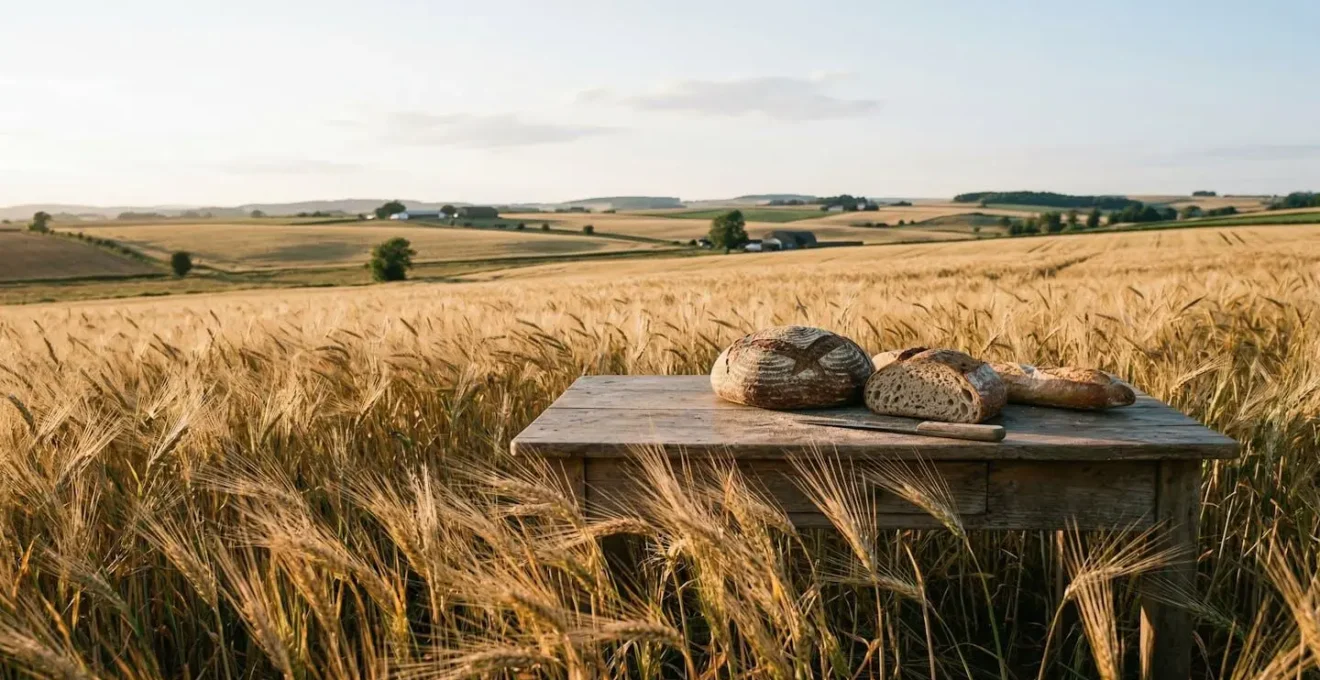
Moving from commodity feed wheat to a high-value heritage grain premium is less about the crop and more about mastering an entirely new business model.
- Success hinges on three pillars: advanced agronomic risk management, non-negotiable quality control, and a direct-to-market channel strategy.
- Controlling the value chain, from seed purity to final packaging, is where the majority of the premium is captured.
Recommendation: Identify and build a relationship with a viable route to market—be it a local baker or a direct-to-consumer platform—before planting a single seed.
For the arable farmer tired of the volatile commodity market, the allure of heritage wheat is undeniable. Whispers of £300 per tonne premiums and direct relationships with artisan bakers paint a picture of a more profitable and fulfilling way of farming. However, many who attempt this transition find the reality far more complex than simply switching a variety in the drill. The common advice to “focus on flavour” or “talk to bakers” barely scratches the surface of what is required.
The truth is that capturing this premium is not a simple crop substitution; it is a fundamental shift in business strategy. It requires moving from being a price-taker in a bulk system to becoming a meticulous manager of a niche value chain. This involves a new level of expertise in agronomy to manage unique production risks, an obsessive focus on post-harvest quality specifications that are alien to the feed market, and a proactive approach to marketing and sales. The journey from commodity to artisan supplier is about taking control at every stage.
This article will deconstruct the process, moving beyond the romanticism to provide a clear, strategic framework. We will explore the technical reasons why these grains command a premium, how to manage their inherent risks, what quality parameters are non-negotiable, and how to structure your business to capture the maximum value from every tonne produced. This is the blueprint for exiting the commodity cycle and building a resilient, high-value arable enterprise.
To navigate this transition successfully, it’s essential to understand each component of the value chain. The following sections break down the critical decisions and operational details you’ll need to master, from the field to the final sale.
Summary: Your Guide to a High-Value Heritage Wheat Enterprise
- Why Modern Chorleywood Process Bread Can’t Use Heritage Grains?
- How to Manage Lodging Risk in 1.5m Tall Heritage Wheats?
- Einkorn or Emmer: Which Ancient Grain Has Higher Consumer Demand?
- The Combine Cleaning Mistake That Ruins Your Pure Seed Stock
- How to Mill and Bag Your Own Flour to Capture 100% of the Value?
- Farm Shop or Wholesaler: Which Route Offers Better Security During a Recession?
- The Mill Quality Mistake That Rejects Blends at the Intake
- Farm-to-Fork Marketing: Do QR Codes Actually Increase Farm Shop Sales?
Why Modern Chorleywood Process Bread Can’t Use Heritage Grains?
To understand the value of heritage wheat, you must first understand why it is incompatible with the dominant industrial bread-making method: the Chorleywood Bread Process (CBP). Developed in the 1960s, CBP revolutionised the baking industry by using intense mechanical energy to develop dough rapidly. This high-speed mixing was a game-changer, allowing bakeries to use lower-protein domestic wheat and drastically cut fermentation times. It is a process built for speed and efficiency, relying on a specific kind of gluten structure that can withstand intense punishment.
Heritage grains, with their often lower-yield and more fragile, extensible gluten structures, simply cannot tolerate this. The very qualities that an artisan baker seeks—complex flavour profiles and a unique protein makeup—cause the dough to break down under the high-energy conditions of CBP. Research shows the process uses intense mechanical energy, with some estimates at 11 Wh/kg of dough, which is far too aggressive for the delicate protein strands in grains like Einkorn or Marquis. Submitting these wheats to a CBP mixer would destroy the dough’s integrity, resulting in a poor-quality, unworkable product.
This fundamental incompatibility is the very source of the niche market. As one analysis notes, the CBP “allowed the fermentation time to be drastically reduced, and meant that the lower-protein British wheats could be used in place of the more expensive North American imports.” The entire industrial system was built to accommodate one type of wheat, leaving a gap for grains that require a slower, more traditional fermentation process. This is the gap that artisan bakers, and by extension, you as a grower, are positioned to fill. You are not just selling wheat; you are selling the key ingredient for an entirely different production philosophy.
How to Manage Lodging Risk in 1.5m Tall Heritage Wheats?
The most significant agronomic challenge when leaving the world of modern semi-dwarf varieties is managing lodging. Heritage wheats can easily reach heights of 1.5 metres, making their long, elegant stems highly susceptible to wind and rain, especially during grain fill. A lodged crop is not just difficult to harvest; it leads to uneven ripening, increased disease pressure, and, most critically for this market, a catastrophic loss of grain quality. A lodged crop will almost certainly fail to meet the high Hagberg Falling Number and specific weight requirements of an artisan miller.
However, lodging is not an unavoidable fate; it is a manageable risk. A proactive agronomic strategy is essential for protecting your investment. This is not about a single application of a plant growth regulator (PGR) but a season-long approach that builds resilience into the crop from day one. The goal is to create strong, thick-walled stems and robust root systems that can support the tall plant architecture through to harvest.
Key interventions focus on controlling plant density and nitrogen timing. Overly thick crops with lush, early growth are far more prone to failure. Consider these established practices to build a lodging-resistant crop:
- Delayed Sowing: A slight delay in the autumn drilling window can significantly improve standability. Data from Central England suggests a one-week delay can increase the lodging resistance score by 0.5 points.
- Strategic Nitrogen Application: Avoid heavy early N doses. Splitting applications and delaying the first split helps prevent excessive tiller numbers and weak stem development.
- Reduced Plant Populations: Aiming for a target population of 200-400 plants/m² reduces inter-plant competition, leading to stronger individual stems and decreased root lodging risk.
- Judicious PGR Use: Plant growth regulators remain a vital tool. A well-timed application at GS31 can increase both stem and root lodging resistance by 0.5-1.5 points, providing crucial insurance.
- In-Season Monitoring: Don’t rely on guesswork. Regularly walk the crop and measure plant height to assess risk and inform management decisions.
Einkorn or Emmer: Which Ancient Grain Has Higher Consumer Demand?
Once you’ve committed to the heritage market, a key decision is which variety to grow. While there are many options, two of the most discussed are Einkorn (Triticum monococcum) and Emmer (Triticum dicoccum), often sold as Farro. Both are ancient hulled wheats with unique nutritional profiles and culinary uses, but their market dynamics differ. Choosing between them requires an understanding of consumer trends and baker preferences.
Einkorn is often positioned as the “original” wheat, with a very simple genetic structure and a reputation for being more easily digestible by some people with gluten sensitivities (though it is not gluten-free). Its flavour is nutty and rich, and it produces a distinctive yellow-hued flour. Its demand is often driven by the health and wellness sector and home bakers seeking unique ingredients. Emmer, on the other hand, is more robust and versatile. As Farro, it has a strong foothold in the culinary world, used as a whole grain in salads, soups, and side dishes. Its flour is excellent for pasta and certain types of rustic bread.
The overall market for these grains is expanding rapidly. A market analysis from Fact.MR projects a 9.4% CAGR for low-gluten Emmer and Einkorn flour blends between 2026 and 2036, indicating strong and sustained consumer interest. The key is to determine which grain has more traction in your specific target market.
Case Study: Bluebird Grain Farms’ Market Experience
Bluebird Grain Farms in Washington State provides a compelling example of market dynamics. They experienced explosive growth in demand for spelt (a relative of emmer) at 360% year-over-year, while demand for Farro (emmer) also saw a very healthy 39% annual increase. This demonstrates a strong base for emmer/farro in established culinary uses. Their success in meeting local Pacific Northwest demand and their field trials of both emmer and einkorn in other states suggest there is room for both, but emmer/farro may have a broader, more established commercial base to tap into initially.
Ultimately, the choice may come down to your route to market. If you are selling to high-end restaurants, Emmer/Farro might be an easier sell. If you are targeting health food stores or direct-to-consumer online sales, Einkorn’s unique story and nutritional profile could be a stronger marketing tool. The best approach is to speak directly to potential buyers before committing to a variety.
The Combine Cleaning Mistake That Ruins Your Pure Seed Stock
For a commodity wheat farmer, a few stray grains from the previous field are a rounding error. For a heritage grain producer, they represent contamination that can lead to a rejected load and the complete loss of your premium. Maintaining 100% seed purity is not a “nice-to-have”; it is a contractual obligation and a cornerstone of your brand. The single biggest threat to this purity is an inadequately cleaned combine harvester.
The amount of material retained inside a combine after it appears empty is staggering. Even after running the unloading auger until it’s clear, a significant amount of grain, chaff, and weed seeds remains lodged in the machine’s complex internal pathways. Iowa State University Extension research indicates that 125-150 lbs of grain and other biomaterial can be retained inside a combine even after one minute of running the augers empty. When moving from a field of modern wheat to your high-value heritage crop, this level of contamination is unacceptable.
A thorough, systematic clean-out protocol between fields, and especially between different crops, is therefore one of the most critical operational steps you will take. This is a non-negotiable part of your quality control system. It requires time and attention to detail but is far less costly than a rejected delivery.
Action Plan: Between-Field Combine Clean-Out Protocol
- Access Key Areas: Open all doors at the bottom of the clean grain elevator and the unloading auger sump in the grain tank. If time permits, removing the header provides superior access.
- Run the Machine: Start the combine and run the thresher and separator at full speed. Critically, ensure the cleaning shoe sieves are fully open to allow all material to pass through.
- Maximise Airflow: Adjust the cleaning fan to its maximum speed and let the entire system run for a minimum of two minutes. This purges a significant amount of lodged material.
- Use Compressed Air: With the machine off, use a high-powered leaf blower or air compressor to clean all exterior surfaces, paying special attention to the header, feederhouse, and straw spreader where material accumulates.
- Clean Traps and Sumps: Manually clean out the rock trap and any other sumps or collection points where grain can be held.
- Final Check: Before moving to the next field, ensure all access doors and traps are securely closed to prevent loss of your valuable new crop.
How to Mill and Bag Your Own Flour to Capture 100% of the Value?
Growing a perfect crop of heritage wheat is only the first step. The real opportunity to maximise your premium lies in taking control of the value chain. Selling your grain to a miller is a good first step away from the commodity market, but to capture the full value your crop represents, you must consider becoming the miller yourself. On-farm milling and bagging transforms you from a raw material supplier into a branded, food-grade product manufacturer.
This vertical integration allows you to control quality at every stage and, most importantly, to control the final retail price. As the Cornell University eOrganic Extension service notes, it’s a proven strategy for maximising returns. They state:
Through direct marketing, farmers are able to sell wheat kernels and flours from these hulled wheats at a high price per pound to chefs, bakers, and consumers.
– Cornell University eOrganic Extension, Growing and Dehulling Ancient Grains guide
Investing in a small-scale mill (like an Osttiroler or similar stone mill) and bagging equipment requires capital, but it unlocks a new tier of profitability. You are no longer just selling “wheat”; you are selling “Anarchy Acres Red Fife Flour,” a product with provenance, a story, and a direct connection to the land. This allows you to build a brand that commands loyalty and a premium price far beyond what a simple grain delivery could ever achieve.
Case Study: Anarchy Acres’ Farm-to-Flour Model
Anarchy Acres in Wisconsin exemplifies this strategy perfectly. They operate a complete farm-to-flour business for several heritage wheat varieties, including Marquis and Red Fife. They don’t just grow the wheat; they process it through their own on-farm mill. Crucially, they’ve invested in the branding, using antique 1880s letterpress equipment to hand-print their flour bags. This creates a powerful and authentic brand identity that resonates with artisan bakers and consumers. By controlling the entire chain from seed selection to final packaging, they command premium prices and have built a resilient business insulated from commodity market fluctuations.
Farm Shop or Wholesaler: Which Route Offers Better Security During a Recession?
Choosing your route to market is one of the most critical strategic decisions you’ll make. The two primary channels are selling directly to consumers (DTC) via a farm shop or online store, or selling in bulk to a wholesaler who then services multiple bakeries and retailers. Each has distinct advantages and risks, especially during an economic downturn. There is no single “best” answer; the right choice depends on your business structure, risk tolerance, and cash flow needs.
The wholesale route offers predictability. You negotiate a price, sign a contract, and have a clear delivery schedule. This smooths out cash flow and reduces your marketing burden, as the wholesaler handles the final sales. However, it also concentrates your risk. If that single wholesale buyer faces financial trouble or decides to delist your product, your entire market can disappear overnight. During a recession, wholesalers are also under immense pressure to cut costs, which can lead to them trying to squeeze your hard-won premium.
The farm shop or DTC route offers higher margins and full control over your pricing and brand story. Your risk is distributed across hundreds or thousands of individual customers, making you resilient to the failure of any single one. A potential pitfall is variable cash flow dependent on foot traffic or online sales. However, high-quality, local food with a strong story often benefits from an “affordable luxury” effect during recessions. Consumers may cut back on expensive holidays or cars, but a £5 bag of unique, flavourful flour from a local farm becomes an accessible treat. This trend can provide a surprising degree of security.
The following table, based on an analysis of different market factors, breaks down the risk profile of each channel.
| Factor | Farm Shop Direct Sales | Wholesaler Route |
|---|---|---|
| Risk Type | Distributed (lower footfall across many customers) | Concentrated (single buyer failure) |
| Consumer Behavior During Recession | Affordable luxury effect may boost unique item sales | Volume maintained but pressure to cut costs/squeeze premiums |
| Cash Flow | Variable, dependent on foot traffic | More predictable with contracts |
| Price Control | Full control over retail pricing | Negotiated wholesale rates |
| Marketing Costs | Higher (direct customer acquisition) | Lower (wholesaler handles retail marketing) |
| Infrastructure Investment | Moderate (shop setup, POS, storage) | Lower (bulk storage and logistics) |
The Mill Quality Mistake That Rejects Blends at the Intake
Meeting your buyer’s quality specification is the final, non-negotiable step in securing your premium. You can do everything else right—manage lodging, maintain purity, choose the right variety—but if the grain fails the intake tests at the mill, it will be rejected or downgraded to a commodity price. Of all the parameters, one of the most critical for artisan bakers is the Hagberg Falling Number (HFN). This test measures the alpha-amylase enzyme activity in the grain, which directly impacts how the flour will behave during fermentation and baking.
A low HFN indicates high enzyme activity, often caused by pre-harvest sprouting in the ear (a major risk in a lodged crop). This enzymatic activity breaks down starches too quickly, resulting in a sticky, unworkable dough and a poor-quality loaf. A high HFN indicates sound, unspoiled grain. While specifications vary, grain quality research shows that a minimum HFN of 250 seconds is generally required to produce good quality bread. Anything significantly below this will be rejected by a discerning miller, as it jeopardises their entire production process.
This is where agronomy and quality control directly intersect. The lodging you failed to manage in June can be the direct cause of the load rejection you suffer in August. The link is direct and unforgiving.
Case Study: The Domino Effect of Lodging on Grain Quality
Classic research by Weibel and Pendleton documented the devastating impact of lodging on key milling parameters. In their study, wheat that lodged during the early grain-filling stage saw its Hagberg Falling Number plummet from a healthy 289 seconds to just 114 seconds—far below any commercial threshold. The damage didn’t stop there. Test weight dropped from 42.2g to 37.2g, and specific grain weight declined from 70.3 kg/hl to 65.8 kg/hl. Each of these parameters on its own would be grounds for rejection; together, they represent a total quality failure directly attributable to a single agronomic event.
This highlights the importance of viewing your crop through the eyes of your end user. You are not just growing tonnes; you are growing a precise set of specifications. Failing to protect those specifications in the field means you have nothing of value to sell at the mill gate.
Key Takeaways
- Securing a premium is a business strategy, not just a crop choice, requiring control over the entire value chain.
- Agronomic management of risks like lodging is critical, as it directly impacts the final milling quality and your premium.
- Vertical integration through on-farm milling and branding is the most effective way to capture 100% of the product’s value.
Farm-to-Fork Marketing: Do QR Codes Actually Increase Farm Shop Sales?
In the final step of the value chain, communicating the unique story of your grain becomes paramount. You have meticulously managed its growth, protected its purity, and perhaps even milled it yourself. Now you must convey that value to the final customer. As Scott Mowbray noted in *Bake from Scratch* magazine, artisan bakers seek out these grains because they “possess flavors and other qualities that were bred out of modern hybrid grains in the search for yield.” Your marketing must tell this story of superior quality and provenance.
In the digital age, tools like QR codes on packaging seem like an obvious way to bridge the gap between the physical product and its story. A customer in a farm shop can scan the code on a bag of your flour and be instantly transported to a webpage with videos of your farm, the story of the heritage variety, and recipes from the baker who uses it. In theory, this is the ultimate farm-to-fork connection.
But do they actually work? The answer is: it depends entirely on the execution. A QR code that simply links to your farm’s homepage is a missed opportunity and unlikely to drive sales. Its effectiveness hinges on providing immediate, tangible value to the consumer at the moment of decision. To be more than a gimmick, a QR code strategy must be thoughtful. The linked content should be mobile-friendly, visually engaging, and offer something the customer cannot get from the packaging alone. This could include:
- A short video (under 60 seconds) showing the crop in the field and you, the farmer, talking about it.
- The specific recipe the local artisan baker uses for that flour.
- Details on the unique flavour profile and nutritional benefits of that specific variety.
- A clear link to purchase more online, capturing a future sale.
When used as a gateway to compelling content that reinforces the brand’s provenance and authenticity, a QR code can be a powerful sales tool. It helps justify the premium price by making the product’s story tangible and immediate. It fails when it’s a lazy, low-effort addition that leads to a generic or difficult-to-navigate website. Success is not in the code itself, but in the quality of the story it unlocks.
To successfully transition from a commodity producer to a premium artisan supplier, you must internalise this new philosophy. It is a journey that requires expertise at every step, from agronomy to marketing. To put these strategies into practice, the next logical step is to begin building relationships with your potential end-users and developing a business plan that addresses each stage of this complex but rewarding value chain.