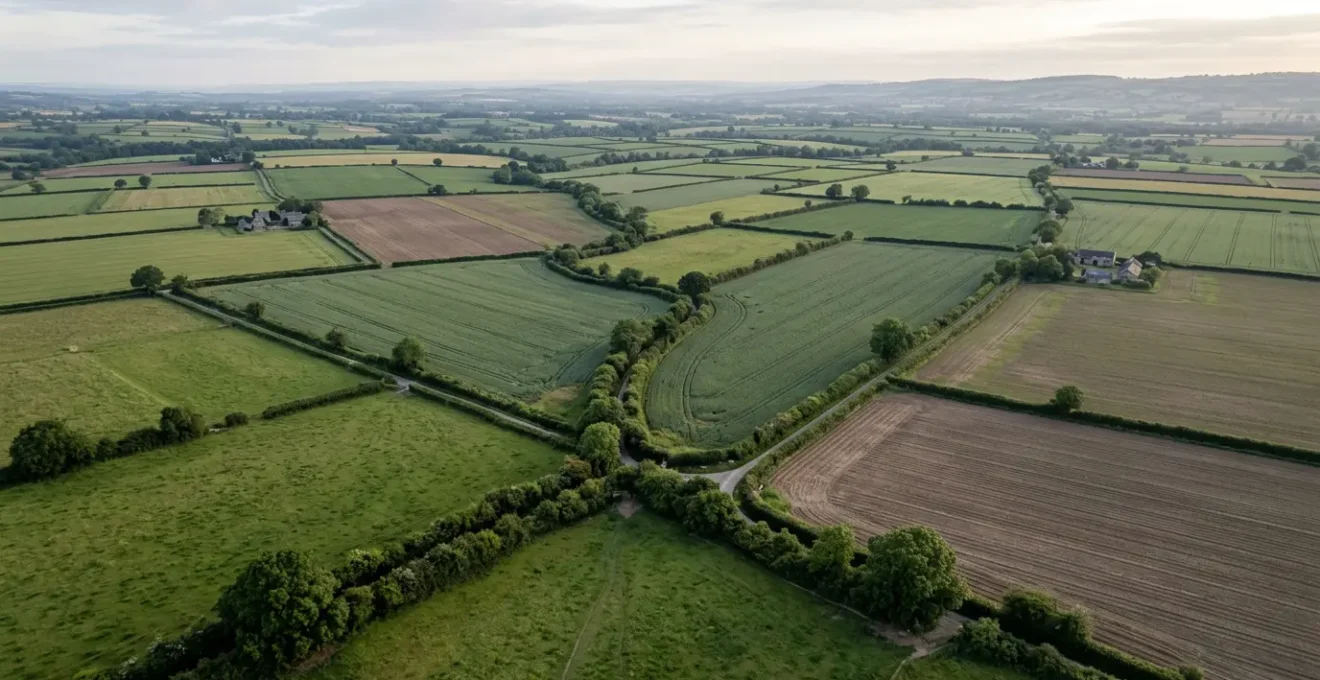
Securing a Higher Tier agreement is no longer about isolated habitat creation; it’s about proving you can deliver strategic, landscape-scale connectivity that meets Natural England’s new priorities.
- Your application must function as an ‘ecological business case’, demonstrating how linking habitats on your holding solves a larger environmental problem.
- Success hinges on meticulous planning, from species selection on challenging soils to compliant management and evidence-based claims.
Recommendation: Shift your mindset from simply ‘planting a hedge’ to ‘designing a functional wildlife corridor’ and document every step as if preparing for an audit.
For any UK landowner considering a Countryside Stewardship Higher Tier application, the goal is clear: maximize environmental payments by delivering high-value outcomes. For years, the advice has been to establish habitat features like beetle banks, flower margins, and hedgerows. Yet, many well-intentioned applications fall short, failing to secure the more lucrative agreements. The common approach of creating isolated ‘islands’ of habitat, while beneficial, no longer satisfies the increasingly sophisticated requirements set by Natural England. Landowners are often left wondering why their significant investment in planting doesn’t translate into a successful Higher Tier contract.
The conversation around stewardship is evolving. It’s moving beyond the simple presence of environmental features towards their function within a wider ecological network. The mistake is to see your farm as a collection of separate fields, each with a potential stewardship option. The key to unlocking top-tier payments lies in a fundamental shift in perspective. But what if the secret wasn’t just adding more habitat, but strategically connecting the pieces you already have? What if the difference between a rejected application and a funded one was the ability to tell a compelling story of connectivity across your entire holding?
This guide provides a specialist’s view on precisely that. We will move beyond the basics of planting and delve into the strategic mindset required to build a successful Higher Tier application centred on habitat connectivity. We will dissect the new priorities, tackle practical establishment challenges, weigh the scoring of different connector types, and outline the critical management and documentation needed to not only secure your agreement but also to keep it. This is your blueprint for transforming a standard application into a winning ecological business case.
To help you navigate this complex process, this article is structured to address the key strategic questions you’ll face. The following summary outlines the path we will take, from understanding the policy shift to implementing a compliant, high-scoring connectivity plan on your farm.
Summary: A Specialist’s Guide to Qualifying for Higher Tier Stewardship Payments
- Why ‘Stepping Stones’ Are No Longer Enough for Natural England?
- How to Establish a New Hedge Link on Heavy Clay in Winter?
- Scrub Belts or Flower Margins: Which Connector Scores Higher for Birds?
- The Flailing Mistake That Severs the Connectivity Corridor
- When to Claim: Sequencing Your Planting to Match Grant Windows
- Mid-Field or Headland: Where Do Beneficials Have the Biggest Impact?
- How to Combine Woodland Creation Grants with BPS on the Same Field?
- Planting Trees on Arable Land: How to Minimize Yield Loss at Headlands?
Why ‘Stepping Stones’ Are No Longer Enough for Natural England?
The core reason many Higher Tier applications are unsuccessful is a failure to grasp a fundamental shift in Natural England’s strategy. The era of rewarding isolated “stepping stones” of habitat is over. The new focus is squarely on creating functional, interconnected ecological networks at a landscape scale. An application that proposes a new hedge here and a wildflower plot there, without a clear, overarching narrative of how they link together, is likely to be viewed as a series of disconnected actions rather than a cohesive plan. This strategic change is a direct response to ecological evidence showing that fragmented habitats are far less effective for species survival and dispersal than continuous corridors.
Your application must now be framed as an ‘ecological business case’. You are not just asking for funding to plant trees or hedges; you are proposing a solution to a problem Natural England wants to solve: habitat fragmentation. The new Countryside Stewardship Higher Tier scheme explicitly prioritises this, with applications now being co-developed with Natural England advisers. As Natural England’s new framework shows, their advisers are tasked to work with farmers on connectivity-focused plans rather than isolated patches. This makes the pre-application engagement process absolutely critical.
The process has become more competitive and collaborative. While recent data shows a high proportion of applications are taken forward for development, this is after an initial filtering process where only the most promising, connectivity-led proposals are invited to proceed. Demonstrating from the outset that you understand and can deliver landscape-scale collaboration is the new barrier to entry. Your plan must show how linking a woodland block to a species-rich grassland via a new, thick hedgerow creates a functional corridor that benefits priority species. It’s this level of strategic thinking that elevates an application into the Higher Tier category.
How to Establish a New Hedge Link on Heavy Clay in Winter?
One of the most common practical barriers to creating hedgerow connectivity is dealing with challenging soil types, particularly heavy clay in winter. Poor establishment not only wastes time and money but can also jeopardise your stewardship agreement if capital works fail. Heavy clay is prone to compaction and waterlogging, creating an anaerobic environment that can kill the roots of young hedge whips before they have a chance to establish. However, with the right technique and timing, successful establishment is entirely achievable.
The key is to work with the soil, not against it. Avoid planting in the wettest part of winter when the ground is saturated. Delaying until late winter or early spring allows the worst of the waterlogging to pass. When preparing the ground, the goal is to improve structure without creating a ‘sump’ that collects water. The following illustration highlights the correct planting approach for bare-root whips, focusing on the critical root-to-soil contact needed for survival.
As the image shows, the focus is on a tight ‘notch’ planting method. This ensures the delicate root system makes firm contact with the soil, eliminating air pockets. To achieve this and ensure maximum survival rates, follow a clear, proven process for establishment on clay soils. The following steps are critical for success:
- Delay planting on heavy clay soils until late winter or early spring to minimize waterlogging risk for dormant roots.
- Work in organic matter (like composted bark or well-rotted manure with straw) to improve soil texture, but mix it well with the native soil to avoid creating a non-draining “bowl” effect.
- Use the notch planting technique for bare-root whips, creating a narrow slit with a spade, inserting the plant, and firmly ‘heeling-in’ by pressing the soil back around the roots for stability.
- Select clay-tolerant native species such as hawthorn, blackthorn, field maple, hazel, or dogwood for the highest chance of survival.
- Install appropriate protection, like spiral guards against rabbits and hares or full fencing for livestock, and maintain it until the hedge is well-established.
Scrub Belts or Flower Margins: Which Connector Scores Higher for Birds?
When designing a connectivity plan, a key strategic decision is choosing the right type of habitat link. Two popular and effective options are creating scrub belts or planting new hedgerows (often under options like BN11), and establishing flower-rich margins (like AB8). While both are valuable, they serve different ecological functions and are scored and remunerated differently, especially when considering benefits for priority farmland birds. A common question is which will give your application a greater edge. The answer depends on your specific objectives and existing farm landscape.
Flower-rich margins (AB8) are primarily designed for pollinators and beneficial insects, and also provide a source of seed for foraging birds. They are relatively quick to establish. In contrast, new hedges (BN11) and managed scrub provide critical nesting habitat, winter shelter, and safe passage for birds and other wildlife like dormice. While they take longer to mature, their structural complexity offers a permanent corridor that flower margins cannot replicate. From a scoring perspective, a well-placed hedgerow linking two existing blocks of woodland will almost always be seen by a Natural England adviser as a higher-value ‘connectivity’ action for birds than a flower margin in the same location. The following table compares the key financial and ecological aspects of these options.
| Option Code | Option Type | Payment Rate (per ha/per m) | Establishment Cost Factor | Priority Species Benefit |
|---|---|---|---|---|
| AB8 | Flower-rich margins and plots | £539/ha | Moderate – seed mix required | Pollinators, foraging birds, beneficial insects |
| BN11 | Planting new hedges (connectivity) | £22.97/metre | Higher – whips, guards, labour | Nesting birds, dormice, connectivity corridor |
| BE3 | Management of hedgerows | £13/100m yearly | Low – ongoing management | Habitat maintenance, corridor function |
The data from the official 2024 payment rates makes it clear: while flower margins offer an attractive revenue stream per hectare, the capital investment and long-term ecological impact of planting a new hedge as a structural link is often what unlocks a Higher Tier agreement. The strategy, therefore, is not necessarily to choose one over the other, but to use them in combination: a new hedge (BN11) for the structural corridor, flanked by a flower-rich margin (AB8) to provide a foraging resource. This ‘stacking’ of options demonstrates a sophisticated, multi-functional approach that is highly attractive to assessors.
The Flailing Mistake That Severs the Connectivity Corridor
Establishing a new hedgerow is only half the battle; its long-term management is what determines its value as a wildlife corridor. The single most common and damaging mistake made is improper flailing. An annual, severe “box-cutting” approach, while seemingly tidy, systematically removes all flowering and fruiting wood, destroying the food resources on which birds and insects depend. More importantly, it prevents the hedge from developing the dense, complex structure needed for nesting and shelter. This effectively severs the connectivity you worked so hard to create, turning a potential wildlife superhighway into a sterile green fence, and putting you in breach of your stewardship agreement.
The financial and legal risks of non-compliance are significant. The Management of Hedgerows Regulations are robustly enforced, and breaches in stewardship agreements can lead to payment reductions or even substantial fines. For serious cases of non-compliance, Variable Monetary Penalties can reach up to £250,000. Adhering to the management prescriptions, such as those for the BE3 (Management of Hedgerows) option, is therefore not just an ecological requirement but a critical business risk to manage. The prescribed method is rotational cutting, which ensures that at any one time, a significant portion of your hedgerow network remains uncut and productive for wildlife.
Implementing a compliant cutting schedule requires planning and good record-keeping. The aim is to cut no more than a third of your hedges in any given year, and always outside the bird nesting season (1st March to 31st August). This creates a mosaic of different growth stages across the farm, providing a continuous supply of food and habitat. The following checklist outlines a compliant system that satisfies both the rules and the ecological objectives.
Your Action Plan for Compliant Rotational Hedgerow Management
- Identify Hedgerows: Map all hedgerows included in your BE3 agreement and divide them into three roughly equal sections (A, B, C) for your rotational plan.
- Inventory Current State: Before any cutting, document the current condition of each section—note height, width, any gaps, and the presence of flowering or fruiting wood.
- Check for Coherence: Ensure your cutting plan maintains an A-shape profile (wider at the base) and aims for a minimum height of 2 metres, as per BE3 guidelines.
- Assess Wildlife Value: During your inventory, identify sections with the most berries and blossom. Prioritise leaving these sections uncut in the current year to maximise food resources.
- Create Your Cutting Map: Formalise your plan. In Year 1, cut section A. In Year 2, cut B. In Year 3, cut C. Document all cutting activity with date-stamped, GPS-tagged photos for RPA compliance.
When to Claim: Sequencing Your Planting to Match Grant Windows
Securing a Higher Tier agreement is a significant achievement, but it’s the start of a multi-year project. A common pitfall is a mismatch between cash flow and the practicalities of completing capital works like hedge planting. Understanding the claims process and sequencing your work to align with payment windows is a crucial piece of financial management. You don’t get all the capital grant money upfront, so planning how and when you will plant—and when you will get paid for it—is essential.
Under the Higher Tier Capital Grants system, you typically have three years to complete capital items. This flexibility is a strategic tool. For a large-scale hedge planting project (BN11), you can phase the work over two winters, spreading the cost of plants, guards, and labour. The first payment from the RPA usually arrives around four months after your agreement is accepted. This initial payment can be used to fund the first phase of planting. You can then submit a claim for the completed work, and the subsequent payment can fund the next phase. This requires careful planning and, crucially, meticulous evidence gathering.
Every capital claim must be backed by clear evidence. This isn’t just bureaucracy; it’s how the RPA verifies that public money has been spent correctly. For hedge planting, this means you need to provide supplier invoices for the plants and guards, along with date-stamped, GPS-tagged photographs of the completed work. The image below shows exactly the kind of evidence required: a clear photo of the newly planted and guarded hedge, taken on a device that embeds location data.
This process transforms you from a farmer into a project manager. You must treat the evidence gathering not as an afterthought but as an integral part of the planting process itself. Taking photos as you go, keeping invoices organised, and submitting claims promptly are the administrative actions that ensure your cash flow remains healthy and your project stays on track across the five-year agreement period.
Mid-Field or Headland: Where Do Beneficials Have the Biggest Impact?
Once you’ve committed to creating habitat corridors, the next strategic question is placement. For options like in-field grass strips or beetle banks, designed to support beneficial insects and pollinators, where do you site them for maximum ecological and scoring impact? The default position is often the headland, as this is perceived to minimise disruption to cropping operations. However, from an ecological perspective, a mid-field corridor can be far more valuable, and this is increasingly recognised by Natural England.
Headlands are often subject to compaction, spray drift, and disturbance, making them a suboptimal environment. A grass strip or beetle bank placed in the middle of a large arable field acts as a ‘habitat reservoir’ or a ‘stepping stone’ *within* the field itself. It allows beneficial insects like predatory beetles and hoverflies to travel much further into the crop, providing more effective pest control. This enhanced ecological function is something that can significantly boost the score of your application. In the words of the official guidance, this strategy is highly valued.
In arable-dominant landscapes, well-placed mid-field options can be viewed as higher-value ‘habitat reservoirs’ by Natural England, potentially boosting your application’s score.
– Natural England, Higher Tier Application Guidance
This recognition is also reflected in payment rates. The increased payment for in-field options for pollinators and beneficials demonstrates a clear policy signal that these are high-priority actions. While headland margins are good, mid-field options are often better. The strategic decision for a landowner is to weigh the perceived inconvenience against the potential for a higher score and a more ecologically functional holding. Using GPS yield maps to identify unproductive areas within a field can often reveal logical locations for these features that have minimal impact on overall profitability, while delivering a major win for your stewardship application.
How to Combine Woodland Creation Grants with BPS on the Same Field?
A sophisticated connectivity strategy often involves more than just hedgerows. Integrating small-scale woodland creation into your plan can dramatically increase its ecological value and scoring potential. A major concern for landowners, however, has been the potential for conflict between different grant schemes, particularly losing Basic Payment Scheme (BPS) eligibility on land planted with trees. As BPS is phased out and replaced by a suite of Environmental Land Management (ELM) schemes, the system is becoming more integrated, but requires careful navigation.
The key is to understand how schemes like the England Woodland Creation Offer (EWCO) can be ‘stacked’ with new schemes like the Sustainable Farming Incentive (SFI). The ambition, expected to be realised by 2025, is for a streamlined, single application service for Countryside Stewardship, SFI, and other grants. This will make it easier to design a whole-farm plan that combines, for example, planting a small woodland block under EWCO on a less productive field corner, while the rest of the field remains in an SFI-arable rotation. This allows you to maximise environmental payments across the holding without taking large areas of productive land completely out of farming.
The critical element for compliance is meticulous parcel management on your Rural Payments Agency (RPA) digital maps. You must clearly divide the land parcel, mapping the area designated for woodland creation separately from the area remaining in arable or grassland SFI options. This prevents any ‘double funding’ conflicts, where you could be inadvertently claiming payment for two different, incompatible actions on the same piece of land. As BPS disappears, the ability to skilfully combine EWCO, CS, and SFI actions on the same holding will become a hallmark of the most successful and profitable farm environmental plans. It requires forward-planning and a good working knowledge of the RPA mapping system.
Key Takeaways
- Strategic connectivity, not isolated habitats, is the new key to unlocking Higher Tier funding.
- Management is as important as establishment; improper flailing can nullify your efforts and breach your agreement.
- Meticulous documentation (GPS photos, invoices) is non-negotiable for successful capital claims and cash flow management.
Planting Trees on Arable Land: How to Minimize Yield Loss at Headlands?
While integrating trees and hedges into an arable landscape is ecologically powerful, a primary concern for any farmer is the impact on crop yield. The assumption is that planting on productive land will always result in a net financial loss. However, a strategic, data-led approach can allow for significant habitat creation while having a minimal, or even positive, impact on overall farm profitability. The solution lies in targeting the least productive parts of your fields: the headlands.
Headlands are notoriously inefficient. They suffer from soil compaction due to turning machinery, leading to poor drainage and nutrient uptake. Yield maps generated by modern combine harvesters consistently show these outer 6-12 metres of a field underperforming, often significantly. By selectively taking these low-yielding zones out of production and planting them with trees or hedges, you can create valuable habitat corridors while concentrating your inputs (seed, fertiliser, fuel) on the more productive areas of the field. This targeted approach can actually increase your overall margin per hectare, as you are no longer spending money trying to farm unprofitable ground.
The process for establishing trees on these compacted, often heavy clay headlands follows similar principles to hedge planting. Good ground preparation is vital to break up the compacted pan and allow roots to establish. Selecting the right tree species is also critical to minimise future issues. Species with very aggressive lateral root systems, like poplar or willow, should be avoided near crops as they can compete for water and nutrients. Instead, consider species with a slimmer profile and less invasive roots, such as field maple, wild cherry, or crab apple. This ensures the new woodland edge doesn’t create a new yield-loss problem for the adjacent crop.
- Use combine GPS yield maps to identify consistently low-yielding headland zones (typically the outer 6-12 metres) for targeted planting.
- Prepare heavy clay soil in autumn or early winter when dry by digging or sub-soiling the planting area to break up compaction.
- Avoid creating a ‘sump’ by backfilling planting holes primarily with native soil, mixed with only a modest amount of organic matter.
- Select tree species with less aggressive lateral root systems, such as field maple, wild cherry, or crab apple, to minimize competition with adjacent crops.
- Plant bare-root stock in late winter when the clay is workable, ensuring roots are well-spread and firmly in contact with the native soil structure.
By shifting your focus from isolated actions to a cohesive, farm-scale connectivity plan, and by backing it with meticulous management and documentation, you transform your Countryside Stewardship application. It becomes a compelling investment proposal that a Natural England adviser can champion. To put these strategies into practice, the next logical step is to conduct a full audit of your own holding’s connectivity potential and build your ecological business case.