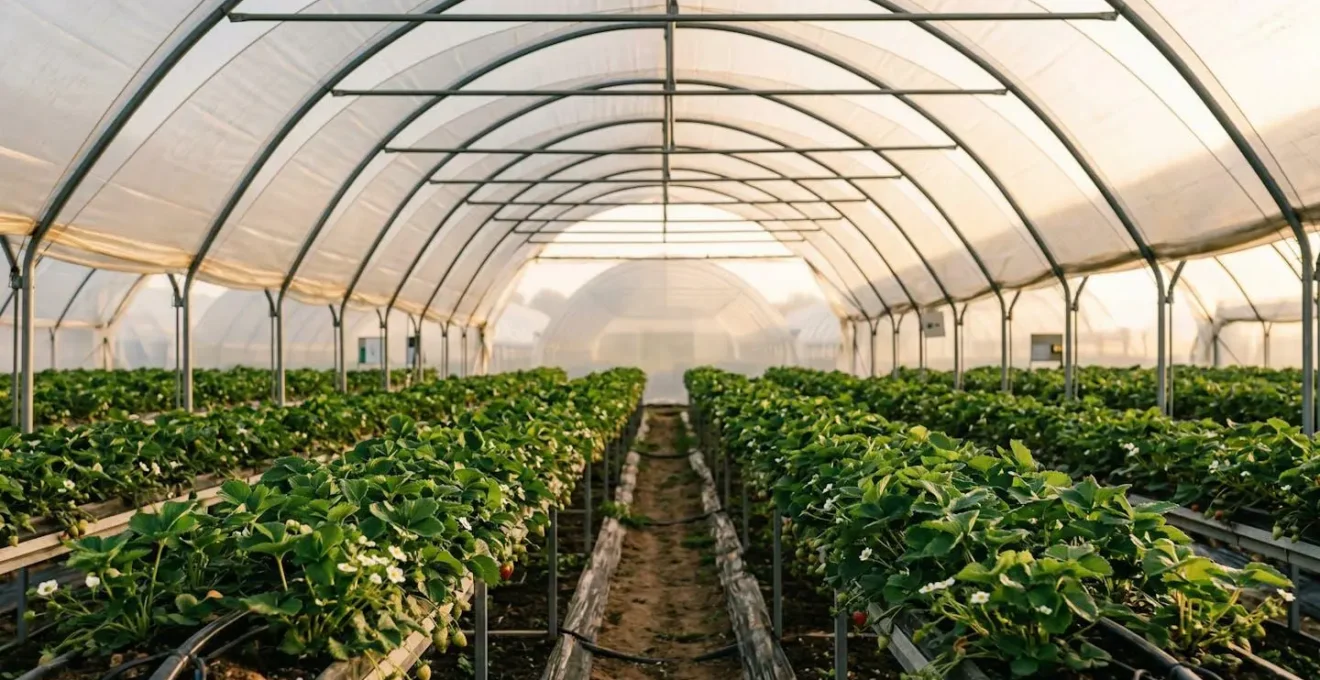
The common approach of simply swapping chemical sprays for biological ‘sprays’ is a primary reason for failure in thrips management.
- Effective control comes from preventative predator colonisation, not reactive releases after pests are seen.
- Success hinges on engineering a complete tunnel ecosystem, addressing hidden saboteurs like fungicide residues and environmental mismatches.
Recommendation: Shift your mindset from ‘pest fighter’ to ‘ecosystem engineer’ by implementing a holistic strategy that integrates habitat, monitoring, and predator selection.
For soft fruit growers, the challenge of managing Western Flower Thrips is reaching a critical point. With the withdrawal of key pesticides and rapidly developing resistance to those that remain, the old playbook is no longer effective. Many growers have turned to biological controls, releasing predatory mites with the hope of a silver bullet, only to be met with disappointing results and continued crop damage. The frustration is understandable, but it often stems from a fundamental misunderstanding of what makes biocontrol work.
The solution isn’t to find a better biological ‘product’ to spray, but to fundamentally change the approach. It requires a shift from being a reactive pest controller to a proactive ecosystem engineer. This means you don’t just release predators; you create the ideal conditions for them to establish a permanent, self-sustaining ‘predator workforce’ inside your polytunnels. It involves understanding not just the pest, but the predator’s specific needs for temperature, humidity, and even day length. It also demands a forensic look at your entire crop protection program to identify the hidden system saboteurs—the seemingly harmless fungicides or adjuvants that can wipe out your expensive biological investment overnight.
This guide will walk you through the operational intelligence needed to build a truly resilient system. We will move from the foundational principles of thrips management to a broader farm-wide strategy, demonstrating how the same ecological principles can solve other persistent problems like rodents and slugs, and even boost your yield through enhanced pollination. It’s time to stop fighting fires and start building a fortress.
To help you navigate these advanced strategies, this article breaks down the key components of an integrated, ecosystem-based approach. The following summary outlines the path from mastering thrips control to leveraging ecology for farm-wide benefits.
Summary: A Grower’s Guide to Thrips Control and Beyond
- Why You Must Release Predatory Mites Before You See the Pest?
- How to Distribute Sachets in Strawberries for Even Coverage?
- Orius or Phytoseiulus: Which Predator Works Best in High Temperatures?
- The Fungicide Residue That Kills Your Expensive Biologicals
- When to Top Up: Reading Pest Monitoring Cards to Schedule Releases
- Why a Pair of Barn Owls Eats More Rats Than 5kg of Bait?
- Why Carabid Beetles Are Your Best Defense Against Slugs?
- How to Boost Oilseed Rape Yields by 20% Using Wild Pollinators?
Why You Must Release Predatory Mites Before You See the Pest?
The single most common mistake in thrips biocontrol is waiting until you see the pest to act. Unlike a chemical spray that provides a quick knockdown, biological control agents are a living workforce that needs time to build its numbers and colonise the crop. Releasing predators into an established and rapidly growing thrips population is like sending a small squad to fight an army; they will be overwhelmed before they can make an impact. The core principle of successful biocontrol is preventative colonisation.
Your goal is to have a healthy, distributed population of predatory mites already in place when the first thrips arrive. This requires introducing them early in the crop cycle, often weeks before pest pressure is expected. Research demonstrates that predatory mites like Amblyseius cucumeris require a significant establishment period to build a functional population capable of suppressing thrips. This proactive approach turns your crop into a ‘no-go zone’ for pests from the very beginning.
Case Study: Self-Sustaining Populations with Banker Plants
To solve the problem of feeding a predator workforce before the pest arrives, growers can use ‘banker plants’. USDA research on banker plant systems showed that predatory mites could be reared on pollen from plants like ornamental peppers or castor beans grown within the tunnel. The mites feed and reproduce on the banker plants and then naturally disperse into the main crop. This strategy creates a self-sustaining, in-tunnel predator population that is present and active for several months, providing continuous protection without the need for weekly costly releases.
By investing in establishing this standing army, you are not just treating a problem; you are building resilience directly into your cropping system. This initial investment in preventative colonisation pays dividends by preventing the population explosions that lead to economic damage.
How to Distribute Sachets in Strawberries for Even Coverage?
Once you’ve committed to a preventative strategy, the next operational challenge is effective deployment. Simply hanging predatory mite sachets randomly throughout the polytunnel is inefficient and leads to gaps in your defensive line. Strategic distribution is crucial for ensuring your ‘predator workforce’ is positioned to intercept thrips where they are most likely to enter and establish.
This means thinking like a pest. Thrips typically enter polytunnels through doors, vents, and on prevailing winds. Therefore, your sachet distribution should be concentrated in these high-risk gateway zones. Furthermore, the microclimate within the strawberry canopy plays a huge role in the success of the sachet breeding system. Sachets placed in direct sun or exposed to overhead irrigation will fail quickly. They need the higher humidity and protection found deep within the plant foliage to function as effective mini-predator-rearing facilities.
The image above illustrates the ideal placement: nestled within the dense foliage, protected from direct sun and water, creating a stable microclimate for the mites to emerge over several weeks. Achieving even coverage requires a systematic protocol that considers both pest biology and environmental factors.
- Identify Pest Gateways: Concentrate the initial placement of sachets near tunnel entrances, vents, and along the side of the tunnel that faces the prevailing wind. This creates a defensive barrier.
- Optimise for Microclimate: Place sachets within the lower to mid-canopy, ensuring they are shaded by leaves. This protects them from drying out and prolongs the emergence of predators.
- Calculate Density: A standard preventative rate is often one sachet per 6 feet of row. However, in high-pressure situations or around known hotspots, this should be increased to one sachet per plant or every other plant.
- Schedule Top-Ups: Slow-release sachets are not a ‘one-and-done’ solution. Introduce new sachets every 4-5 weeks to ensure a continuous emergence of new predators, maintaining consistent pressure on the pest population throughout the growing season.
This methodical approach ensures that your investment in biologicals is not wasted and that your entire crop is protected, not just isolated sections.
Orius or Phytoseiulus: Which Predator Works Best in High Temperatures?
Selecting the right predator is as critical as deploying it correctly. Not all beneficial insects are created equal, and their performance is heavily dependent on environmental conditions, particularly temperature and day length. For soft fruit growers in polytunnels, where temperatures can soar in summer, choosing a predator that thrives in the heat is essential. This is where a common point of confusion arises between generalist mites and specialist predators.
While predatory mites like *Amblyseius cucumeris* are excellent for early-season prevention, their effectiveness can decline as temperatures rise. This is when a more aggressive and heat-tolerant predator like *Orius insidiosus* (the minute pirate bug) should be introduced. However, *Orius* has its own specific operational requirements. As a technical advisor, one of the most important factors I stress is photoperiod. This was highlighted by a key piece of research:
Orius insidiosus displayed a long-day response with a critical photoperiod between L11:D13 and L12:D12. Some species enter diapause (a resting period) during shorter daylights, but not others.
– Van den Meiracker et al., Induction and termination of diapause in Orius predatory bugs
This means releasing *Orius* too early in the spring when days are short is a waste of money; they will simply go dormant. They are a tool for when temperatures are in the 68-85°F (20-29°C) range and day length exceeds 12 hours. The table below provides a clear comparison to help guide your selection.
| Characteristic | Orius (Minute Pirate Bug) | Amblyseius cucumeris | Amblyseius swirskii |
|---|---|---|---|
| Target Pest Stage | All mobile thrips stages, adults included | Immature thrips (1st instar larvae) | Thrips larvae, whitefly, spider mites |
| Temperature Tolerance | 68-85°F optimal, reduced activity >85°F | 68-77°F optimal (20-25°C) | High temperature tolerance, generalist |
| Photoperiod Sensitivity | HIGH – enters diapause under short days (<12h) | Moderate diapause response | More tolerant to varied photoperiods |
| Consumption Rate | 12+ thrips per day (aggressive) | Lower per-capita consumption | Moderate consumption, generalist diet |
| Alternative Food Source | None – requires prey | Can survive on pollen | Can feed on pollen and other mites |
| Best Application Timing | Once temps rise and days lengthen (spring/summer) | Early season preventative release | Year-round, especially high heat periods |
The Fungicide Residue That Kills Your Expensive Biologicals
One of the most devastating and often overlooked causes of biocontrol failure is chemical incompatibility. A grower can invest thousands in a sophisticated predator release program, only to have it silently wiped out by a single, seemingly harmless fungicide application. These are the system saboteurs. Research consistently shows that living Biological Control Agents (BCAs) are negatively impacted by incompatible fungicides, but the damage goes far beyond outright mortality.
Many chemicals don’t kill predators instantly but inflict sub-lethal effects: they can sterilize them, reduce their feeding rate, or impair their ability to hunt. This leads to a slow, mysterious decline in the biocontrol program’s effectiveness, leaving growers baffled as to why their investment isn’t paying off. The problem is compounded by ‘inert’ ingredients, adjuvants, and even some foliar feeds, which can be just as harmful as the active ingredient in a pesticide. A rigorous and proactive audit of all inputs is not just good practice; it’s essential for protecting your biocontrol investment.
This requires moving beyond simply checking the compatibility of a main fungicide. You must scrutinize every single product applied to your crop. A systematic audit is the only way to ensure you are not inadvertently sabotaging your own program.
Action Plan: Chemical Compatibility Audit
- Perform Total Ingredient Diligence: Before any purchase, cross-reference every planned input against predator compatibility lists. This includes not just active ingredients but also ‘inert’ carriers, surfactants, wetting agents, and foliar feeds, which are often the hidden culprits.
- Assess Residue Persistence: Determine the ‘half-life’ of chemical residues on leaf surfaces. Some products remain toxic to beneficials for days or even weeks after application, creating a long-lasting hostile environment.
- Evaluate Sub-Lethal Effects: Actively seek out data on chemicals that don’t cause immediate death but result in reduced feeding, reproduction, or mobility. These effects cause a slow, creeping failure of the program.
- Implement Temporal Separation: If an incompatible product is unavoidable for disease control, create a strict schedule that separates its application from biocontrol releases by the maximum possible time frame, respecting the residue persistence period.
- Maintain Meticulous Records: Document every application (product, rate, date) in a detailed log. This historical data is invaluable for troubleshooting any future biocontrol failures and identifying problematic products in your rotation.
Protecting your predator workforce from chemical harm is as important as releasing them in the first place. This diligence is a cornerstone of professional IPM.
When to Top Up: Reading Pest Monitoring Cards to Schedule Releases
Even with a strong preventative program, pest populations can sometimes begin to build. The key to staying in control is to intervene at the right moment. This is where pest monitoring, specifically the use of yellow and blue sticky cards, becomes your command and control system. However, the most common mistake growers make is relying on a static, arbitrary threshold—for example, “release more predators when I count 10 thrips per card.” This approach is fundamentally flawed because it ignores the most important piece of data: the population growth trend.
A count of 10 thrips per card could mean very different things. It could be a stable, low-level population that your existing predators are managing effectively. Or, it could be the midpoint of an explosive population increase that will overwhelm your predators within a week. The absolute number is far less important than the rate of change. Professional growers move beyond simple counts and instead chart their weekly data to visualize the population curve.
The trigger for a top-up release of predators should not be when the count hits a specific number, but when the slope of that growth curve begins to steepen. This proactive intervention allows you to reinforce your predator workforce just as the pest population is starting to accelerate, enabling them to suppress the outbreak before it reaches damaging levels.
Case Study: Trend Analysis vs. Static Thresholds
Research from UC Riverside’s biological control experts highlights this advanced approach. Their work shows that the most successful growers on long-term crops are those who use dynamic thresholds that account for both pest and natural enemy levels. Instead of reacting to a fixed number, they chart weekly pest counts on a simple graph. The critical moment for action is identified when the line on the graph changes from flat or slowly rising to sharply angled upwards. Acting on the *acceleration* of the pest population, rather than its current size, is the key to efficient and cost-effective IPM.
This data-driven approach allows you to make precise, timely decisions, deploying your resources exactly when and where they are needed most, maximizing their impact and your return on investment.
Why a Pair of Barn Owls Eats More Rats Than 5kg of Bait?
The ‘ecosystem engineering’ mindset extends beyond the micro-world of insects. The same principles of establishing a permanent, active workforce can be applied to one of the most persistent problems on any farm: rodents. The conventional approach of using rodenticide bait stations is a perfect example of a reactive, short-term solution that often fails in the long run. A pair of barn owls, however, represents a living, continuous-pressure system.
The numbers are staggering. As Mark Browning, director of a California vineyard study, noted, “In our study, for the first time, we have produced numbers on how many rodents are being taken by a barn owl family.” The results were profound: a California study documented that 18 owl pairs removed over 25,000 rodents from a 100-acre vineyard in just two years. A single barn owl family can consume thousands of rodents annually. But their true value lies in a concept that bait can never replicate: territorial pressure.
Case Study: The Territorial Vacuum Effect
A national barn owl project in Israel perfectly demonstrates why owls outperform bait. When bait kills the rats in a specific area, it creates a ‘territorial vacuum’. This empty territory sends a signal to neighbouring rodent populations, which quickly move in to fill the void, leading to a constant cycle of re-infestation. In contrast, a resident pair of barn owls provides continuous hunting pressure across their territory. Their constant presence acts as a powerful deterrent, preventing new rodents from ever establishing themselves. Furthermore, rodenticides often cause secondary poisoning, killing the very predators—owls, weasels, cats—that provide this free, 24/7 pest control service, ultimately making the rodent problem worse over the long term.
By simply installing a few well-placed nest boxes, you are not just setting a trap; you are recruiting a highly efficient, self-replicating pest control team that works every single night for free, protecting your entire farm, not just the area around a bait station.
Why Carabid Beetles Are Your Best Defense Against Slugs?
Continuing the theme of building a free, farm-wide workforce, let’s turn to another relentless pest: slugs. The go-to solution is often slug pellets, another costly, recurring input with its own set of environmental concerns. Yet, a powerful and voracious predator of slugs and their eggs is likely already present on your farm, working silently and unseen: the Carabid, or ground beetle.
These nocturnal predators are a cornerstone of a healthy soil ecosystem. The problem is that common agricultural practices, especially intensive tillage, can devastate their populations. As the CABI BioProtection Portal notes, there is a direct link between farming methods and the health of this predator population.
Soil tillage, especially deep ploughing, devastates ground beetle populations, whereas low-till or no-till systems dramatically increase their numbers, creating a virtuous cycle of soil health and pest control.
– CABI BioProtection Portal, Thrips management: Identification, impact, and control
The key to leveraging this natural defense is to stop harming it and start actively supporting it. This involves not only reducing soil disturbance but also providing dedicated habitats where these beetles can shelter and overwinter, ensuring a strong population is always present and ready to work.
Case Study: Beetle Banks as Permanent Predator Refuges
Conservation biological control research has proven the effectiveness of ‘beetle banks’. These are simply raised, grassy mounds or strips, often planted with native tussock-forming grasses, that are created within or along the edges of cropping areas. These permanent, undisturbed habitats provide the perfect overwintering refuge for ground beetles and other beneficials like spiders. Because these beetles are nocturnal, their impact is often underestimated by growers who rarely see them. However, a healthy population will constantly patrol the soil surface at night, consuming vast quantities of slug eggs and small slugs, tackling the problem at its source before the pests are large enough to cause visible crop damage.
By creating this simple piece of ecological infrastructure, you are effectively building a permanent barracks for your slug-control army, guaranteeing they are on-site and at full strength at the start of every season.
Key Takeaways
- Biocontrol is an ecosystem strategy, not a product replacement; preventative establishment is mandatory.
- Operational success depends on matching the right predator to the right environment (temperature, photoperiod) and deploying them strategically.
- Hidden ‘system saboteurs’ like fungicide residues can cause total program failure; a full chemical audit is non-negotiable.
How to Boost Oilseed Rape Yields by 20% Using Wild Pollinators?
The final step in becoming a true ecosystem engineer is to see how this infrastructure can move beyond pest control to directly increase profitability. The same habitats created for predators—like beetle banks or wildflower strips—also support another critical workforce: wild pollinators. While often overlooked in favor of managed honeybees, wild pollinators like solitary bees and hoverflies can be incredibly efficient, and supporting them can lead to significant, measurable yield gains.
In crops like oilseed rape, effective pollination is directly linked to yield. Better pollination leads to more uniform pod development and, crucially, a reduction in pre-harvest ‘shatter’ losses. The data is clear: field trials in agricultural research show that practices supporting wild pollinators can deliver a 10-20% yield increase. This transforms conservation from a cost into a high-return investment.
Case Study: The ROI of Wildflower Strips
The economic model for pollinator support mirrors that of barn owl conservation: a small, one-time infrastructure cost yields significant, ongoing returns. Research shows the primary mechanism for the yield boost in oilseed rape comes from more complete and rapid pollination. This leads to a more uniform pod-set across the entire plant, which significantly reduces the number of pods that split and shatter before harvest. The key is to plant perennial wildflower mixes that bloom both before and after the main crop. This ensures a large, healthy population of wild pollinators is resident in the field and at peak numbers at the exact moment the cash crop begins to flower. The small upfront cost of establishing these wildflower strips is quickly offset by proven yield gains, demonstrating a clear and positive return on investment.
This is the ultimate expression of the ecosystem engineering mindset. By creating habitat, you are not only getting free pest control for slugs and other pests, but you are also actively boosting the yield of your primary crop. It’s a system where ecology and economy work in perfect synergy.
By adopting this holistic view—from preventative mite releases to establishing pollinator habitats—you move beyond the frustrating cycle of reactive treatments and begin to build a truly resilient and more profitable farming operation. The next logical step is to assess your own system and identify the first, most impactful change you can make.